



In his 1978 memoir, In Search of Enemies, former CIA station chief John Stockwell offered a sickening insight into the agency’s operational doctrine. He described a plan to compromise Zambian President Kenneth Kaunda, who had publicly supported an embargo against shipping arms to Angola. The CIA’s plan, Stockwell wrote, was to entice Kaunda into permitting just one secret arms shipment.
“It was felt that if one planeload of arms could be introduced through Zambia, with Kaunda’s permission, he would be irreversibly committed,” Stockwell explained. The agency had a term for this state of strategic entrapment. “‘Pregnant’ we said in CIA headquarters.”
The jargon is cold, a product of a bureaucratic culture that, as some critics have noted, views moral compromise as a tactical tool. To be “pregnant” is to be irreversibly complicit, your future actions dictated by a past event you cannot afford to have exposed.
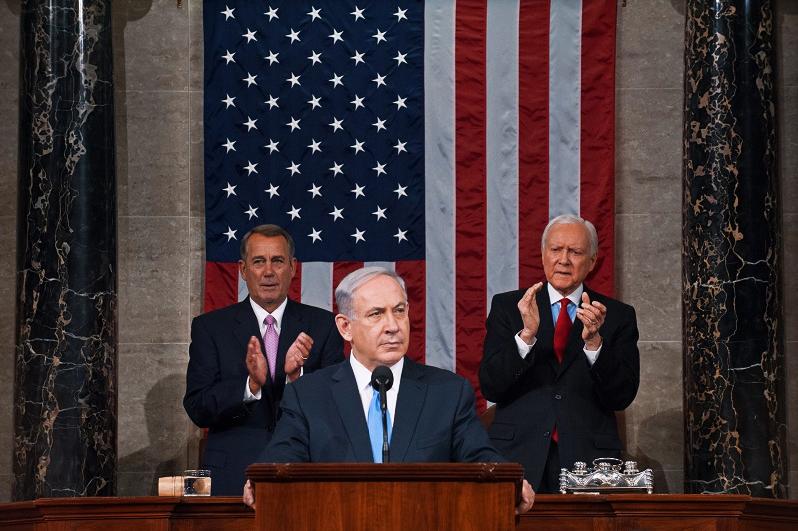
This American modus operandi provides a stark, unsettling lens through which to re-examine the career of Israel’s longest-serving prime minister, Binyamin Netanyahu. For decades, Netanyahu has defined Israeli politics, building a global brand as the ultimate Jewish nationalist, a fierce defender of Israeli sovereignty, and the only leader capable of saying “no” to Washington.
But this public persona has always coexisted with a starkly contradictory record: a history of stunning political capitulations, land concessions that violated his own “red lines,” and a pattern of acquiescence to American demands, often at moments of his greatest political strength. This chasm between rhetoric and action has fueled a persistent, unsettling question, one that his critics have asked from the very beginning: Is Binyamin Netanyahu an English-speaking Israeli, or is he, in terms of his loyalties and practical actions, a Hebrew-speaking American?
A ‘Man Without a Past’
Today, Netanyahu is a fixture of Israeli life, a political titan synonymous with the state itself. It is difficult, then, to recall the furor that greeted his first election in 1996. He was, to many, an outsider—an American-accented, media-savvy consultant who had rocketed to the top, bypassing the traditional hierarchies.
Just weeks after his victory, on June 21, 1996, the Jerusalem-based weekly Kol Ha’ir published a multi-page investigation that landed like a grenade in the new prime minister’s office. The article, titled “A Man Without a Past,” reported that Netanyahu’s U.S. Social Security file was “חסוי” (secret/classified). This classification, the paper alleged, was of a type reserved for employees of U.S. federal agencies.
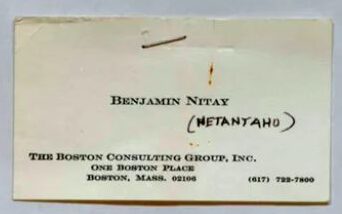
The report went further. It claimed the file linked the name “Binyamin Netanyahu” to two others: “John J. Sullivan” and “John J. Sullivan Jr.” The paper, which had investigated his years in the U.S., including his time at the Boston Consulting Group where he was known as “Ben Nitay,” put the question bluntly: “Who are you, Mr. Netanyahu? … Is it all the same person? … Never was the history of an Israeli prime minister so secretive.”
The story exploded. On July 5, 1996, Deseret News, syndicating a report from the New York Times News Service, covered the growing scandal under the headline, “Israel wants ‘real’ Netanyahu to please stand up.” It confirmed that the Kol Ha’ir report had “prompted a parliamentary question this week from Labor Party legislator Ephraim Sneh.”
On the floor of the Knesset, Sneh (other accounts name different MKs, but the question was officially asked) demanded answers. According to Knesset protocol records and contemporary reports, the query was direct: “Why is this file classified? Did he ever work for the U.S. government? Did he serve as an informant for any U.S. government authority?”
The Prime Minister’s Office flatly denied the allegations. A spokesman, Charli Sitbon, called the report “groundless” and “a complete lie,” attributing the name “Ben Nitay” to a simple, Hebraized version of his father’s pen name, Nitai, which was easier for Americans to pronounce. The “John J. Sullivan” connection was dismissed as fabrication.
Political firebrand and rival Uri Avnery seized on a related issue: Netanyahu’s U.S. citizenship. Netanyahu, who was born in Israel but grew up and was educated in the U.S., had held American citizenship. While he claimed to have relinquished it as required by law, Avnery, writing in the Maariv daily, pointed out that no proof had ever been made public. “If he was an American citizen when elected prime minister,” Avnery wrote, “his election is null and void.”
The Prime Minister’s Office flatly denied the allegations, and with no smoking gun, the immediate furor subsided. But the questions lingered, unresolved. The new Prime Minister was now in a uniquely vulnerable position. With his loyalty and secret American past the subject of unresolved parliamentary questions and media speculation, he was about to enter his first major negotiation—the Hebron Accords—with the Clinton administration, the very power he was being accused of serving.
The Great Acquiescence
Had the “Man Without a Past” scandal been an isolated incident, it might have remained a historical footnote. But it was followed almost immediately by a pattern of political behavior that baffled his own right-wing base and seemed to confirm his critics’ deepest suspicions.
Netanyahu had won the 1996 election, in large part, by campaigning ferociously against the Oslo Accords, which he and his Likud party had branded as a catastrophic, criminal concession to terrorism. His supporters expected him to halt the process, to reverse the tide. Instead, he did the opposite.
In January 1997, Netanyahu signed the Hebron Accords. This agreement, brokered by President Bill Clinton’s administration, did what his nationalist voters considered unthinkable: it handed over 80 percent of the ancient Jewish holy city (H1) to the full civil and police control of Yasser Arafat’s Palestinian Authority.
The Israeli presence was reduced to a small, heavily guarded enclave (H2). This area included the volatile Abu Sneneh neighborhood, which remained under Israeli security control but PA civil control. From that very neighborhood, on March 26, 2001, a Palestinian sniper would aim his rifle at the Jewish settlement and murder 10-month-old Shalhevet Pass. For Netanyahu’s critics on the right, the line from the 1997 capitulation to the 2001 murder was a direct result of his first major act of irreversible commitment.
The Hebron Accords were just the beginning. In October 1998, Netanyahu was summoned by President Clinton to the Wye River Plantation in Maryland, alongside his defense minister, Ariel Sharon. His right-wing government was already fragile, and he went to Wye with a list of publicly declared “red lines.” He assured his constituency there would be no more land concessions without full Palestinian reciprocity on security, and, most critically, no release of Palestinian prisoners with “blood on their hands.”
After nine days of intense American pressure, the Sabbath passed over Israel. Israelis, turning on their radios and televisions after Shabbat, were met with a sense of shock and horror. Netanyahu had capitulated.
The Wye River Memorandum committed Israel to another 13 percent “further redeployment” from Judea and Samaria. More stunningly, it mandated the release of 750 Palestinian prisoners. While Netanyahu’s team argued the text gave them discretion to withhold murderers, the American-brokered reality was that terrorists with blood on their hands were, in fact, included in the releases.
Netanyahu returned to Israel to find his coalition, and his nationalist credibility, in ruins. His justification, offered to a furious public, became infamous: “We had no choice.”
For those watching, it was the classic defense of a leader who, being “pregnant,” truly has no other choice.
The ‘Mr. Security’ Paradox
The gap between Netanyahu’s nationalist rhetoric and his policy of capitulation was not limited to political deal-making. For contemporary security analysts, his actions constituted a national security catastrophe in the making.
In a scathing position paper (#107) from the Ariel Center for Policy Research, The Acquiescence of the Israel Government in Palestinian Authority First Strike Preparations in Judea and Samaria,” this author systematically dismantled the Prime Minister’s “Mr. Security” persona. The paper argued that the government was actively misleading the public, pairing “rhetorical ‘toughness'” with a “studied policy of acquiescence” to a massive, illegal Palestinian military buildup.
Citing intelligence sources, the paper detailed a Palestinian Authority that had swelled to 40,000 armed men—tens of thousands beyond what the Oslo Accords permitted. More alarmingly, this was not a “police force” to manage civil order; it was an army-in-training. The paper documented its acquisition of forbidden heavy machine guns, mortars, and anti-tank missiles, and its construction of fortified offensive positions, all in preparation for a “first-strike” against Israel.
The paper’s most damning charge was not that Yasser Arafat was building this army, but that the Netanyahu government knew every detail and was consciously letting it happen. This deliberate inaction, this “studied policy of acquiescence,” represented another step in an irreversible commitment, leaving Israel dangerously exposed while its leader maintained a public facade of toughness.
The Modern Vassal
This pattern of rhetorical nationalism concealing a policy of American-aligned acquiescence did not end with Netanyahu’s first term. It has, his critics argue, defined his entire career.
The Abraham Accords, widely hailed as his greatest foreign policy triumph, are seen by some analysts not as a sovereign Israeli achievement, but as a thoroughly American-led project. In this view, the accords were a strategic “trap,” designed by Washington to lock Israel into a formal Sunni-Arab alliance, serving America’s goal of creating a unified front against Iran. The lavish “Abraham Accords Cookbook,” for all its celebratory gloss, became a symbol of a deal that served Washington’s interests first.
This brings the question of sovereignty to the present day. In the wake of the October 7, 2023, catastrophe, Israel has witnessed an unprecedented American military presence on its soil. While U.S. logistics and air defense support are not new, the deployment of senior American military advisors, including special operations generals, to consult on Gaza operations has triggered alarm.
Recent videos and reports have raised concerns that Israel has been reduced to a “vassal state,” unable to act decisively in its own defense—from Gaza to Lebanon—without an American “green light.” Netanyahu’s office has been forced to issue unconvincing denials, such as a recent one claiming “we are not in a situation where U.S. troops will enter Gaza,” a statement that narrowly sidestepped the larger question of American control over Israeli war policy.
This is the ultimate paradox of Binyamin Netanyahu. He is the man who speaks of Jewish destiny and sovereign power, yet his record is one of serial capitulation. He is the man who lectures the world on Israeli self-reliance, yet he has, in the view of his critics, overseen the deepest penetration of American military and political influence in Israel’s history.
Was the 1996 “man without a past” allegation just a bizarre, forgotten smear? Or was it an early warning sign? Is Binyamin Netanyahu the masterful politician, the ultimate survivor, navigating impossible pressures as his supporters claim?
Or, to return to the cold jargon of the CIA, was the man who arrived from America in the 1970s as “Ben Nitay” already “born pregnant”—a leader whose entire career was committed to a script written in Washington, a Hebrew-speaking nationalist whose actions would ultimately serve another’s interests? The question, once whispered on the fringes, now defines the central crisis of Israeli sovereignty.

Dear Mr. Sones,
I noticed that this article, concerning the possibility of the “born pregnant” issue with regard to our prime minister (which I had never heard of before), starts with events that took place in the summer of 1996. I have a question: Do you, or anyone who reads this article, remember what occurred 20 years earlier, on July 4, 1976, that directly affected the life and future of young Binyamin Netanyahu?
If you do, you might want to keep in mind how that might have been part of a possible plot to compromise our prime minister, long before he became one.
If you don’t, here’s a link to the story: https://en.wikipedia.org/wiki/Yonatan_Netanyahu
I think this might provide a clue that we should all consider.
Thanks for posting. I wish you all the very best on getting to the bottom of the important question you have raised.
Hey Mordechai,
I think your facts are well-stated, but I disagree with your conclusion. You think he’s working for the Americans. I think he’s working for American GLOBALISTS, who are all part of the CFR.
There’s a big difference between Americans and CFR Globalists who happen to be American. You’ve gotta know about the CFR, right? Barry Chamish wrote all about it and Bibi’s connection to it. He was listed as a member back in 89.
And, since you brought up Bibi’s ‘red lines’ at Wye, you can add that he had another red line in that he would not leave Wye without Jonathan Pollard. Of course, he abandoned Jonathan to another 22 years or so of hell.
You are correct, and this is another layer that needs to be peeled off of the facade. Most people sneer or their eyes glaze over when CFR is mentioned, which needs to be rectified skillfully. There is an email from me in your inbox, in case you missed it.