


To our Noachide brothers and sisters worldwide — gentiles who have renounced the idolatry of Trinitarian Christianity at immense personal cost, often enduring family estrangement, social ostracism, and financial ruin — we at Jewish Home News offer this unreserved apology.
You sacrificed everything to uphold the Noahide prohibition against avodah zarah. The State of Israel, on the eve of Yom Hazikaron, responded to a soldier who destroyed a Jesus idol in Debel, Lebanon by punishing him with 30 days’ detention, removing him from combat duty, and then using public funds to replace the very idol he shattered — all in groveling coordination with local Christians.
We were saddened and shocked. That’s not what we’re about.
Your courage in rejecting the worship of Jesus as divine mirrors the very act that should have been celebrated, not condemned. Instead, the official Israeli reaction turned your spiritual heroism into a national embarrassment. We apologize for this betrayal.
The soldier’s sledgehammer was not a breach of discipline — it was a higher form of loyalty.
Of course a modern army requires order and unit cohesion, especially in a combat zone like southern Lebanon. No one disputes that independent action can risk tactical complications or local backlash.
But a Jewish army fighting for the survival of the Jewish people cannot divorce itself from the foundational Torah laws that define its very purpose. True military strength flows from spiritual integrity, not bureaucratic conformity. The soldier’s act embodied the same uncompromising rejection of idolatry that has sustained the Jewish people for millennia — and that you, our Noachide coreligionists, have chosen to live by. His “indiscipline” was loyalty to a higher command.
Let it be clear: we are not calling for vigilante action by individual soldiers. While the soldier was right in principle — his act flowed directly from the Torah’s clear mandate against avodah zarah — he was wrong in practice. We remain in galut; Jews around the world are still vulnerable, and unilateral action in a combat zone carries real risks to our people.
The deeper solution we demand is not individual improvisation but a fundamental rectification of Israeli policy itself — including the current rules of engagement that too often reflect a Christian-influenced ethic of the Jew turning the other cheek rather than the Torah’s demand for Jewish self-defense and the eradication of idolatry in areas under our sovereignty. These rules endanger Jewish lives and betray our soldiers.
When the IDF punished the soldier and replaced the statue, it did not merely discipline one man — it told every Noachide who has lost family, livelihood, and community that their sacrifice is less important than Christian sensibilities. That financial groveling with Israeli taxpayer money stands in grotesque contrast to the personal financial ruin so many of you have endured to walk away from idolatry.
The timing makes the betrayal even sharper. This unfolded on the threshold of Yom Hazikaron — when we honor the fallen soldiers who gave their lives for Jewish survival — and the lead-up to Yom HaAtzmaut, Israel’s celebration of independence. The IDF speaks constantly of “purity of arms” as a core military value. Yet here the army used its power and resources to protect and restore an idol. What is “purity of arms” when it is employed in the service of avodah zarah? And what does Jewish sovereignty actually mean on Independence Day if the state apparatus cringes before foreign theological symbols on the very eve of the holiday we claim marks our freedom?
Physical independence without spiritual sovereignty is hollow. A Jewish state that honors its soldiers’ sacrifices by punishing fidelity to Torah while celebrating “independence” has lost its soul.
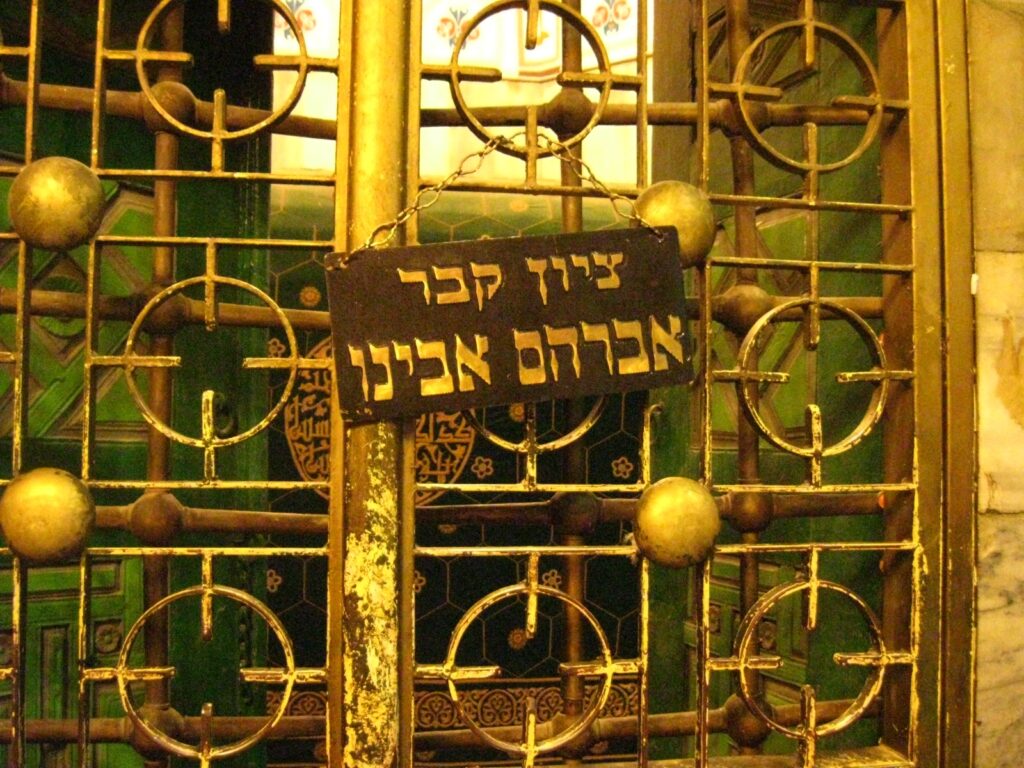
Let us be clear from traditional Torah sources and Halacha. The Torah commands the destruction of idolatrous images and altars in the strongest terms. Deuteronomy 7:5 instructs: “You shall smash their altars, and break their pillars, and cut down their sacred posts, and burn their Asherim with fire, and cut down the graven images of their gods.” Deuteronomy 12:2-3 echoes this mandate to eradicate the places and objects of idol worship in the land. Rambam (Maimonides) in Hilchot Avodah Zarah codifies the obligation to pursue and destroy avodah zarah, particularly in contexts tied to Jewish presence and sovereignty. Abraham, our forefather, smashed idols as the foundational act of monotheism. This is not fringe extremism — it is bedrock Jewish law and ethics.
Rabbi Tovia Singer, one of the clearest voices on this issue today, has repeatedly articulated the authentic Jewish attitude toward Christian Trinitarian worship. In his Manila lecture on the gravest form of idolatry, he explains that “Scripture regards the belief in the Church doctrine of the Trinity the most abhorrent form of idol worship.”
He describes trinitarianism as the worst iteration of idolatry — a form of shituf (partnership with G-d) that the Torah condemns in the harshest terms. In multiple talks and writings, Rabbi Singer emphasizes that worship of Jesus as divine constitutes avodah zarah — not merely a theological disagreement, but the very foreign worship the Torah demands we reject and, where appropriate, actively oppose. His message to both Jews and Noachides is unwavering: this is not hatred, but fidelity to the One G-d of Israel and the Noahide covenant.
The soldier who acted did not “deviate from IDF values,” as the official statement claimed. He embodied them — or at least what those values should be if Israel is to remain a Jewish state rather than a pale imitation of the nations.
The real deviation was the lightning-fast condemnation, the punishment (30 days’ detention and removal from combat for the soldier and the one who photographed the act), and the grotesque spectacle of the IDF itself replacing the statue “in full coordination with the local community.”
Behold the stark contrast: In 1997, after Jordanian soldier Ahmad Daqamseh murdered seven Israeli schoolgirls at Naharayim’s “Island of Peace,” large numbers of Jordanian lawyers — reports cite 120 to 200 — competed to represent the killer pro bono, backed by the Jordanian Bar Association. Upon his release in 2017, Daqamseh expressed no remorse, calling Israelis “human garbage” and declaring he would do it again. Yet to date, no comparable mass movement of Israeli lawyers, bar associations, or organized Jewish groups has arisen to defend this IDF soldier who acted in accordance with Torah. Why can our enemies mobilize so readily in defense of their own while we hesitate to stand with ours?
Therefore we call upon the IDF and the government of Israel: reverse course immediately. Restore the soldier to full duty with honor. Reward him and elevate him to a position of authority within the IDF rabbinate so he can teach the authentic Torah perspective on avodah zarah to our troops. Let his hammer become the symbol that vindicates both the soldier’s courage and the Noachides’ costly choice to reject the same idolatry.
To every Noachide who has paid the price: we see you. We honor your courage. And we stand with the soldier who acted in the spirit that should define a truly Jewish army and a truly Jewish state.
That is what we’re about.
Am Yisrael Chai.


But there is nothing Religious or Jewish about the State of Israel so the state has no reason to choose Torah values over Idolatry.
I don’t think we can say at this time that the state has no reason to choose Torah values over idolatry or any other religious or government form.
We’re on the verge of the “State” of Israel having to decide whether to remain secular or not. The youth are the future, and a clear majority of them here in Israel have chosen halachic Judaism (most would call it Orthodox; but — considering where and when we are — I am trying to name something beyond the most we could do because the majority of us were in exile) since 7 October 2023.
Bs”d. Dear Mordechai, i have read your article twice and yes, you are right, absolutely right. When i heard of the aforementioned incident, i was shocked. Because of the negative fall-out. Because of the negative impact it would have on our standing in the world. But after reading your article, i do realize what’s at stake. Our credibility as a Jewish state. However, that is exactly the problem. How many Jews, living in this country, realize the true meaning of our Holy Torah? We are supposed to reject idolatry. Not for 70, 80 or 90%. No, we must reject it for 100%. It means that in the future, all symbols of idolatry have to be removed from the land of Israel. Churches and statues. And also expressions of other non-Jewish religions. However, i am afraid that at this moment, it is still a bridge too far. Maybe even two bridges too far. I don’t think the present military and political leadership will reinstate the soldier, who smashed the statue of Yoske. They will – almost certainly – not elevate this soldier. We don’t know his true motives or intentions, when he decided to take a sledge hammer and smash the statue to pieces? Maybe, after he is released from detention, he will tell his personal story? But something is even worse. That Christian leaders have asked the President of Israel to pardon the soldier, while referring to their idol and their book. By doing so, they demonstrate that they really believe that Christianity is “superior” to Torah-Judaism. As most of the Israeli establishment has a warped idea of Torah Judaism, this will only add insult to injury: it will show the outside world that these so-called Christian “friends” of Israel and the Jews, will continue to impose their idea of religion on us, the Jews. With such “friends”, we don’t need enemies… Only our Father in Heaven can help us!
Is there no distinction between what is required in the land of Israel and outside the land in this regard? Is southern Lebanon in the land of Israel?
https://jewishhome.news/lebanon-is-ours/