




To the Jewish community and the steadfast friends of Israel, the current reality often feels like a tragic series of military setbacks or unavoidable complexities. We are told by our leaders that “total victory” is just over the next ridge in Gaza, that the northern border will be “secured” through just one more operation in Lebanon, and that the Iranian “octopus” is being systematically dismantled.
But the 2009 Brookings Institution report, Which Path to Persia?, tells a different story. When read alongside the current state of regional warfare, it reveals a chilling truth: the conflicts you see today are not meant to be won. They are meant to be managed indefinitely.
The Architecture of Attrition

The Brookings blueprint does not present its options—airstrikes, supporting insurgencies, or containment—as “either/or” scenarios. Instead, it advocates for an “Integrated Policy,” which serves as the strategic origin of what can only be described as a “Controlled Burn.”
In this model, the misery of constant rocket fire from Lebanon, the grueling urban combat in Gaza, and the “war between wars” in Syria are not signs of military incompetence or tactical failure. They are the calculated settings on a geopolitical thermostat.
Modern evidence confirms this paradigm is still the active operating system in Washington; we see it in the strategic pauses of critical weapons deliveries and the specific diplomatic conditions Riyadh places on normalization—maneuvers designed to ensure that Iranian proxies are depleted but never fully eradicated, maintaining a state of equilibrium that prevents a total regional collapse.
The Strategy of Perpetual Imminence
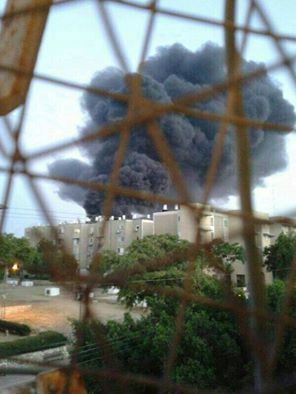
For over thirty years, the Iranian nuclear threat has been framed as a “three to five year” window—a timeline established by Binyamin Netanyahu as early as 1992. This “perpetual imminence” is not a failure of intelligence; it is a masterpiece of cognitive warfare.
By keeping the threat perpetually on the verge of eruption, the architects of this policy have created a permanent justification for covert action, regional realignments, and the “managed” attrition we see today.
This narrative ensures a “mirage of finality” where the public is conditioned to believe that one final strike will bring safety, while the reality is a state of perpetual fuse designed to keep Israel dependent on its American patron and locked into its role as a regional combat proxy.
The Fifteen-Year Echo: Prescience as Proof
Critics may dismiss the 2009 Brookings paper as outdated, but its age is actually its most damning strength. The document did more than suggest a strategy; it named the primary actor. By explicitly detailing the “Leave it to Bibi” option in 2009, the high priests of the Washington Consensus—men like Martin Indyk and Kenneth Pollack—demonstrated a cynical prescience that borders on the prophetic. They identified Netanyahu by name as the “convenient lightning rod” who would absorb the political fallout for American strategic goals.
The fact that he is still in power fifteen years later to implement the very script they wrote is the smoking gun of modern Middle East policy. It validates that we are not witnessing accidental history, but the deliberate execution of a long-standing blueprint.
The Beneficiaries of the Static War
While terrified Israeli families huddle in shelters and exhausted, poorly-equipped soldiers return to the same Gazan neighborhoods for the third or fourth time, a larger strategic goal is being secured that has nothing to do with Israel’s sovereign security. This is the U.S.-led regional order anchored by Saudi capital.
The 2020 Abraham Accords were not a “peace deal,” but the diplomatic crystallization of this strategy: the formal alignment of Israel as a sacrificial pawn to confront Riyadh’s nemesis. In this arrangement, Riyadh gains regional dominance without firing a single shot, watching its two greatest rivals—Israel and Iran—bleed each other out. This allows Washington to reap the rewards of a weakened Iran while publicly restraining Israel, maintaining its role as a regional arbiter while Israeli blood and political capital pay the Bibi Option’s price.

No-Win Policy
This is not a conspiracy; it is a professional menu of options being executed to the letter, shielded from public scrutiny by the very label “conspiracy theory”—a term weaponized by the state specifically to categorize conclusive logical argumentation as irrational paranoia.
When a leader promises victory while adhering to a strategy of containment and integrated management, they are not being incompetent; they are being compliant with a pre-authored script that views “total victory” as a strategic liability.
The Perpetual Fuse
By framing these events as a series of disconnected tactical failures or “complexities,” the rhetorical shield of the “conspiracy” label allows the controlled burn to operate in plain sight, ensuring that the blood and treasure spent in the alleys of Jabalia or the hills of Southern Lebanon are never recognized for what they are: calculated inputs in a grander equation. These lives are the discarded friction in a system of managed destiny, where the goal is not the resolution of the conflict, but the perpetual maintenance of the burning fuse.
The evidence suggests that as long as the strategic goals of the Washington-Riyadh axis require a weakened Iran and a checked Israel, the missile bombardments and the urban incursions will continue indefinitely.
The public is being fed a narrative of finality to keep them invested in a process designed for perpetuity.
It is time to recognize that the controlled burn is working exactly as planned, and the plan was never to bring you peace.