



There is a quiet, comforting label that now appears on many of the “bug-free” leafy greens we bring home for Shabbat. It promises that this produce has been grown “according to instructions on the rational use of pesticides” and tested in a laboratory “for the sake of public health.”
We see the logo. We see the Hebrew words “דרך המעבדה למען בריאות הציבור”. We breathe a little easier.
But after the original Guinea Pig State investigation, a simple question arose: who exactly is watching the watchers?
The Fluff That Fooled Us
Visit the Lab-Path website. You will be greeted by glossy promises of “innovation,” “excellence,” and “one-stop-shop” service for the food industry.

There are no public test results.
No violation statistics.
No raw residue data or summaries.
No failure rates.
No downloadable reports on actual produce they have certified.
No consumer-facing transparency about what levels of pesticides are typically found in Lab-Path-marked “bug-free” vegetables.
Their “Standards” (תקנים) page proudly lists a collection of ISO and HACCP certifications — all of which simply confirm that the lab is qualified to test produce. Nowhere do they publish actual test results, failure rates, or residue data from the vegetables carrying their mark. Just beautifully designed pages that inform us how seriously they take our health.
Who Really Owns the Watchdog?
Lab-Path is a wholly owned subsidiary of the Chemovil Group — one of Israel’s largest importers, producers, and distributors of agrochemicals, pesticides, and fertilizers.
The chemical conglomerate owns the laboratory that certifies the safety of produce grown with agrochemicals — including those supplied by its parent company.
In 2015, Lab-Path acquired Avishar, a food-industry consulting firm staffed with technologists, chemists, biologists, and veterinarians. The move gave the Chemovil-owned lab an instant team of in-house “food safety experts” — all while the parent company continued selling the very agrochemicals being certified.
In June 2019, Chemovil’s subsidiary Chemothal was involved in a serious incident in Haifa Bay when two LPG tanks exploded and caught fire. The Ministry of Environmental Protection’s official investigation found Chemothal acted with negligence: no gas leak detectors were installed, no emergency response teams were present, and basic protective measures were missing. As a direct result, the Ministry prohibited Chemothal from handling toxic gases, ammonia, flammable gases, and cooking gas until the company met proper safety standards.
The Official Numbers vs. the Leafy Green Reality
The Ministry of Agriculture proudly reports that 92.3% of 2024 samples met legal Maximum Residue Limits (MRLs). That sounds reassuring — until you remember that the same Ministry’s own 2023 State Comptroller audit repeatedly called leafy greens the industry’s “problem child”.
Parsley: 57% violation rate in targeted testing. Mint: 63%. Coriander, lettuce, basil — all dramatically higher than the national average.
The comforting overall percentage hides the very crops religious families buy in the largest quantities.
Remarkably, despite the heavy reliance of religious households on “bug-free” produce, no Israeli newspaper — mainstream, Haredi, or religious — has ever conducted its own independent laboratory testing specifically on these kashrut-certified vegetables and published the results. The only notable media investigation of pesticide residues in fresh produce was a 2014 Channel 2 exposé by Galit Gutman, which tested general supermarket items but did not focus on the “bug-free” category. The entire public discussion therefore continues to rely almost exclusively on official Ministry reports and the 2023 State Comptroller audit.
The label on your parsley bag is not a government stamp. It is a paid commercial certification that growers voluntarily purchase. It is marketing, not regulation; it is public relations, not science.
This is not accidental. This is staged reality — the same linguistic sleight-of-hand Jewish Home News exposed in “The 100% Pure Lie.”
This staged reality is not limited to private lab monopolies, but extends to the government’s broader refusal to update public health standards – another symptom of Israel’s look-the-other-way culture that allows chemical conglomerates to certify their own produce.
The Red Dye Israel Still Allows
In January 2025 the FDA revoked authorization for Red No. 3 (Erythrosine / FD&C Red No. 3 / E127) in food and ingested drugs, citing the Delaney Clause — a 1960 law that prohibits any additive shown to induce cancer in humans or animals.
The trigger was clear: multiple animal studies, including a landmark 1988 study by Hiasa et al., showed that high doses of Red No. 3 promoted thyroid tumors in male rats through a hormonal mechanism that disrupts thyroid hormone regulation. Earlier work had already linked the dye to enlarged thyroid glands and abnormalities in hormone balance in rats and pigs.
While the FDA noted the rat-specific mechanism may not translate directly to humans, the Delaney Clause left no room for debate. The European Union banned it decades earlier; Australia, New Zealand, and many others followed. Israel has not. The dye remains legal here in candies, cakes, beverages, and your children’s foods.
The Hidden Chemical Load: Glyphosate, Oxyfluorfen, and the ‘Cocktail’ Reality
Professional-grade concentrates of glyphosate (Roundup and local equivalents like Typhoon) and oxyfluorfen (Galigan) sit openly on hardware store shelves next to lightbulbs — the same super-concentrates farmers mix in residential buckets.
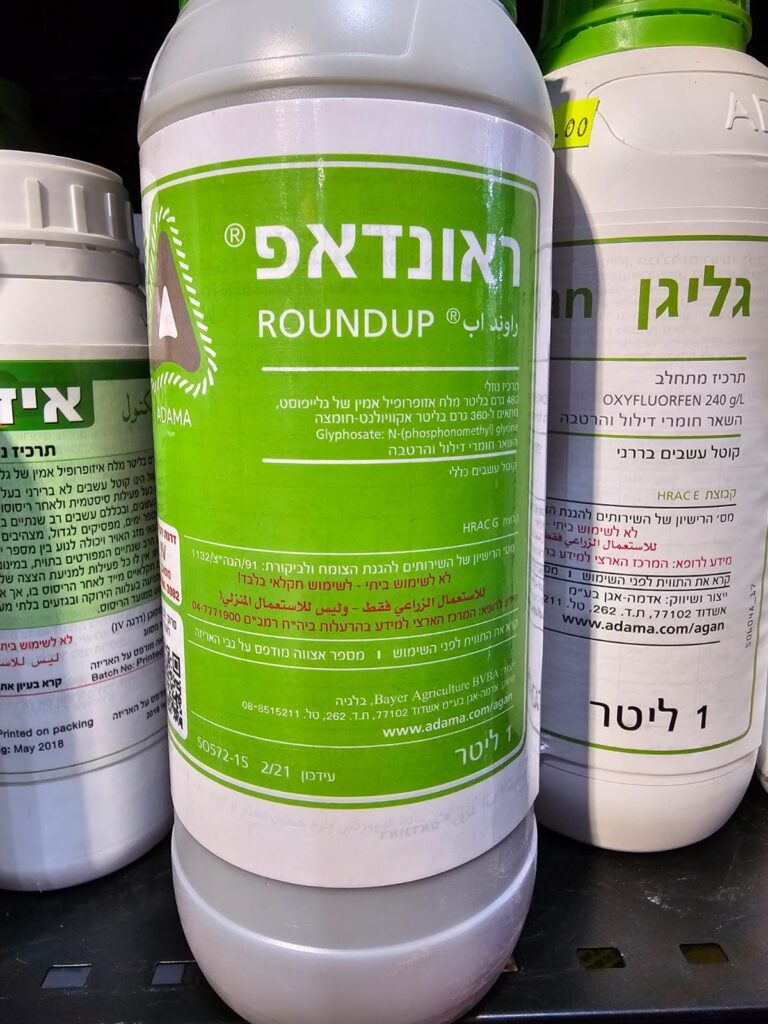
Glyphosate, classified by the International Agency for Research on Cancer (IARC) in 2015 as “probably carcinogenic to humans” (Group 2A), has been linked in multiple meta-analyses to a roughly 41% increased risk of non-Hodgkin lymphoma (NHL) in highly exposed individuals. It causes genotoxicity and oxidative stress — mechanisms known to damage DNA.
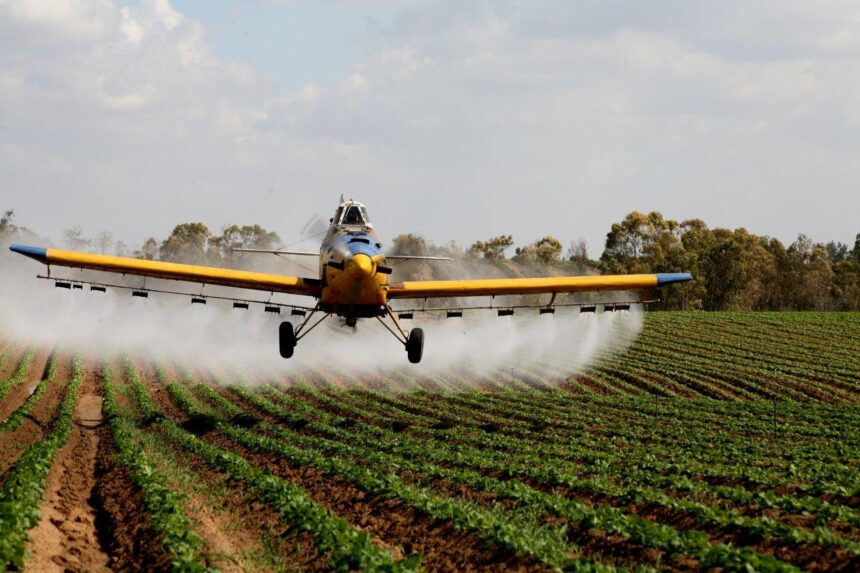
The devastation is not theoretical: during Plan Colombia’s aerial spraying campaigns, peasant communities reported immediate skin burning, respiratory distress, eye irritation, and spikes in miscarriages. In the United States, thousands of farmers and landscapers have developed NHL after years of Roundup use; juries have awarded massive verdicts after hearing testimony of men who sprayed the chemical for decades only to face aggressive lymphoma.
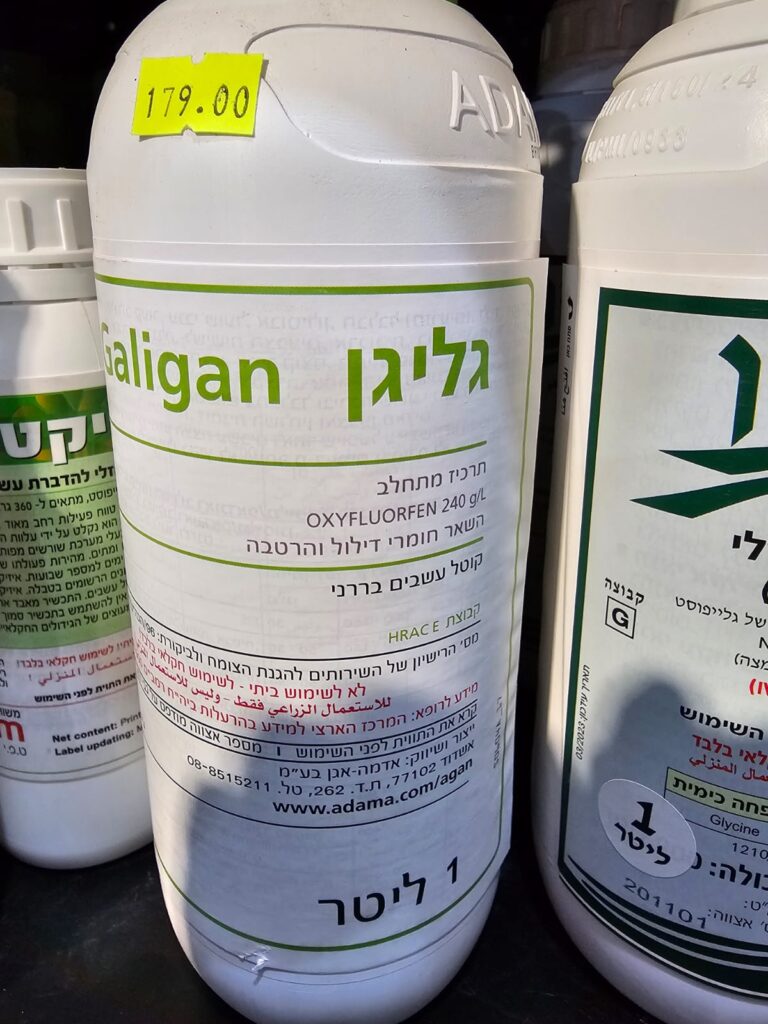
Oxyfluorfen (the active ingredient in Galigan) is classified by the EPA as a “possible human carcinogen” (Group C) based on increased liver adenomas and carcinomas in mouse studies. It disrupts heme biosynthesis, leading to anemia, liver toxicity, and — in animal studies — reproductive and developmental effects at doses that also harm the mother. These are not abstract lab findings; they are the reason Western countries restrict these concentrates to licensed professionals in hazmat gear.
And then there are the “cocktails” — six or more different pesticides layered on a single leaf of “bug-free” greens. No one knows the long-term synergistic effects of these specific combinations on a developing child’s brain, thyroid, or immune system.
Regulatory Blind Spot

Walk through any Israeli supermarket and you will see the latest masterpiece from the same Ministry of Health that presided over the COVID “trial lab” and still permits these substances: the green-and-red circular sticker system.
These mandatory red warning symbols (salt shaker for high sodium, spoon for high sugar, frying pan for high saturated fat) and the voluntary green “Efshari Bari” healthy-choice seal are proudly displayed on thousands of packaged products.
Foods containing Red No. 3? No red sticker. Produce drenched in pesticide cocktails? No red sticker. Glyphosate or oxyfluorfen residues? Completely invisible.
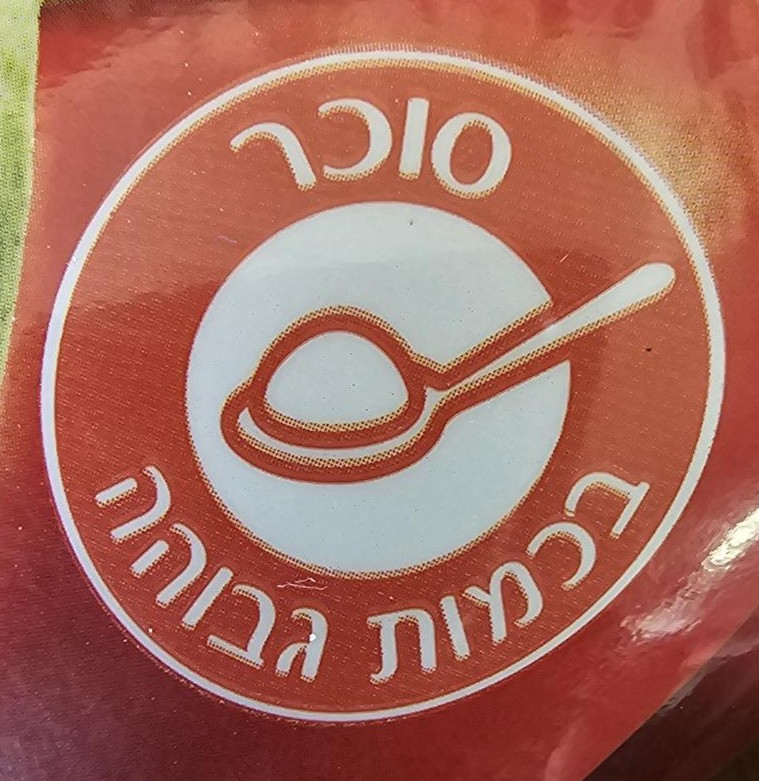
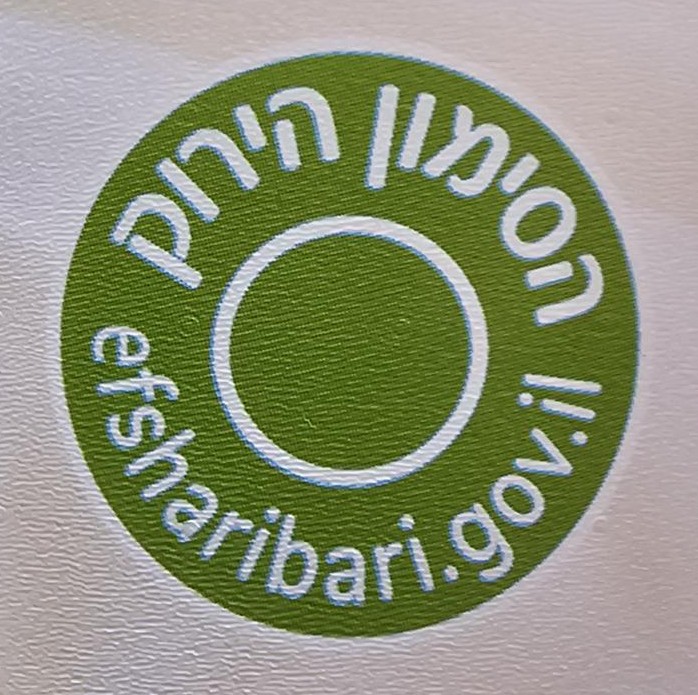
The stickers only police sugar, salt, and fat. Nothing else.
It is a perfect example of bureaucratic inertia — directing public attention to sugar, salt, and fat while the far more serious issues of pesticide residues and banned chemical additives continue unchecked.
The Discernment Framework: Tools You Can Use Today
Stop being a passive consumer. You don’t need to become a full-time investigator in the produce aisle. Instead, use this simple tiered framework — immediate actions you can take at the supermarket, and deeper steps you can take from home.
In the Store – Your Immediate Shield
- Avoid the highest-risk crops unless they are clearly marked as hydroponically grown: parsley, mint, cilantro, and leafy greens are repeatedly flagged as the worst offenders for pesticide residues and “cocktails.”
- Ignore the green and red stickers on produce and packaged foods. They only address sugar, salt, and fat — they say nothing about pesticides, dyes, or chemical residues.
- Choose with your eyes open: When possible, opt for vegetables with the fewest visible certification labels and marketing claims. Fewer stickers often means less heavy chemical intervention.
These three rules take literally seconds to apply and give you real protection right now.
From Home – Your Sword for Change
Once you’re back at your kitchen table, move from defense to offense:
- Follow the money: When you see a certification logo (Lab-Path, “bug-free,” or any other mark), quickly check who owns the certifying body.
- Look for the fluff test: Does the organization publish actual test results, failure rates, or residue data — or only glossy promises?
- Compare international standards: If the US or EU has banned or severely restricted a substance that Israel still allows, note it.
- Demand answers: Email your supermarket chain or the Ministry of Health with the exact questions you want answered (you can even copy the four simple questions I sent to Lab-Path’s VP). Collective pressure works.
Apply the shield every time you shop. Use the sword when you have a few minutes at home. Together they turn helplessness into quiet, effective power.
When Even the Consumer’s Questions Go Unanswered
At time of publication, Lab-Path Vice President Alon Zaks has not responded to a consumer request for clarification regarding four straightforward questions: What are the current legal MRLs for leafy greens? What residue levels can a consumer realistically expect in Lab-Path-certified produce? Do your tests check for pesticide “cocktails”? And is there any public summary of average test results?

Separately, Jewish Home News sent an official inquiry to the Ministry of Agriculture and Food Security prior to the publication of the first article in this series. The Ministry has now responded, stating that professional-grade pesticides are legally sold for agricultural use only, that the end-user bears full responsibility for following the instructions on the label, and that they conduct ongoing laboratory monitoring of both the pesticide products themselves and residues in fresh produce. They noted that in recent years over 90% of samples have been found compliant with Israeli standards, claiming a consistent improvement trend, and that they have been re-evaluating approximately 100 substances registered in Israel but not in the EU, updating MRLs or restricting some of them.
This is a classic bureaucratic reply: it defends the existing regulatory framework, cites their sampling efforts, and highlights the overall compliance numbers we already knew, while sidestepping the specific consumer concerns the query raises.
The Ministry’s reply did not address the specific higher violation rates repeatedly found in “bug-free” leafy greens (such as parsley, mint, and cilantro), the prevalence of pesticide “cocktails” on a single leaf, or the open retail sale of concentrated professional-grade products in neighborhood hardware stores alongside consumer goods. Should further details or clarification be provided, Jewish Home News will update this report.
V’nishmartem Me’od L’Nafshotekhem
The Torah does not command us to trust hired experts. It commands us to guard our souls — our health — very carefully.
The overlap between a chemical company certifying its own products, permissive MRLs on high-risk crops, the continued allowance of dyes and herbicides banned elsewhere, and the asinine sticker theater is not incompetence. It is the logical outcome of a system in which the public has been trained to accept staged reality.
We have the food safety governance we tolerate.
The good news? The moment we stop accepting the fluff and start applying the Discernment Framework, the game changes. Not because the ministries will suddenly become perfect — but because we will no longer be willing partners in our own deception.
The label on your next bag of “bug-free” greens — and the red or green sticker on your next packaged product — is no longer the end of the story.
It is the beginning of your own investigation.


If much of these foods are grown in greenhouses and considered water crops, why are there bugs anyway?