


The Ultimate Pagans
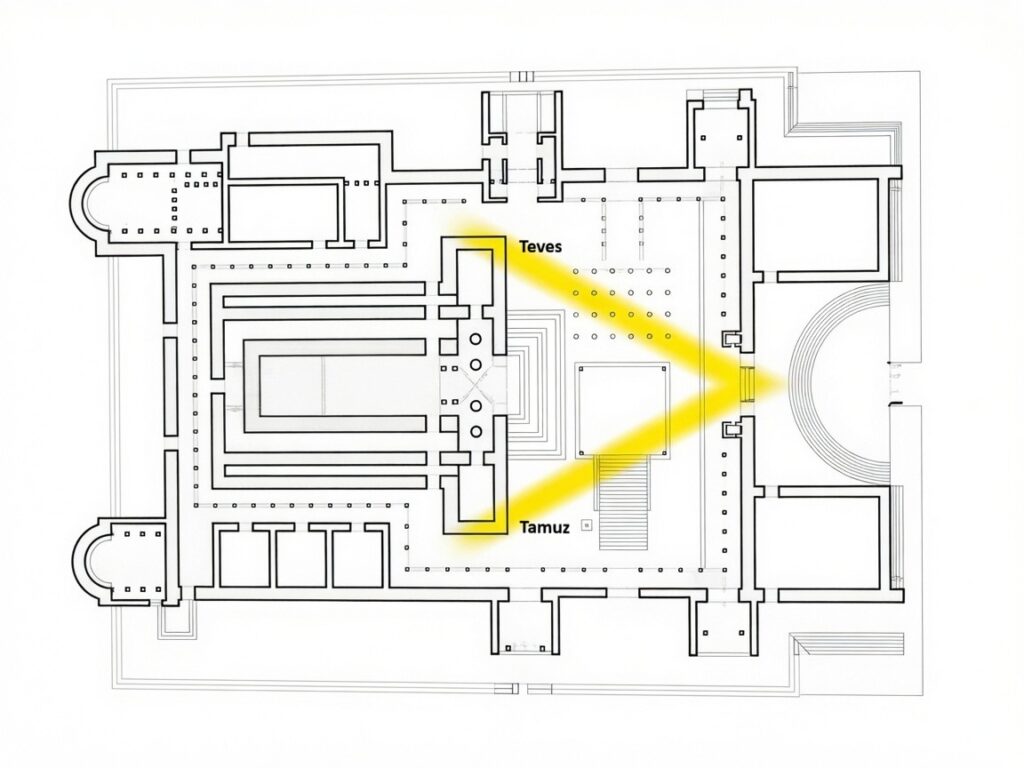
The Beis HaMikdash was deliberately oriented so that its eastern openings received the full annual range of sunlight. At Jerusalem’s latitude, the sun’s rising position shifts by roughly 56 degrees between the summer and winter extremes — from about 28 degrees north of due east in the Hebrew month of Tamuz to about 28 degrees south of due east in the month of Teves. The Temple was engineered to welcome and sanctify that entire spectrum of light across the seasons. This was not primitive stargazing or decorative symbolism. It was a sophisticated, Torah-rooted approach to living in harmony with time, space, and the created world.
The word “pagan” originally meant something close to “country dweller” or “person of the heath” — someone rooted in the land, attuned to the rhythms of nature and the cycles of the earth. If that is the true meaning, then the Jews, through the Torah and the Beis HaMikdash, were always the ultimate pagans: the people most deeply and authentically connected to the land and the cosmos, not in rebellion against heaven but in covenant with the One who created both. Everyone else has been fumbling for fragments of what the Jews were given in full.
The Imitators
Pagans throughout history have sensed the power of sacred alignment with the earth and the heavens and tried to replicate it. They built monuments to track the sun, oriented grand structures to celestial events, and performed rituals at the turning of the seasons. Yet they always captured only the outer form.
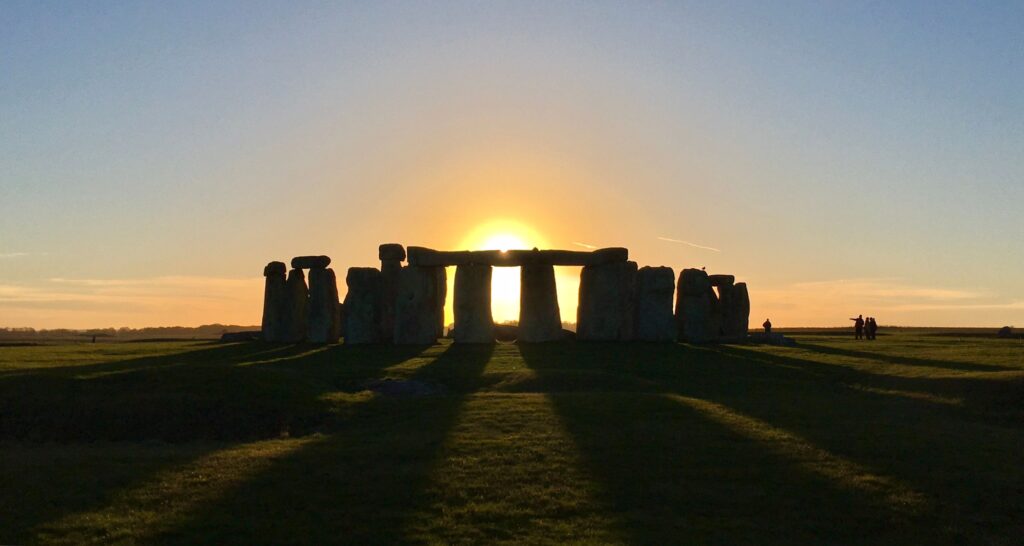
Consider Stonehenge. Its massive stones were carefully aligned to the summer and winter solstices. At sunrise on the longest day, the sun rises directly over the Heel Stone as seen from the center of the circle. People still gather there in large numbers for the spectacle. It represents impressive architectural engineering. Yet it remained a monument to the sun and seasons themselves — an empty attempt to connect with cosmic forces through stone and ritual timing.
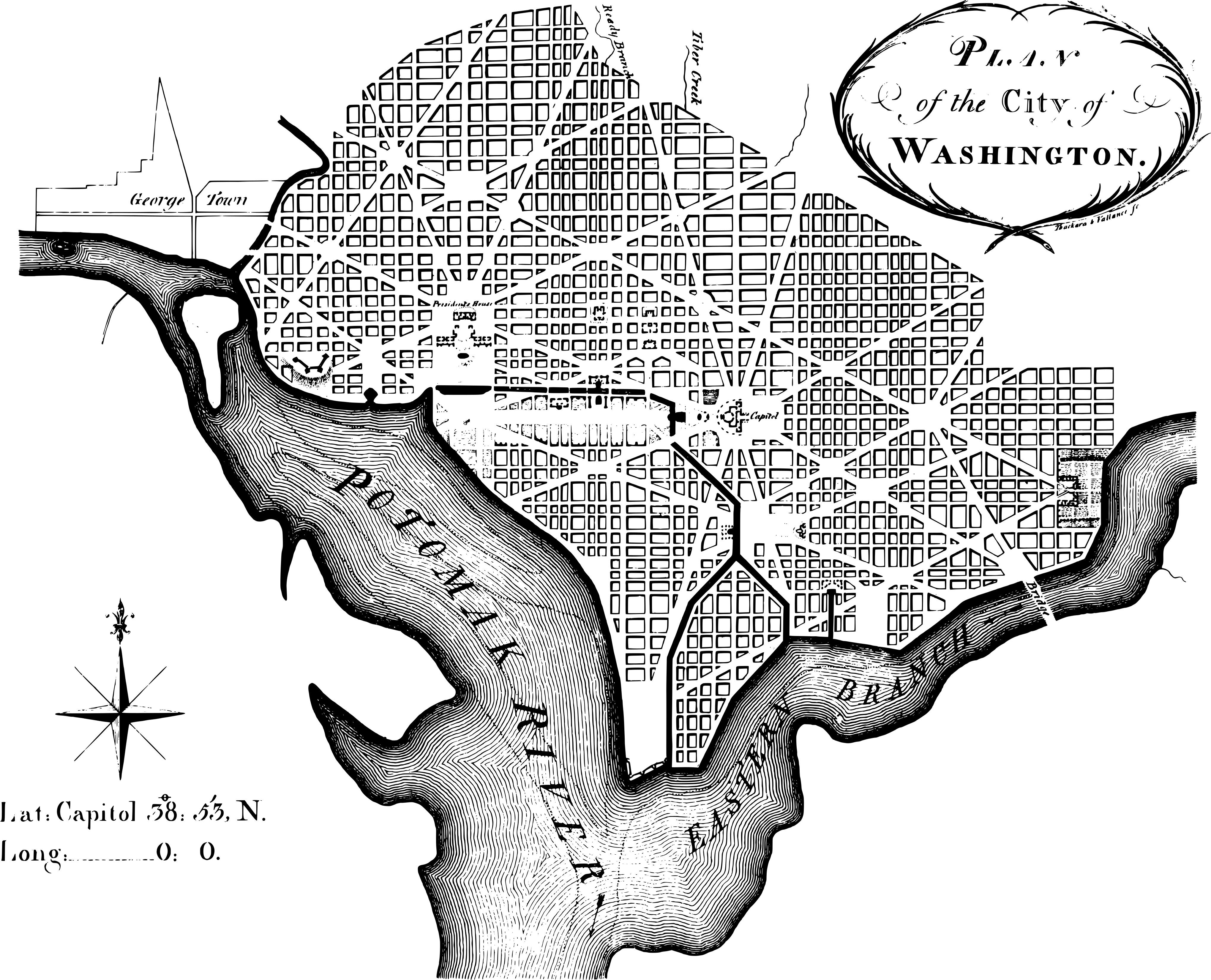
A far more ambitious and influential modern example of this same impulse lies at the symbolic heart of the American capital. When the French-American architect and Freemason Pierre Charles L’Enfant designed the original plan for Washington, D.C. in 1791, he deliberately wove principles of sacred geometry and cosmic order into the city’s very layout. Over a rational street grid he superimposed grand diagonal avenues that form interlocking stars, pentagrams, and precise right triangles linking the Capitol, the White House, and the intended site of a monument to George Washington. The design reflects the Masonic ideal of “as above, so below” — an earthly reflection of celestial harmony — with key sightlines and avenues oriented toward stars such as Sirius and with numerous public buildings incorporating zodiacal and astronomical motifs.
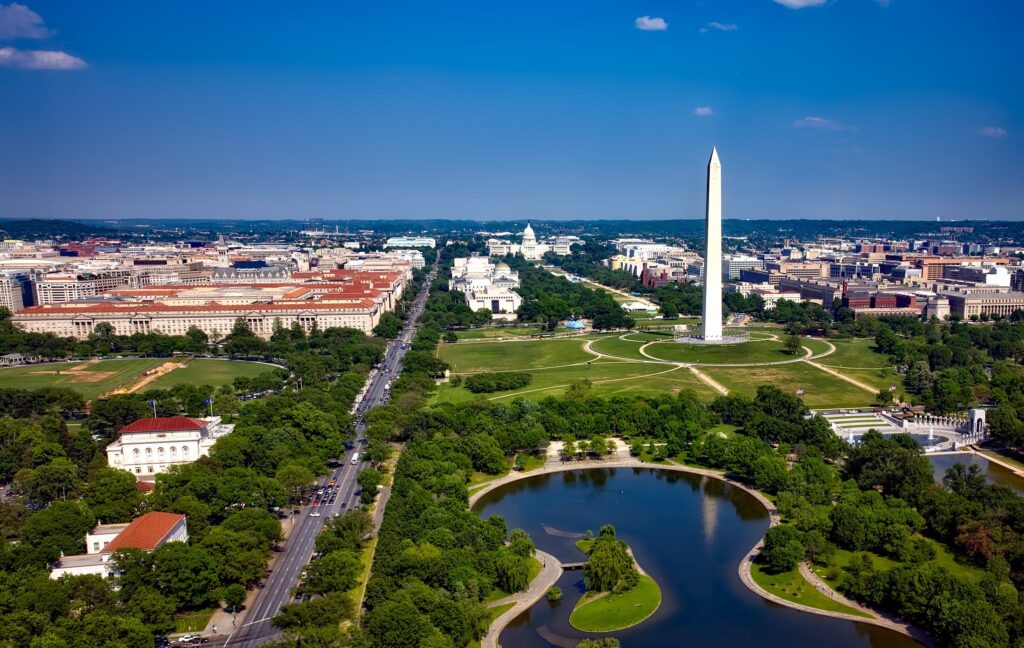
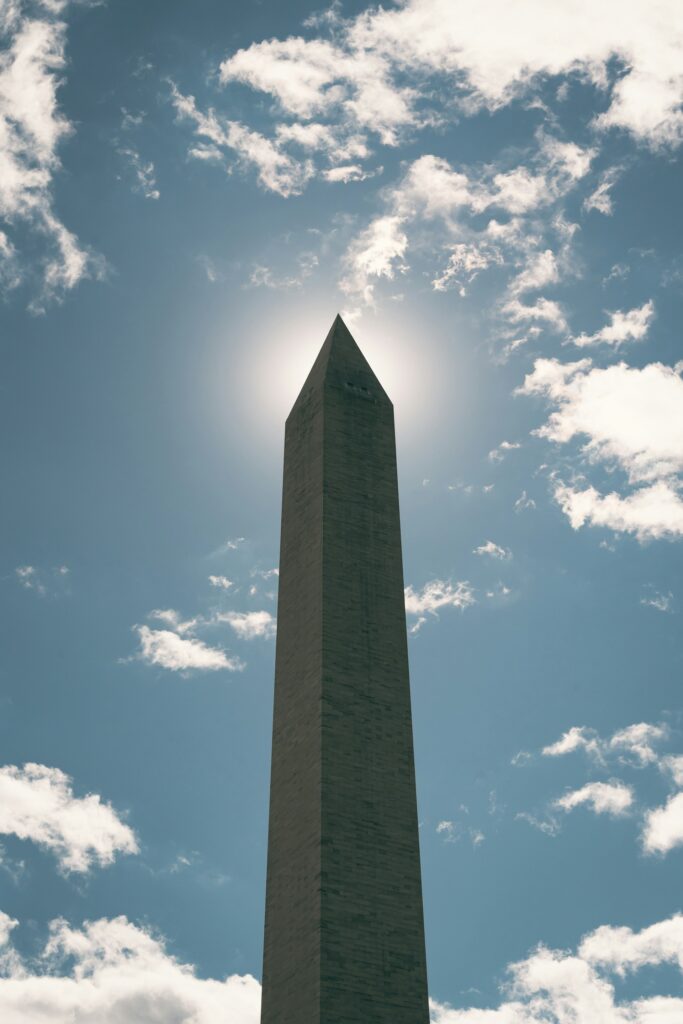
At the center of this carefully engineered landscape rises the Washington Monument, an Egyptian-style obelisk whose very form was understood in antiquity (and later in Masonic tradition) as a ray of sunlight made stone, a symbol of divine light and cosmic order. Its gleaming aluminum capstone bears the inscription “Laus Deo” (“Praise be to God”) on the east face, deliberately oriented to greet the rising sun. At dawn the first rays strike the tip, transforming the monument’s peak into a radiant, beacon-like point of light hovering above the shadowed city — an effect that has long captured the imagination of those attuned to the city’s symbolic architecture. It has been noted that the monument’s position and the city’s principal axes align with the summer solstice sunrise from key vantage points, reinforcing the theme of light emerging at the turning of the year.
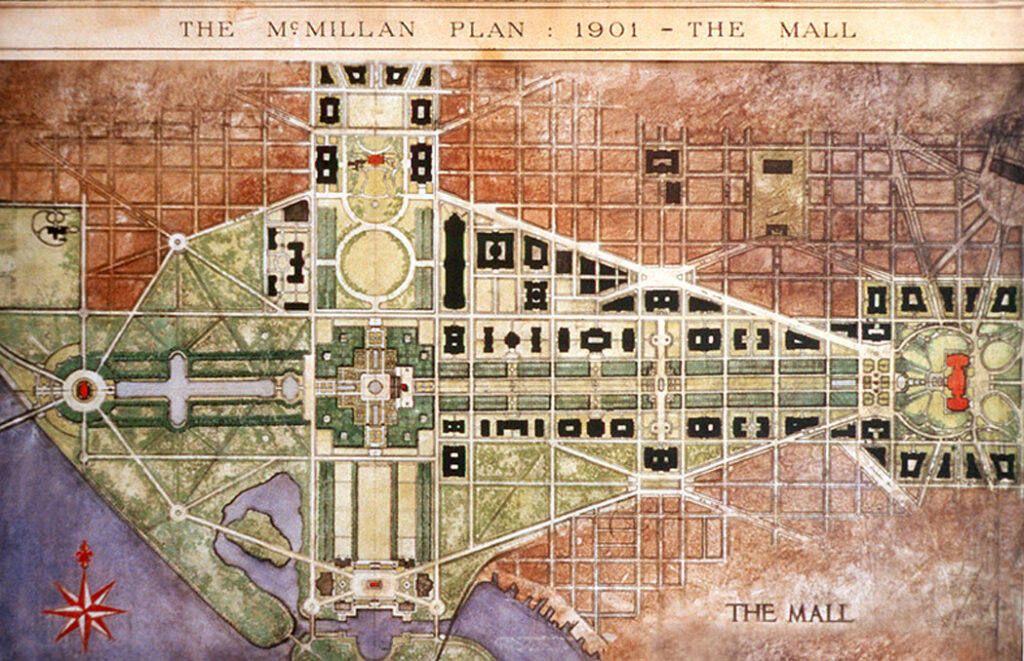
This was no accidental borrowing. Freemasonry consciously drew upon Egyptian, Babylonian, and other ancient traditions of monumental architecture and solar alignment, seeking to recreate in a new republic the power of sacred geometry and cosmic attunement once attempted in temples and monuments of old. The result is a grand national capital deliberately intended as a receptacle for symbolic light, geometric order, and the drama of enlightenment — a modern, large-scale attempt to recapture the rooted, cosmic dimension of human existence that the Torah and the Beis HaMikdash had long expressed in their original, uncorrupted form.
Yet the very grandeur of the effort reveals the deeper pattern. These constructions reach for the forms of sacred alignment with creation — the precise geometries, the solar orientations, the monumental axes that echo the ancient longing to live in conscious relationship with the cosmos — while operating outside the living covenant that gave those forms their original power and purpose.
Everyone wants the mystery and the majesty. Few want the discipline.
The Rambam addresses this exact phenomenon in his Iggeres Teiman. Comparing Judaism to Christianity and Islam that arose after it, he writes that they are like a statue fashioned in the image of a man. From a distance the statue may appear alive and impressive, but upon closer examination it is revealed to be lifeless stone. The Jewish people and the Torah, by contrast, are like the living human being himself — possessing not only the outward form but the inner vitality, the soul, and the ongoing relationship with the Creator.
We can apply the same comparison to the Temple and the many later attempts to create sacred geometry and cosmic alignment. Stonehenge, the great temples of Egypt and Babylon, the carefully planned monumental core of Washington, D.C., and similar projects are like the statue: impressive, carefully proportioned, and oriented toward the heavens and the earth. They capture something revealing about the human longing to live in harmony with creation. But they remain stone. They lack the living covenant, the ethical and spiritual demands, and the direct connection to the One G-d that animated the Beis HaMikdash.
Even the rigorous discipline of these builders — the multi-generational precision required to track solar shifts at Stonehenge, the complex and arcane hierarchies of ancient priesthoods, or the moral codes symbolized by the square and compass in Masonic tradition — was ultimately external and human-contrived. It was the masterful but ultimately external chisel work required to carve a flawless marble statue from inanimate stone. That discipline could impose order from the outside, but it could not generate life blood from within.
The Original: The Beis HaMikdash
The Beis HaMikdash was the authentic integration of cosmic harmony and divine covenant.
Its orientation was east-west, with the main entrance and most important openings facing east, toward the rising sun. This is explicitly described in the sources and was unique among temples in the region. The Mishnah (Middot 2:4) notes the eastern alignment in connection with key mitzvos.
Rambam, in Hilkhot Beit HaBechira 3:12, explains that this east-west axis was not an arbitrary architectural choice. He rules on the positioning of the vessels inside the Sanctuary in a manner that establishes and reflects its consistent east-west orientation (length east-west, with the Holy of Holies in the west). Traditional sources build on this halachic foundation to trace the same sacred axis back through the entire chain of Jewish history.
It began in the Garden of Eden, where the biblical account describes the entrance to the garden facing east — the direction from which divine light and presence first entered the world of humanity. The same orientation appears at the Akeida, when Abraham bound Isaac on Mount Moriah (the future site of the Temple). According to the tradition Rambam draws upon, Abraham deliberately positioned the altar so that he faced west, toward the innermost direction of divine encounter. The pattern continued at Mount Sinai during the revelation, where the people’s approach and the way the Divine Presence manifested followed the same sacred geography. It was then embodied in the Mishkan that traveled with the Jewish people through the wilderness, and finally reached its permanent expression in the Beis HaMikdash in Jerusalem.
In Rambam’s understanding, the consistent east-west orientation reflects a continuous spiritual thread: the “face” of the sanctuary is always turned toward the source of light and revelation, while the innermost sanctum (the Holy of Holies in the west) represents the hidden, transcendent unity of the Divine. Each stage — Eden, the Akeida, Sinai, the Mishkan, and the Temple — builds upon and fulfills the previous one. The Temple in Jerusalem was not inventing a new direction; it was bringing to completion a sacred alignment that had existed from the very beginning of humanity’s relationship with G-d.
The roughly 56-degree sunlight range was not decorative. It meant the Temple received and sanctified the full measure of solar light across the seasons. Jewish festivals and the calendar itself are tied to both lunar months and solar years. The structure brought that reality inside, transforming natural light into part of the divine service without ever turning the sun or stars into objects of worship. In this way, while the nations of the world would turn eastward to bow before the rising sun, the Jews in the Temple would present their backs to the sun and prostrate themselves toward the Shechinah that united in the west.
Mystically, the Temple was understood as a microcosm of the universe and the primary meeting point between heaven and earth. The Zohar speaks of the lower Sanctuary depending upon an Upper Sanctuary, which in turn depends upon still higher realities — all bound together. The east-west flow represented the movement of divine light and revelation into the world, with the Holy of Holies standing for the hidden, transcendent unity of the Divine. Every measurement, material, and direction encoded spiritual truths. Later masters such as the Ramchal unpacked these correspondences in detail: the building was not merely functional or symbolic — it was an instrument for drawing down and revealing holiness into physical space and time.
This is what the monumental imitations were reaching for, often consciously. They built their circles and pyramids and obelisks to mark the same turning points and channel the same forces. The Torah gave the original, complete version: a sanctuary that aligned with the cosmos while binding that alignment to justice, compassion, covenant, and the service of the One G-d.
Law and Spirit in One Place: The Sanhedrin
The integration went even deeper. The Great Sanhedrin — the supreme court and legislative body of the Jewish people — sat in the Lishkat HaGazit, the Chamber of Hewn Stone, built into the northern wall of the Temple complex. Half inside the sacred precinct, half outside, with access to both the sanctuary area and the outside world.
This was not an accident of architecture. Capital cases could only be tried when the Sanhedrin sat in its proper place in the Temple (Rambam, Hilkhot Sanhedrin). The highest expressions of Torah law — civil, criminal, and ritual — were adjudicated in the physical presence of the altar and the Shechinah. Justice was sacred. There was no artificial divide between “religious” and “political” life.
In Washington, D.C., the functions of human law and cosmic symbolism remain miles apart, geographically and spiritually divorced. The Capitol, where legislation is made, stands a dividing Mall away from the Washington Monument, the obelisk that captures solar alignment and celestial order. Visual sightlines connect them, but the law-making and the awe of the cosmos occupy separate physical and symbolic realms.
In the Temple, they occupied the same blueprint. The Sanhedrin did not sit in a distant government building. It sat directly adjacent to the altar, inside the sacred space itself. The proximity of the Sanhedrin to the altar was itself meaningful. As commentators note on the juxtaposition of civil laws and altar laws in the Torah, both institutions bring peace: the altar between man and G-d, the court between people. When the Sanhedrin was forced to leave its chamber in the Temple (roughly forty years before the destruction), capital punishment effectively ceased and societal cohesion began to fracture. The exile of the court from the Temple was both a cause and a symbol of deeper exile.
A society in which the highest law is decided in the holiest place will be fundamentally different from one in which law is merely a human construct or an instrument of power.
Jerusalem: The City That Remembers
This is why the mention of Jerusalem still stirs such overwhelming emotion in Jews.
Jerusalem is not just a capital or a historic site. It is the place G-d chose for His Name to dwell. It is the site of the Temple — the axis where heaven most intensely touches earth. In Jewish tradition it is called Ir Shalem (“City of Peace/Completeness”) or Yira Shalem (“Whole Awe”). It corresponds to the heart or Malchut — the point where all spiritual energies converge and flow into the physical world.
Even in ruins, its holiness remains eternal (Rambam). The longing for Jerusalem is the longing for wholeness — for the full Jewish life in which Torah, land, Temple, justice, and divine presence are no longer separated. “If I forget thee, O Jerusalem…” is not poetry. It is the soul remembering what was torn away and what is still promised.
Three times a day Jews pray facing Jerusalem. On Tisha B’Av they mourn it. At the end of the Seder and in every Sheva Berachot they say “Next year in Jerusalem.” The emotion is not nostalgia for stones. It is the ache for the world as it is meant to be — a world in which the divine blueprint is lived, not merely imitated.
The Real Pagans
The ancient builders and later esoteric traditions wanted the power, the alignment, the mystery, the connection to something larger than themselves. They built what they could with the tools they had. They tried. Like the statue in the Rambam’s metaphor, they captured the outward appearance of sacred harmony with the earth and the heavens — even when their discipline was profound and their geometry precise.
But the Torah gave something much greater: a way to live on the earth that integrates and sanctifies time and space, unites law and spirit, and directs all of it toward the service of the One G-d and the betterment of human life. The external forms can be copied. The inner covenant — the living relationship — cannot.
If “pagan” truly means one who seeks to live rooted in the land and in harmony with creation, then the Jews were always the real pagans. While other nations corrupted this earth-rooted impulse into the worship of stone and geometry, the Temple elevated and fulfilled it through covenant. The Temple was never a rejection of the earth; it was the fullest and most living expression of that harmony. Everything else has been reaching for the statue. The Jews were given the living body and soul.
That is why, in the end, everyone wants to be the Jews — or at least wants what the Jews were given — while so few are willing to accept the Torah that makes it real.


Bs”d. Dear Mordechai, shalom and good evening! Very well written and with adequate historical background: thank you!!
Powerful points enwrapped in a beautifully researched article – yashar koach.