


On October 7, 2023, the Israel Defense Forces precipitated a catastrophic failure that laid bare the fragility of its security framework and the emptiness of its feminist ideals. The savage attacks by an Islamic organization, which claimed approximately 1,200 lives and saw 252 individuals abducted, including 90 women and girls, revealed a stark truth: Israel’s celebrated military, despite its proclaimed commitment to gender equality, could not safeguard the nation’s women. This harrowing event stands as a damning testament to the failure of the feminist push for women in combat roles—a noble but misguided endeavor that has proven both dangerous and deadly.
The journey toward integrating women into the IDF reached a pivotal moment with the 2000 Equality Amendment to the Defense Service Law, which granted women the right to serve in any military role. Until that time, the Israel Defense Forces was held up by military professionals around the world as an example of a prudent nation that, having learned its lessons, barred women from combat roles, a perspective later overturned by feminist-driven reforms. This legislative milestone loosened longstanding restrictions, heralding an era of supposed empowerment through combat participation.
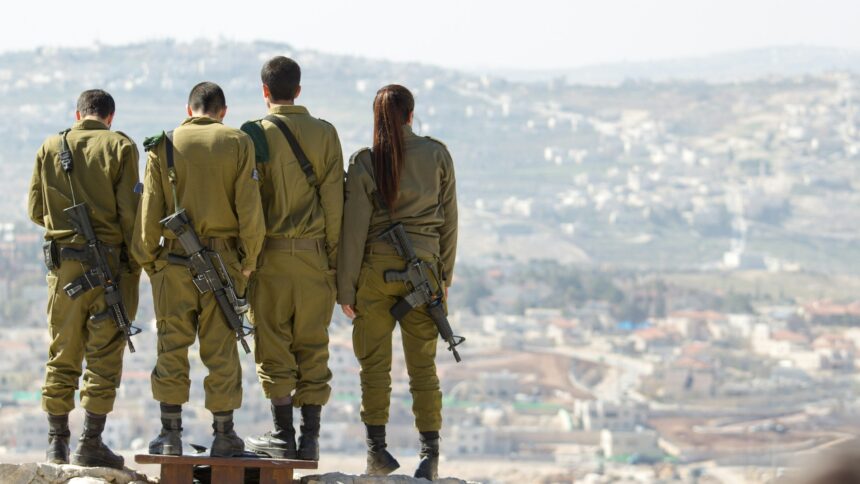
By 2025, this policy has led to a troubling reality: women now constitute a staggering one-fifth of the IDF’s combat force, serving in roles ranging from the Caracal Battalion, where they comprise 70 percent of the troop strength, to artillery, border defense, and search-and-rescue units like Unit 669. This dramatic rise, fueled by a 350% increase in female infantry soldiers between 2013 and 2017 and a surge in enlistments following the 2023 Simchat Torah attacks, places women in unprecedented proximity to the perils of warfare, a development that gravely undermines the nation’s protective obligations.
Yet, as Gil Ronen incisively noted in his critiques, this shift introduced significant challenges. Writing in 2015, Ronen argued that the physical and psychological demands of combat exact a disproportionate toll on female soldiers, undermining unit cohesion and operational efficacy. His earlier work in 2014 further questioned the wisdom of such policies, suggesting that the integration of women reflects a broader societal confusion about gender roles—a confusion that compromises military readiness.
The October 7 attacks crystallized these concerns into a brutal reality. Despite (or because of) the presence of female soldiers in combat positions, the IDF proved incapable of preventing the targeted sexual violence and abductions that ravaged women disproportionately. Reports of rape, gang rape, and mutilation at sites like the Nova festival and kibbutzim illuminated the acute vulnerability of women in conflict zones—a vulnerability the IDF’s egalitarian policies failed to mitigate.
Compounding this failure, female surveillance soldiers, known as tatzpitaniyot, issued warnings that were dismissed by their superiors. As one soldier confided to Haaretz, “If there were men sitting at those screens, things would look different,” hinting at a sexism that exacerbated the intelligence breakdown. This incident underscores a grim irony: the very system purported to empower women nullified their contributions, leaving them exposed to unimaginable horrors.
Feminism’s relentless advocacy for women in combat rests on a flawed assumption—that institutional equality inherently translates to empowerment and security. The events of October 7 shattered this delusion, proving that equal participation in warfare neither ensures protection nor confers agency. Instead, it heightens risks, positioning women as prime targets for gendered violence. Gil Ronen’s 2017 analysis reinforces this point, observing that mixed-gender units often grapple with higher injury rates among women, a factor that erodes unit readiness and increases casualties due to physical disparities. Such practical realities expose the feminist rhetoric of equality as a hollow canard, one that ignores the visceral truths of combat.
Further evidence of this folly emerges from the broader discourse on mixed-gender units. Logistical challenges abound, from the provision of specialized equipment for female soldiers—highlighted in a 2018 Israel National News report on tailored gear—to the complexities of maintaining operational tempo in mixed units.
Even the Caracal Battalion, often cited as a success story for its border defense operations, cannot erase the systemic failures of October 7. While a 2017 article praised Caracal’s role in thwarting infiltrations, its triumphs pale against the backdrop of ignored intelligence, logistical collapses, and the unchecked violence against women during the attacks. These isolated victories do little to counter the overarching reality of vulnerability and neglect.
Public perception in Israel mirrors this tension. A 2015 piece from Israel National News captured a divided populace: some laud women’s combat roles as a progressive leap, while others decry them as a reckless gamble with military efficacy and traditional values. This cultural rift, Ronen argued in 2014, stems from a deeper societal malaise—an obsession with egalitarian optics that sacrifices security for ideology. The non-response by Western feminist organizations following October 7 only deepens this critique, revealing a selective solidarity that abandons Jewish women when political dogmas are exposed for what they are.
The collapse of feminist ideals extends beyond the battlefield to the very structure of Israel’s military policy. Mandatory conscription for women, once heralded as a beacon of progress, did not shield female soldiers or civilians from the onslaught. Instead, it thrust them into peril without ensuring their safety, as evidenced by the disregarded warnings from female intelligence personnel and the chaotic response to the attacks. This tragic outcome demands a reckoning with the feminist myth that equates military integration with empowerment—a belief that has proven not only illusory but lethal.
In the wake of October 7, Israel confronts an undeniable verdict: the IDF’s inability to protect the nation’s women signals the disintegration of feminist ideals in the crucible of war.
The seductive promise of equality, championed by decades of advocacy, stands exposed as a mirage that disregards the brutal realities of conflict and the unique threats women face.
As the nation reels from this tragedy, it must grapple with a sobering truth: feminism’s drive to place women in combat has not only failed to deliver on its lofty promises but has also sown the seeds of a deadly and unsustainable status quo.


Final nail in feminism’s coffin
Besides all this : Not exactly my field but if I remember well women are forbidden to carry weapons according to Halacha. Also abortion rate very high in the army. I’m more worried about the spiritual damage to Am Israel than the operational consequences of women in the army.
What a disgusting and insulting article.
What a vile collection of mistruths and slander.
You claim that there is “collapse of feminist ideals”.
Sones – do you support equal work for equal pay? Do you believe women should get paid the same as men for doing the same job?
Or do you believe that women should be paid less?
I’m guessing you support equal pay for equal work (if not, you are going to have a bigger problem than just annoying the parents of combat soldiers).
I’m guessing you also support the right of women to vote.
But before feminism, women were not allowed to vote and you didn’t have to pay them equally for the same work. And you could fire a woman if she got pregnant.
And a lot of other vile, disgusting chauvinist policies that existed before feminism.
So, Sones, unless you want to ban women from voting and you want to pay them less, then you too support feminism.
And how many combat soldiers did you interview for this article? My guess is zero, showing you really have no idea what you are writing about. There isn’t a single quote from a soldier.
And your cheap, absolutely bass ackwards comment that somehow the Nova massacre had something to do with women combat soldiers? Totally illogical.
Why did you not mention anything about the women who fought and killed terrorists, especially those who fell in battle protecting your sorry tuchis?
You might not like some of the more recent nuances of feminism, but it most definitely is a credible, viable, worthwhile and beneficial ideology. And women in combat roles in the IDF has proven successful, despite your attempt at cherry picking to try and denigrate their service.
If you need to be reminded, I can post a dozen links to the articles of men praising the courage and combat ability of the women who fought back on Oct 7 after men like you failed the nation with their backwards thinking.
The damage from Oct 7 is on the heads of the men who failed the nation. It is on the heads of the men as you pointed out in your article who failed to listen to the capable and professional women soldiers. It is on the heads of the corrupted rabbis who prevent tens of thousands of men from enlisting every year – making the service of women in combat roles a necessity for the IDF because it lacks the manpower.
As I said, this article is a disgusting insult to the brave capable women who serve in the IDF. It is an insult to me as a parent of soldiers.
Shame on you.
Thank you for your input, which went into this follow-up: Defending the Indefensible: Modern Orthodoxy’s IDF Frontline Feminism and the Real Misogyny
Misogyny is masked as modern progress while halacha is sacrificed on feminism’s altar
https://jewishhome.news/defending-the-indefensible-modern-orthodoxys-idf-frontline-feminism-and-the-real-misogyny/
No, dear Paul, Mordechai’s article is not insulting. It is revealing a very painful truth. It shows how far the present State has drifted away from our oral and written Torah. Apparently, you are not able or willing to handle that truth. For your information: my wife and i are retired Olim from Europe and over seventy years old. During my twenties, i served in the Royal Armed Forces of The Netherlands and was stationed in Western-Germany, then still divided in Allied Zones. My unit – guided missiles – served in the British zone of Germany. In those days, there were NO women in combat units of the NATO. At least, not in the Dutch units in Germany. All military women – ONLY professionals, NO conscripts – were in supportive jobs and outside the confrontation zone near the Iron Curtain. Tell me, dear Paul, why is this so difficult to understand? And if you respond, please, do so in a polite manner. Wishing you all the best, Meir.
Your position supporting the repression of women and support for anti-Torah haredi Jews is still indefensible. Here is my rebuttal to his weakly written attempt to defile not just women, but modern orthodoxy:
Again – Sones shows us that he simply doesn’t get it and he himself is the misogynist.
Here is where he shows himself wrong again, by claiming: “the real misogyny lies in pressuring women into combat roles for which they may be physically or halachically unsuited, exposing them to grave dangers like abduction, rape, and death—as tragically demonstrated on October 7, 2023”
So let’s show how he discredits himself and his phony arguments:
1) “pressuring women into combat roles” – an outright total lie, which shows he never interviewed even a single combat soldier for his article. The reality is the exact opposite of what he claims, because women in combat units all VOLUNTEER to serve in combat units. Sones also obviously never bothered to interview the parents of female combat soldiers, many of whom I know tried to talk their daughters out of it, only to be told by their daughters that they are committed to Am Yisrael and want to serve. So Sones’ fake argument of “pressure” simply does not exist.
2) “Physically or halachically unsuited”: No doubt Sones can quote all the doctors and rabbis who parrot his women-hating ideology, but there are doctors and rabbis who say there is no such thing. An easy example is the doctor who checked my daughter (a combat officer) at Meuhedet in Mea She’arim told her “kol hakavod” and he was absolutely thrilled with her choice to serve.
3) “exposing them to grave dangers like abduction, rape, and death”: Sones simply ignores the fact that a thousand people were murdered on Oct 7 and it made no difference if you were in or out of uniform, male or female, adult or child. He repeatedly brings up hisfarkachta idea that the Nova massacre is connected to women serving in combat. Hundreds of people at the Nova were brutally murdered, many were raped and abducted, pretty much all of them civilians. That part of the disaster had absolutely nothing to do with women serving in combat.
And he finishes by insulting “Modern Orthodoxy” saying it strays from the Torah.
It makes you want to pick up Sefer Bamidbar and hit him over the head with it.
We are reminded constantly that the fallacious argument that haredi Torah study is supposed to “protect” Israel was proven wrong on Oct 7.
I end by adding that Sones has every right to publish his theories, no matter how wrong they are.
Dear Mordechai, again, you have explained in a good and rational way – while at the same time referring to our holy Torah – the foolishness of women in combat position. It has already been forbidden by the Gedolim of the previous generation, besides the fact that it undermines the cohesion, combat effectiveness and readiness of a modern army. And certainly a Jewish army! By the way, the IDF is not a Jewish army in the strict sense of the word. It is an “Israeli army” with a predominantly optical, because external, relationship with our Religion and Torah, but that connection has not been internalised. Period. Women don’t belong on the battle-field. It is something, non-Jewish nations have been doing all along (see TeNaCh) and are still doing. We, as Hashem’s people should not do something like that. What we need is a Jewish army, based on the Torah. Period. Kol haKavod to Mordechai Sones!! Warm regards, Meir.