



“Education has produced a vast population able to read but unable to distinguish what is worth reading, an easy prey to sensations and cheap appeals.”
— G.M. Trevelyan
“Plain lies are dangerous; the only weapons left to the advertiser are the suggestio falsi and the suppressio veri, and his use even of these would be very much more circumscribed if one person in ten had ever been taught how to read… Those who prefer their English sloppy have only themselves to thank if the advertisement writer uses his mastery of vocabulary and syntax to mislead their weak minds… The moral of all this…is that we have the kind of advertising we deserve.”
— Dorothy L. Sayers
The Language of the Legal Defect
In the regulatory lexicon of the United States government, there exists a term of art that serves as the foundation for the modern relationship between the ruler and the governed: the “Defect Action Level.”
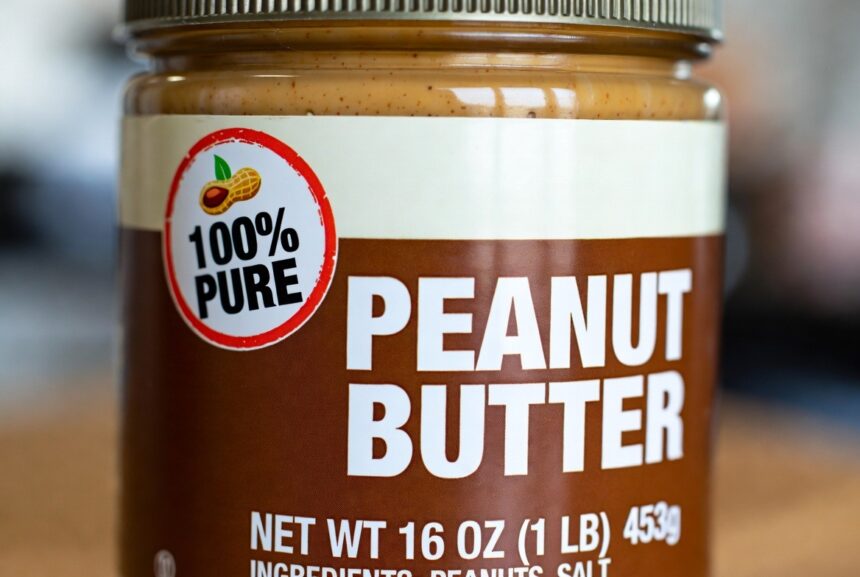
To the uninitiated, the label on a jar of peanut butter or a bar of chocolate implies a literalism—that “100% Pure” translates to a total absence of impurities. The reality, housed within the dry pages of Title 21 of the Code of Federal Regulations, is a mathematical compromise.
The FDA legally permits an average of 30 insect fragments per 100 grams of peanut butter and 60 fragments per 100 grams of chocolate. Canned mushrooms may legally harbor 20 maggots per 100 grams of drained weight, while oregano can contain up to 1,250 insect fragments per 10 grams before the government deems it “adulterated.”
It is critical to understand that “100% Pure” is not a scientific term; it is a marketing term. Science deals in precise measurements of composition, parts per billion, and the uncompromising identification of contaminants. Marketing, conversely, deals in the management of perception and the curation of emotion.
When a manufacturer places that “Pure” seal on a product, they are not making a claim about the physical absence of biological filth; they are making a claim about their successful compliance with a negotiated regulatory threshold. They utilize the suggestio falsi—the suggestion of a falsehood—to lead the consumer to believe in a pristine, laboratory-clean reality.
Simultaneously, the suppressio veri—the suppression of the truth—ensures that the “allowable” rodent hairs and mold filaments remain hidden in plain sight, protected by the density of the bureaucratic code.
This gap between the rigorous reality of the production line and the sterilized language of the advertising agency is the primary staging ground for the modern hoodwink. It is here that the consumer is trained to accept a “staged reality”—the shimmering motor oil poured over pancakes in a commercial—while the actual, grittier contents remain unexamined.
The Pharmaceutical Defect Action Level
This architecture of “allowable defects” was never intended to stay confined to the supermarket pantry. In recent years, it has been scaled with terrifying precision into the global pharmaceutical sphere, most notably during the COVID-19 vaccine rollout. In Israel, which served as the world’s primary laboratory for the Pfizer experiment, the public was sold a “100% effective” or “95% safe” narrative using the same linguistic sleight-of-hand. Just as “pure” does not mean “clean” in the world of processed food, the “safe and effective” mantra was a marketing term masking a regulatory “Defect Action Level” of unprecedented and dangerous scale.
The fraud relied heavily on the public’s inability to distinguish between relative risk reduction—the flashy marketing figure—and absolute risk reduction, the scientific reality that would have revealed a much more marginal benefit. By suppressing the mounting data on adverse events—the “human insect fragments” of the pharmaceutical industry that were deemed an “acceptable” cost of doing business—state agencies and manufacturers engaged in a global suggestio falsi. They sold a medical intervention based on a staged reality of total protection, while the suppressio veri was employed to bury clinical trial discrepancies and the reality of waning immunity.
In Israel, the “Green Pass” system functioned as the ultimate marketing tool, a coercive psychological bludgeon that transformed a medical product into a “100% pure” ticket for societal participation. The public, conditioned by a lifetime of sloppy English and a lack of scientific literacy, failed to ask why the “defect levels” of these mandates—the heart inflammations, the neurological tremors, and the sudden deaths—were being treated as either non-existent or “statistically insignificant” anomalies.
The Holy ‘Defect’: The Dilution of Glatt
The methodology of the hoodwink does not stop at the secular border of the supermarket or the pharmacy; it has permeated the most sacred enclaves of Jewish life, specifically the multibillion-dollar kashrut industry. As Rabbi Eliezer Eidlitz documents in his book, “Is It Kosher?“, the term “Glatt” has undergone a semantic degradation that mirrors the “100% Pure” marketing trap.
Historically, glatt—meaning “smooth”—referred to the lungs of an animal being entirely free of adhesions, indicating a lack of punctures that would render the animal treif. Yet, as Eidlitz notes, because true glatt animals are rare—sometimes appearing in only one out of every twenty animals—a massive supply shortage was created. To bridge the gap between halakhic reality and market demand, suppliers have “watered down” the term.
Today, the “Glatt Kosher” label often covers animals with small adhesions that have been “peeled” or “diluted” through a series of halakhic leniencies that the average consumer is never told about. The consumer pays a premium for “Glatt,” assuming they are buying a product of the highest possible standard, when in reality, the term has been expanded to include defects that would have been rejected by previous generations.
It is a classic suggestio falsi: the label suggests a level of purity that the industrial process cannot actually deliver at scale. The “Glatt” stamp has become a marketing term of art, a regulatory threshold negotiated between the economic needs of the slaughterhouse and the religious expectations of the public, with the “truth” of the animal’s lung condition suppressed behind the bold-faced advertising of the meat conglomerate.
Staged Reality in Shechita
Beyond the technicalities of adhesions lies an even more shocking suppressio veri regarding the mechanical reality of the kosher industry in Israel. While the consumer envisions a sanctified environment where every hand involved in the process is dedicated to the holiness of the task, the internal reality is starkly different.
According to shochtim currently employed in Israeli slaughterhouses, the vast majority of the staff—from the handlers to those cleaning and processing the meat—is comprised of Arabs. In many cases, the only Jews physically present on the floor are the shochtim themselves, functioning as a small island of ritual oversight in a sea of non-Jewish industrial labor.
The irony of this “staged reality” reaches its peak during the Jewish calendar. Because the operational workforce is overwhelmingly Muslim, the facility’s schedule is often dictated by Islamic holidays rather than Jewish ones. Shochtim report that vacations and days off are synchronized with Islamic festivals, while these Jewish slaughterers are frequently required to work during Jewish holidays, such as Chol haMoed, to keep the machinery of the “Glatt” market moving.
The consumer sees a stamp from a reliable rabbinic authority and imagines a Jewish environment; they are never told that the physical reality of their “glatt” meat is an Arab-run factory floor where Jewish holidays are a secondary concern to industrial output. This is the ultimate “Defect Action Level” of the kashrut industry—a level of cognitive dissonance that the public is never invited to examine, as it would shatter the “pure” marketing narrative that sustains the industry’s control over Jewish meat consumption.
War Discourse and the Staged Narrative
Since the catastrophic events of October 7th, this methodology of the allowable defect has migrated into the war cabinet and the national media apparatus with devastating results. In Israel, the discourse surrounding the conflict has been characterized by a management of perception that mirrors the “Glatt” or “100% Pure” marketing strategy. The state narrative functions as a curated campaign for a specific geopolitical outcome, utilizing the foundational techniques of suggested falsehood and suppressed truth to maintain public buy-in.
When the public is fed a consistent diet of “victory” narratives that fail to account for systemic intelligence failures or the staggering long-term cost of specific military strategies, they are being treated as consumers of a “war product.” The allowable defects in the official story—the contradictions in battlefield reports, the shifting, nebulous goals of the campaign, and the deliberate suppression of dissenting military perspectives—are the rodent hairs in the national narrative. The phrase “Total Victory” functions as a piece of marketing puffery, a term that cannot be scientifically defined but suggests a pristine outcome that masks a messy, compromised reality. The citizenry is expected to swallow this narrative without question, largely because they have lost the ability to distinguish between a victory that is “marketed” and a victory that is “achieved.”
School as the Architect of Credulity
The inability of the modern citizen to distinguish what is worth reading in a Pfizer press release, a Glatt label, or a military briefing is not a failure of the education system. According to the late investigative educator John Taylor Gatto, it is actually the system’s primary and most successful output. Gatto’s analysis of forced schooling reveals it not as an engine of enlightenment, but as a mechanism of control designed specifically to produce a population that is easy prey for the sensations and cheap appeals described by Trevelyan.
Gatto argued that the modern school system teaches pupils how to be indifferent, how to accept emotional and intellectual fragmentation, and, most importantly, how to defer to external authority. By breaking knowledge into disconnected forty-minute blocks and enforcing a culture of constant “permission-seeking,” the institution ensures that the critical faculty—the ability to recognize a suggestio falsi or to pursue a suppressio veri to its source—remains atrophied and undeveloped.
This institutionalized credulity is the cognitive warfare of the 21st century. If a population can be taught to spend twelve years ignoring their own instincts in favor of a textbook’s authority, they are perfectly primed to accept a government mandate, a pharmaceutical claim, or a religious certification that defies their own observation.
They become a “vast population able to read” words and follow instructions, but utterly unable to read the intentions, the economics, or the deceptions behind them. The school bell is the training for the “Defect Action Level” of the state; it prepares the mind to accept the “allowable filth” of the official story as the only reality available.
The Moral of the Modern Consumer
The uncomfortable truth, as Dorothy L. Sayers pointed out, is that the public has the kind of advertising—and the kind of government—it deserves. We have traded the hard work of syntax, logic, and meticulous verification for the cheap comfort of slogans, “100% Pure” labels, and the hollow promises of “expert” consensus. Whether it is the “shrinkflation” of a cereal box, the fraudulent marketing of a medical intervention, the “diluted” promise of a Glatt label, or the curated “totality” of a war victory narrative, the methodology remains identical.
The hucksters are no longer just in the grocery store aisles; they have moved into the laboratories, the legislative chambers, the holy slaughterhouses, and the military briefing rooms.
They are counting on the fact that you will read the bold-faced headline and ignore the underlying data set. They are betting that you will see the shimmering, motor-oil-coated syrup on the screen and ignore the fact that the pancakes are made of cardboard.
Until the public learns to read the “defect levels” of every narrative they consume—until they demand a scientific definition of “pure,” a literal definition of “safe,” and a transparent accounting of “Glatt“—they will remain exactly what the hucksters intended: the silent, and increasingly damaged, partners in their own deception.
The high cost of our “sloppy English” is no longer just a few cents at the checkout counter; it is the very fabric of our holiness, our freedom, and our future.


Bs”d. Dear Mordechai, again an excellent piece of writing. Spot on. Thank you and sincerely yours, Meir.
Wow, knew about the problems with some canned vegetables, but had no idea about the bug issues with peanut butter, chocolate, plus all the shechitah issues you described.
Really appreciate how you brought it all together to the deeper level. Thank you.
Not only what M.R. wrote, but also what Daniel Greenfield wrote about the UN’s “budget crisis.” See here: UN Claims it’s bankrupt and freezing
Let’s face it: It’s worldwide and apparently all “legal” according to the UN. That’s why we need God to redeem us NOW.