


In the first part of this series, we established a foundational principle for survival: A is A. Drawing on sources that Aristotle learned from the Jewish prophets to the Creator’s own self-declaration of “Ehyeh Asher Ehyeh,” we argued that to deny the observable, empirical identity of our enemies is a fatal lapse in logic and a violation of halachic prudence. To see the patterns of hostility documented and then judge our enemies “favorably” is to declare that A is not A—a self-destructive fantasy.
But this raises a more disturbing question. Why are so many of us driven to this fantasy? Why do we insist on seeing a blank slate where a committed enemy stands? The inability to see the identity of the other does not spring from a vacuum. It grows from a void within the self. A Jew who is himself bereft of identity cannot possibly comprehend an Arab who is acting fully in concert with his. This internal hollowness is not a private, spiritual ailment; it is a national security crisis. As one chilling, under-told story from an Israeli prison cell demonstrates, our enemies see our emptiness with perfect clarity—and they draw from it the inspiration for our destruction.
An Intifada Born from a Shrug
The name Salah Ta’Omri is not widely known in the Jewish world, but it should be. John le Carré, in his foreword to The Little Drummer Girl, described this “Palestinian” military commander as a man who “deserves a book to himself.” In the 1980s, Ta’Omri was a senior Fatah official held in an Israeli prison, and by his own account, his revolutionary fire was beginning to dim. He had grown weary of the struggle, questioning its purpose and contemplating a retreat from the conflict. Then came Pesach.
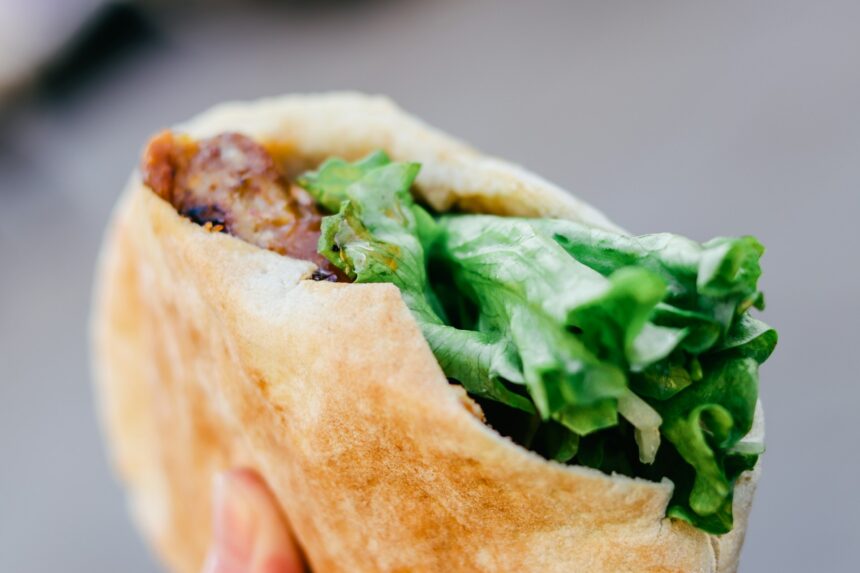
As Rabbi Amnon Yitzchak has often recounted, Ta’Omri was observing the prison routine during the week of Passover when he saw an Israeli guard casually eating a pita—the most basic form of chametz, the leavened bread forbidden to Jews during this festival. The sight was so incongruous that Ta’Omri, a student of his enemy, felt compelled to question him. His understanding was that Jews do not eat bread on Pesach.
The guard’s response changed the course of history. He simply shrugged. “So what?” he said. “That doesn’t obligate me.”
In that moment of dismissive apathy, Ta’Omri’s despair was forged into a renewed and terrible resolve. He saw not an individual’s lapse in observance, but the collective soul of his enemy laid bare. Here was a people so profoundly disconnected from their own history, their own covenant, their own identity, that their most sacred prohibitions had become meaningless suggestions. If the Jews themselves did not feel bound by the traditions that defined their claim to the Land of Israel, then that claim was baseless. A people so unmoored from their past, he concluded, could easily be uprooted from their present. Re-energized by this revelation of Jewish weakness, Salah Ta’Omri would go on to become a key figure in orchestrating the campaign of terror and bloodshed known as the Second Intifada.
Let the weight of that settle. The suicide bombings, the exploding buses, the murdered children in their beds—an entire wave of slaughter was inspired not by our strength, but by our spiritual decay, symbolized by a single Jew’s nonchalant consumption of a pita on Pesach. Our enemy did not need to find a flaw in our tank armor or a gap in our border fence. He found the breach within our soul.
The Autoimmune Disorder of a Soulless People
The prison guard’s shrug is the defining gesture of the modern, secular Israeli. It is the physical expression of a deep-seated spiritual disease, a Zionist autoimmune disorder where the nation systematically attacks the very antibodies of its own survival. When a Jew’s identity becomes a hobby rather than an obligation, he loses the ability to recognize obligation in others. He projects his own amorphous, fluid sense of self onto his enemy, assuming the Arab, too, is a creature of convenience, willing to negotiate away his core identity for comfort or cash.
He is dangerously wrong. While we were cultivating our detachment, our enemies were cultivating their convictions. They see our internal confusion and call it weakness. They see our universalist pleas for tolerance and call it cowardice. Our desperate need for approval from a hostile world, our self-abasement on global stages like Eurovision, our willingness to trade our soul for the applause of nations that despise us—these are not signs of enlightenment. They are symptoms of a terminal identity crisis, and our enemies are watching.
This disorder manifests as a grotesque inversion of compassion. We extend endless understanding to those who celebrate our murder, meticulously vetting every military action to meet the moral standards of our enemies, while directing our harshest judgment toward our own. We scrutinize the Haredim and the settlers with a venom we never apply to the surrounding culture of death. This is the “Jewish compassion deficit syndrome” in its most acute form: a nation that loves its enemies and hates its brothers. We have embraced the Enlightenment’s error of a universal, abstract morality, and in doing so, have forgotten the Torah’s specific command to be a holy nation, separate and distinct. The result is a state that handcuffs its own soldiers, prioritizing the lives of its enemies over the lives of its sons.
Ruth’s Choice: The Rejection That Forges Identity
What, then, does it mean to have a Jewish identity? For the answer, we must turn not to modern philosophers, but to the ancient fields somewhere between Moab and Bethlehem. In Midrash Ruth Rabbah, as Ruth the Moabitess pledges to join the Jewish people, her mother-in-law, Naomi, presents her with the stark reality of conversion. It is not a simple declaration of faith, but a fundamental re-ordering of one’s life. Naomi tells her, “My daughter, it is not the custom of Jewish women to go to the theaters and circuses of the gentiles.”
This is not a minor lifestyle tip. It is the very essence of identity formation. To become a Jew, Naomi teaches, is to make a conscious and painful break. It requires foregoing the “entertainments” of the surrounding culture—the public spectacles, the empty amusements, the cultural norms that stand in opposition to a life of holiness. Identity is not forged by what you embrace, but by what you are willing to reject. Ruth, a princess of Moab, becomes the foremother of King David precisely because she abandons the culture of her past to cleave to the G-d of Israel.
Her example stands as a searing indictment of our own time. We have become terrified of rejection. We immerse ourselves in the very gentile “theaters and circuses” Naomi warned against, only now they are piped directly into our homes through an open sewer of streaming services and social media. We marinate our minds in the cheap obscenity and hyperbole of a soulless society, a culture of excess that inevitably breeds violence. We then wonder why we feel so empty, so disconnected, so unable to articulate who we are.
The prison guard did not decide to eat chametz on Pesach in a vacuum. His decision was the logical endpoint of a thousand smaller choices to consume a culture that is antithetical to Torah. He was the product of a society that has forgotten Naomi’s lesson: you cannot serve two masters. You cannot drink from the poisoned well of gentile culture and expect to maintain a healthy Jewish soul.
A Call to Cultural War
The time for self-deception is over. The war against the Jewish people is not only being fought with rockets from Gaza and tunnels from Lebanon; it is being fought in our living rooms, on our screens, and in our hearts. The enemy is not just the attacker who seeks to kill our bodies, but the culture that seeks to annihilate our soul.
To survive, we must follow the example of Ruth. We must declare war on the empty and poisonous attachments to the entertainments of the gentile world. This is a call to radical action. Unsubscribe from Netflix, which peddles filth and anti-Torah values as enlightenment. Stop reading mainstream news if you are not an expert in identifying psychological warfare and propaganda. Stop voting for parties and politicians who champion a vision of Israel that is divorced from the Creator and His Torah.
Most importantly, we must stop being afraid. Stop fearing what the world will say. Stop fearing being called intolerant or primitive. As one writer has powerfully stated, we must “stop letting G-d keep catching you being afraid of anything but Him.”
This is not a call for asceticism, but for vitality. It is a call to fill the void within ourselves with the substance of Torah, so that we may once again see the world with clarity.
A Jew whose identity is absolute, whose commitment is unwavering, will not make the mistake of seeing his enemy as a reflection of his own confusion. He will see him for what he is. He will know that A is A.
Salah Ta’Omri’s spark must become our own. Let the enemy’s recognition of our weakness awaken us to the urgent need for strength. The choice is the same one that faced Ruth on the road out of Moab: to cling to the familiar poisons of the world she knew, or to embrace the demanding, life-giving truth of Torah.
Our survival depends on making the right choice.


Brilliantly powerful post!
These two ideas (and they’re phrased them) really stood out:
“…an entire wave of slaughter was inspired not by our strength, but by our spiritual decay…”
“…to cling to the familiar poisons of the world she knew, or to embrace the demanding, life-giving truth of Torah.”
Excellent.