



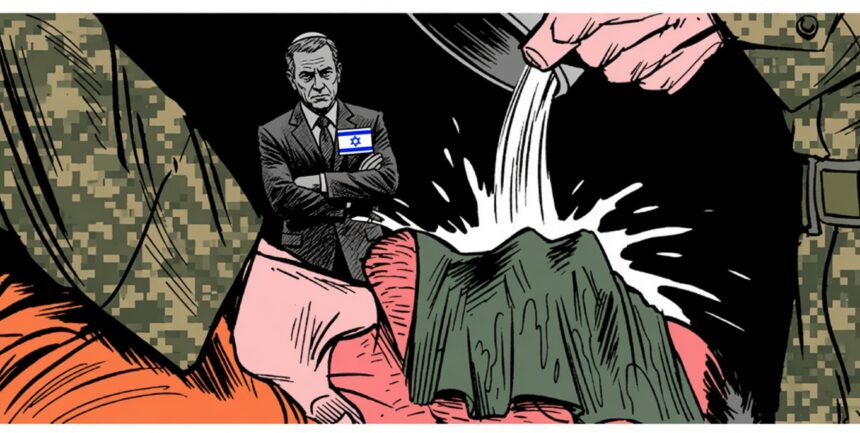
A grassroots initiative has begun urging U.S. Ambassador to Israel Mike Huckabee to back an independent investigation into the conviction of Amiram Ben-Uliel.
Ben-Uliel, an Israeli Jewish father and husband, is serving three-and-a-half life sentences for the 2015 Duma arson attack based on a confession that was extracted through severe torture by Israel’s General Security Service (Shabak). The campaign highlights what it describes as a pattern of coercion, inconsistencies in the evidence, and harsh ongoing prison conditions, and is asking the public to contact the U.S. Embassy directly.
The effort centers on Amiram Ben-Uliel’s case but points to wider questions about interrogation practices and prisoner treatment in Israel. It has drawn attention from attorneys and advocates who say the issues extend beyond one conviction.
The Amiram Ben-Uliel Case
Amiram Ben-Uliel was convicted in 2020 of throwing a firebomb in the Arab village of Duma that killed three members of the Dawabshe family. No eyewitnesses identified him. Several villagers attributed the attack to a rival Arab family amid a long-standing feud that had already produced multiple arsons against the same household. Israeli leaders announced Jewish responsibility within hours of the attack. After detaining scores of young Orthodox Jewish men associated with “hilltop youth” communities, authorities focused on Amiram.
According to court records and the official campaign site, Amiram endured 17 days of interrogation without access to a lawyer or any outside party. He resisted initially, but after the first physical assault and threats that his life would be made “bitter,” he faced a full night of severe physical torture. He later provided a confession 36 hours afterward, reportedly under the understanding that further torture would follow if he did not comply. The Lod District Court acknowledged the torture and its damaging effects but convicted him anyway. The Supreme Court upheld the conviction on appeal.
Amiram has since spent years in solitary confinement under some of Israel’s most restrictive prison conditions, with extremely limited contact with his family, including a daughter who has grown up largely without him. His current attorney, Guy Ehrenberg, has handled recent petitions for conjugal visits and improved conditions in Ayalon Prison’s religious wing. In at least one case, prosecutors withdrew their opposition after legal arguments.
Prominent rights attorney Avigdor Feldman, who represented Amiram on appeal, described reviewing an internal document that detailed the torture methods used — including duration, repetition, and specialized devices. He characterized it as the product of a coordinated effort by medical, psychological, and interrogation professionals.
Background on Torture in Israeli Security Interrogations
Israel’s use of coercive interrogation methods in security cases has been debated for decades. The 1987 Landau Commission permitted “moderate physical pressure” in certain ticking-bomb situations. In 1999, the Supreme Court ruled that torture is prohibited, while leaving open a possible “necessity defense” for interrogators facing imminent threats. Human rights groups and defense lawyers have continued to document allegations of stress positions, sleep deprivation, beatings, threats, and psychological pressure, particularly in cases involving suspected terrorists but also in matters involving Jewish security detainees.
Amiram’s case is frequently cited by advocates as a clear illustration. Lower courts found that both he and a minor co-defendant were subjected to torture, resulting in the disqualification of some confessions. Supporters argue that the practices can produce unreliable statements while making full accountability difficult.
Other Instances of Prisoner Mistreatment
Concerns about treatment extend beyond interrogation rooms into prison conditions and medical care. One recent example involves Shai Yedidi z”l, a 52-year-old prisoner in Ayalon Prison’s religious wing who died in 2025 after more than 13 years of incarceration. According to materials posted by Attorney Ehrenberg, Yedidi had complained for months about severe joint pain, breathing difficulties, and mobility problems. His complaints were reportedly not adequately addressed or escalated to proper medical treatment despite being raised with prison personnel. He ultimately died during hospitalization.
Ehrenberg, who has publicly addressed the case and indicated he is considering legal action against the Israel Prison Service for medical neglect, also represents Amiram Ben-Uliel in ongoing prison-rights matters. Advocates point to this overlap as evidence of systemic issues affecting security prisoners, including ignored health complaints and restrictive conditions.
Similar patterns of prolonged detention, limited access to counsel or independent oversight, and harsh prison environments have appeared in other security-related cases. Together, these examples form part of the broader context cited by those calling for greater scrutiny.
Why the Campaign Seeks an Independent Investigation
Supporters of the grassroots effort argue that Amiram Ben-Uliel’s conviction — based on a confession obtained after documented torture, containing inconsistencies with physical evidence, and followed by years of severe isolation — raises fundamental questions about due process. They say an independent investigation could examine the interrogation methods, the handling of exculpatory leads, and the prison conditions that followed. Such a review, they contend, would either address legitimate concerns or restore public confidence in the system.
The campaign calls these issues especially important at a time when Israel faces significant external threats. It points to Attorney Ehrenberg’s work on both Amiram’s case and other prisoner matters, such as the Yedidi case, as part of a wider push for accountability.
Resources and updates on the Amiram campaign are available at the official Hebrew site free-amiram.org.il, which includes case summaries, videos, articles, and materials for supporters.
How to Take Action
The campaign provides these direct contacts for those who wish to express support for an independent investigation:
- Email: [email protected]
- Mail: U.S. Embassy, 14 David Flusser St., Jerusalem 9378322, Israel
Write also to Ambassador Huckabee’s senior advisor, David Milstein, at [email protected] (BCC: [email protected] and [email protected]).
Organizers encourage respectful, fact-based messages. For more information on the Amiram Ben-Uliel case and ways to support the broader effort, visit free-amiram.org.il.