




In the hills and valleys of Judea and Samaria, a contest over territory is underway. One side, under Palestinian Authority auspices, pursues systematic expansion through construction, roads, and agricultural projects. The other responds with persistent Jewish civilian presence through farming and herding, viewing these actions as both practical defense and fulfillment of a deeper obligation to the land as the biblical inheritance of the Jewish people.
This is not a symmetric clash of fringe elements. It is a confrontation between opposing national and ideological projects. Jewish activists in this arena operate with unapologetic clarity: the land is not neutral ground to be conceded but the inheritance that must be held and redeemed through active presence. Their resolve draws from the tradition that commands remembrance and confronting the forces that seek erasure of Jewish sovereignty, paired with a commitment to strategic humility in method rather than arrogant overreach.
Ideological Grounding: Command, Memory, and the Defense of Inheritance
Jewish tradition contains a divine imperative to confront existential threats to the people and their mission. The commandment to remember Amalek’s unprovoked attack and to blot out that memory is framed not as historical grievance but as the necessary opposition to an enduring archetype of irrational, genocidal hatred aimed at Israel and the sovereignty of G-d. In every generation, forces that seek to erase Jewish presence or sovereignty must be opposed with resolve.
This imperative is balanced by the principle of humility. The biblical model of King Yehoshafat, facing overwhelming enemies, shows the proper stance: acknowledging human limitation while placing trust in divine assistance. His prayer — “We have no might against this great horde… but our eyes are upon You” — produced victory. Reliance on human strength and hubris, by contrast, often leads to strategic failure and condemnation.
For the activists living this reality, these principles translate into a clear mission. The land of Judea and Samaria is the ancestral and divine inheritance of the Jewish people. Maintaining and extending Jewish presence upon it through cultivation, herding, and communities is an active expression of that inheritance. It is not optional idealism but the necessary response to efforts aimed at displacement. The approach favors flexible, adaptive presence that can sustain itself under pressure rather than brittle structures easily removed. This is the ideological grounding that sustains unapologetic action on the ground.
The Strategic Reality: Documented Advance on One Side
The urgency of this mission is measured in concrete data. Regavim’s ongoing “War of Attrition” monitoring, based on fieldwork, aerial photography, and GIS mapping, documents the scale of “Palestinian” construction and agricultural activity in Area C, the region under full Israeli civil and security jurisdiction.
As of the latest updates, more than 97,566 illegal Palestinian structures stand in Area C. Earlier comprehensive tallies already exceeded 80,000, with built-up areas covering approximately 150,000 dunams — roughly twice the total footprint of all Jewish settlements in Judea and Samaria combined. In 2022 alone, 5,535 new illegal structures were recorded, representing an 80 percent increase over the prior year’s rate. Agricultural land seizure has been a particularly effective method since around 2012, allowing large contiguous areas to be claimed through farming and related infrastructure, often with foreign support. Illegal road networks have nearly doubled over the past fifteen years, creating practical connections and barriers that facilitate further expansion.
These patterns, according to Regavim’s analysis, are strategically placed to build contiguity, isolate Jewish communities, and alter the territorial balance. The cumulative effect is a sustained advance that, if unchecked, would severely constrain Jewish presence and security in the heart of the biblical inheritance. This documented reality explains why activists view their own presence not as optional but as the decisive counter in the contest over the land.
Advancing the Line: Presence as the Jewish Front
For those living and working in these areas, the contest is experienced as a front line that must be held and, where possible, advanced. Elisha Yered, a resident of the Ramat Migron outpost, has described the scope of the effort plainly. He has stated that hundreds of Israelis — “adults with families, combat soldiers who served in the reserves during the war, everyone” — are doing “everything they can to expel” Palestinians. This is presented not as isolated excess but as part of a deliberate push to secure and extend Jewish effective control against systematic displacement.
This framing reflects a consistent strategic logic. Jewish civilian agricultural and herding activity functions as the forward edge of presence. Herding teams and farming operations create buffers around communities while responding to incidents such as arson on grazing lands or attempts to restrict access. When theft or harassment occurs, rapid coordination among those on the ground denies easy gains in the critical hours before formal forces arrive. The approach is built for adaptability: teams structured to maintain operations even when pressure requires relocation, ensuring that overall contiguity and security are not easily halted.
The result is a form of territorial pressure that pushes back against expansion on the other side. Where the opposing effort advances through construction and agricultural claims, the response is sustained Jewish presence that reasserts control and denies incremental losses. Yered and others document these incidents from this perspective — prior aggression met with necessary pushback and continued presence — while rejecting claims that isolate Jewish actions from the broader contest. In their view, every grazing area secured, every buffer maintained, and every advance against displacement moves the effective line of Jewish control forward.
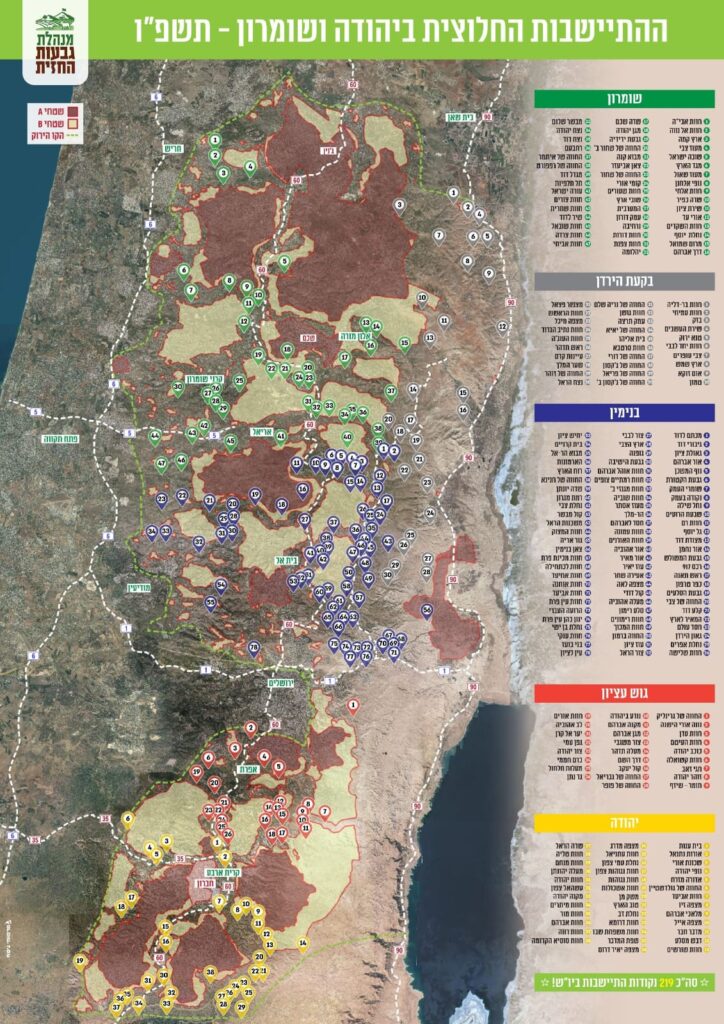
This is the unapologetic logic at work. Jewish actions, including confrontational ones, are understood as instruments in a larger struggle to hold and extend the line of presence in the ancestral land. It is not aggression for its own sake but the necessary counterpart to documented efforts aimed at reducing and isolating Jewish communities. The ideological conviction that the land is the inheritance that must be redeemed sustains the work even under administrative pressure or international scrutiny. Humility lies in the flexible method; resolve lies in the refusal to yield ground that belongs to the Jewish people.
Voices from the Field and the Network of Presence
This perspective is carried forward by activists who live the daily realities of the front. Yered’s reporting and public statements consistently highlight both the challenges — arson, stone attacks, administrative measures — and the necessity of continued presence and response. Ariel Danino, another figure in this network, has documented incidents and criticized what he describes as politically motivated actions against Jewish activists, while emphasizing the importance of exposing threats and maintaining resolve.
Platforms such as HaKol HaYehudi amplify these field accounts, publishing raw documentation and analysis from those on the ground. Together they form part of an infrastructure that records the contest without filtering through external narratives. Their work makes visible the day-to-day friction and the ideological commitment that treats Jewish presence as the decisive factor in holding and advancing the line.
The Imperative of Presence
The combination of ideological conviction and documented reality creates a clear imperative. Regavim’s data on the acceleration of illegal structures, agricultural claims, and road networks in Area C shows one side actively working to reshape the map. Jewish activists respond with their own form of persistent presence — farming, herding, and adaptive settlement — that creates buffers, enables rapid response, and extends effective control.
This is not presented as optional or extreme but as the necessary expression of a people refusing erasure from its inheritance. The front line is not a metaphor but the lived reality of every hill and grazing area where presence is contested.
By maintaining and advancing that line through unapologetic action rooted in tradition and strategic adaptability, these activists see themselves as fulfilling both a practical duty and a deeper obligation.
The land remains in Jewish hands not through declarations alone but through the daily work of those who refuse to retreat from it.
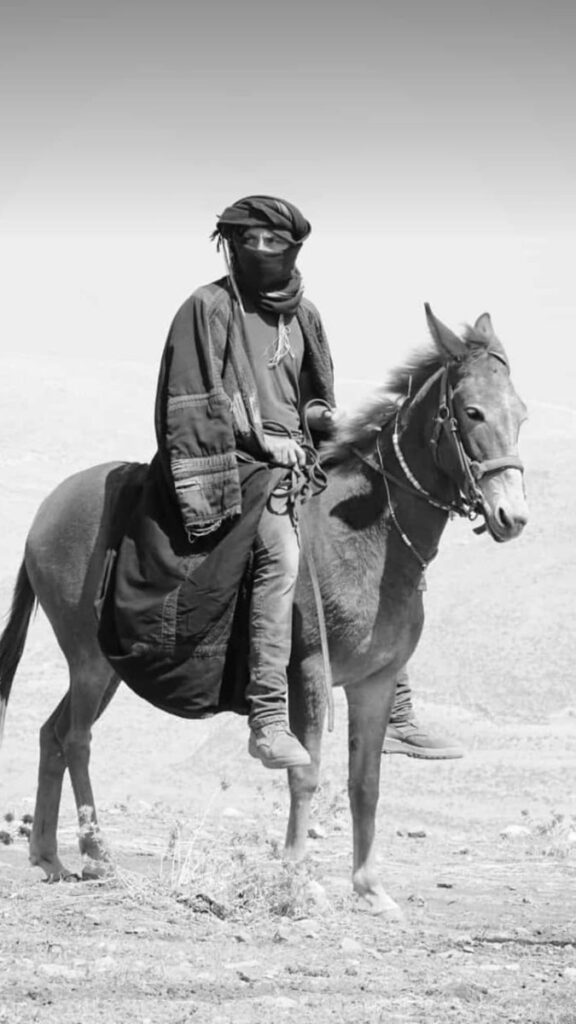

Our heroes, the best evidence that they are on the right path are a) their success b) hatred towards them emanating by our internal and external enemies
What a great article… and discussion… Is this audio AI? It sounds too smooth to be true.