



In the iconic 1962 Twilight Zone episode “To Serve Man,” extraterrestrial beings known as Kanamits arrive on Earth during a time of global crisis, offering advanced technology to solve humanity’s woes—energy shortages, famine, and war.
Their book, To Serve Man, is initially interpreted as a humanitarian manifesto, sparking widespread trust and optimism. Nations disarm, deserts bloom, and humans eagerly board Kanamit ships to visit their supposed paradise.
But the illusion shatters when a linguist decodes the book’s true meaning: it’s a cookbook, revealing the aliens’ plan to consume humanity. This unsettling story warns of the dangers of misplaced trust and the misinterpretation of seemingly benevolent intentions.
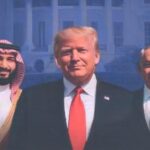
The Abraham Accords, signed on September 15, 2020, bear an unsettling resemblance to this tale. Hailed as a historic breakthrough, these agreements normalized diplomatic relations between Israel and several Arab states, including the United Arab Emirates, Bahrain, Morocco, and Sudan.
Brokered by the United States under President Donald Trump, the accords promised peace, economic prosperity, and regional stability, fostering direct flights, trade partnerships, and security cooperation.
Yet, beneath the surface, some analyses suggest hidden risks that could undermine Israel’s sovereignty, particularly over Jerusalem’s Temple Mount, Judaism’s holiest site. Like the cookbook, the accords may not be what they seem, serving interests that could end Israel as a Jewish state.
The Promise of Economic Integration
The Abraham Accords have been celebrated for their economic potential. Since their signing, trade between Israel and the UAE has surged, with agreements spanning tourism, technology, and agriculture. Direct flights connect Tel Aviv to Dubai, and business partnerships have flourished, positioning Israel as a regional hub for innovation. The accords also align with broader initiatives like the India-Middle East-Europe Economic Corridor (IMEC), which includes shared infrastructure projects such as electricity cables and hydrogen pipelines.
However, this economic integration carries risks. As Israel becomes entwined with the economies of its Arab neighbors, particularly Saudi Arabia—a key player despite not yet being a signatory—it may face political pressures that erode its autonomy. Economic dependencies could translate into leverage, constraining Israel’s ability to make independent decisions on trade, security, or foreign policy. This “gilded cage” of prosperity could trap Israel in a regional framework where its sovereignty is a nostalgic formality at best.
The Temple Mount: A Sovereignty Flashpoint
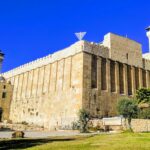
At the heart of concerns about the Abraham Accords lies the status of Jerusalem’s Temple Mount, the site of the ancient Jewish Temples and therefore claimed by Muslims as the location of the Al-Aqsa Mosque. Currently administered by the Jordanian-led Waqf, the Temple Mount is a delicate balance of religious and political interests. Some analyses warn that Saudi Arabia seeks to expand its influence over this sacred site, replacing Jordan’s role by 2028.
Historical patterns support this concern. In the 1980s, Saudi Arabia reportedly offered $100 billion to reshape the region, an offer rejected by then-Prime Minister Menachem Begin. More recently, in 2023, Saudi Arabia appointed an ambassador to the Palestinian Authority and a consul in eastern Jerusalem, alongside economic aid to Jordan, signaling a strategic push for influence in Jerusalem. Forecasts suggest that economic integration tied to the accords could pave the way for Saudi custodianship of the Temple Mount, a move that would strike at the core of Jewish sovereignty and identity.
Cognitive Warfare and the Shaping of Perceptions
The promotion of the Abraham Accords may involve sophisticated strategies to shape public perception, a tactic akin to cognitive warfare. By emphasizing shared threats, such as Iran’s nuclear program, proponents can rally support for the accords while downplaying potential downsides. For example, the claim that Iran is an existential threat may be amplified to justify concessions, such as Israel’s integration into a regional framework that benefits other powers. This manipulation could obscure the threat to Israel’s sovereignty, presenting the accords as an unassailable path to peace.
Trump said Iran was the main obstacle to expanding the accords, but admitted, “For a while, I actually thought Iran might join too.”
Concerns have been raised that the accords prioritize access to the Temple Mount for Muslim worshippers, at the expense of Jewish control, highlighting questions about the true priorities of the agreements.
Israel as a Geopolitical Pawn
Critics argue that the Abraham Accords position Israel as a subordinate player in a broader U.S.-Saudi strategy. Israel’s military actions, such as strikes on Iranian targets, may serve Saudi interests by countering a regional rival, yet leave Israel to bear the costs of retaliation.
Moreover, Saudi Arabia has stipulated that its normalization of relations with Israel hinges on the establishment of a Palestinian state. This condition would come at the expense of Israeli sovereignty in Jerusalem, Judea, and Samaria, areas of profound importance to Israel. The creation of such a state could endanger hundreds of thousands of Jewish lives, exposing them to heightened security threats and potential displacement amid shifting territorial control.
U.S. policy shifts further complicate the picture. In 2025, actions such as lifting sanctions on Syria despite Israeli objections and demanding a halt to Israel’s Gaza offensive suggest that American priorities may not always align with Israel’s security needs. These dynamics raise concerns that Israel is being maneuvered into a role that serves external agendas, potentially at the expense of its own interests.
A Path Forward: Reforming Institutions to Safeguard Sovereignty
To navigate the complexities of the Abraham Accords, Israel must strengthen its sovereignty and security through a dual approach: institutional reform and unwavering commitment to its core interests. A critical first step is electoral reform. The current party-list system often prioritizes political agendas over the people’s will, leading some to call for a boycott of elections until a district election system is adopted. In this proposed system, citizens would vote for individual candidates rather than fixed party lists, fostering a Knesset that is more representative and accountable.
Until these flaws in Israel’s political and judicial institutions are addressed, critics argue that participating in elections legitimizes a broken system. Once reformed, elections can resume, enabling the emergence of a truly independent Knesset. This new body would appoint ministers and officials dedicated to the nation’s welfare—not party interests—while ensuring the IDF becomes a genuine army of the nation, enhancing Israel’s security and sovereignty instead of Saudi Arabia’s.
These institutional changes are vital to safeguard Israel’s core priorities. Control over holy sites, such as the Temple Mount, must remain unequivocal, rejecting foreign influence in Jerusalem. Strengthening communities in Judea, Samaria, and Jerusalem reinforces Israel’s presence and deters external pressures. A reformed political system would provide the strategic foresight and national unity needed to balance the economic and diplomatic benefits of the Abraham Accords with vigilance, ensuring Israel avoids compromising its independence—much like the cautionary tale of misplaced trust in To Serve Man.
Beyond institutions, some advocate for a deeper reliance on cultural and spiritual resilience. Emphasizing Jewish identity and purpose can fortify sovereignty from within, complementing external reforms. By blending these efforts, Israel can secure its future as a Jewish Commonwealth, governed by representatives of the people, not parties, while maintaining its rightful place in the region.
‘It’s a Cookbook!’
The Abraham Accords, like the Twilight Zone cookbook, promise a utopian future of peace and prosperity.
Yet, the potential for Saudi influence over the Temple Mount, the manipulation of public perception, and Israel’s role as a geopolitical pawn suggest that these agreements may conceal a dangerous “cookbook.”
Israel must approach the accords with eyes wide open, ensuring that the pursuit of regional integration does not come at the cost of its sovereignty, security, or sacred heritage.