


On January 15, 2024, at the “Lessons from Gaza” conference in Jerusalem, Eliahu Yosian—an Iranian-born Israeli analyst, Unit 8200 veteran, and winner of the Israel Security Award—stepped to the podium and delivered a proposal that should have sent shockwaves through anyone committed to independent Jewish self-defense:
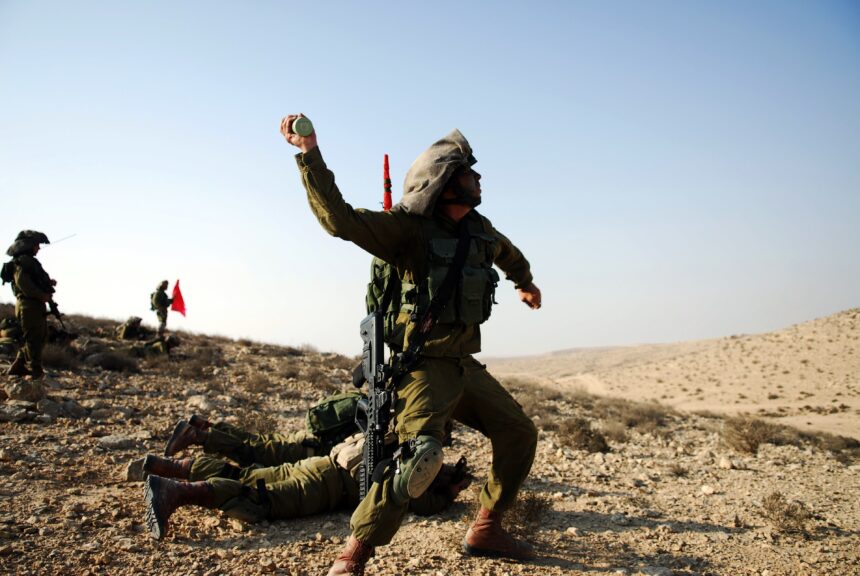
Each Israeli combat soldier has three years of experience, and we can train the Saudi and Arab soldiers with whom we have a common interest in our combat methods. Why should a discharged combat soldier look for a job at a train station for 35 or 40 shekels an hour, instead of being part of an Israeli-Arab NATO training unit? We have technology and cyber skills and they have money and depth.
To the casual listener, this was framed as a pragmatic, hard-headed solution to veteran underemployment and regional security. But the phrase “Israeli-Arab NATO training unit” is not casual rhetoric. He framed this explicitly within the Abraham Accords framework and the anticipated normalization with Saudi Arabia.
In military and geopolitical terms, NATO is not a loose diplomatic partnership; it is a highly structured, treaty-bound alliance characterized by integrated command structures, standardized tactical doctrines, shared intelligence networks, and a mutual surrender of unilateral decision-making. By invoking this specific model, Yosian was describing the structural integration of the Israel Defense Forces (IDF) into a broader, Saudi-led regional military framework under the umbrella of the Abraham Accords.
This commentary does not exist on the fringe. Yosian’s background places him at the intersection of the Israeli security establishment and national media. His prominent public platform reveals a much deeper, systemic mechanism: the way aggressive, right-wing, and religious-Zionist rhetoric can functionally serve to sanitize and normalize a globalist integration agenda for a public that would otherwise fiercely resist it.
The Anatomy of a Pacifier: Eliahu Yosian and the 8200 Pipeline
To understand how this structural dynamic operates, one must examine the institutional trajectory of Eliahu Yosian. Born in Isfahan, Iran, in 1980, Yosian immigrated to Israel in 2003. He spent approximately fifteen years serving in the IDF’s elite Unit 8200, rising to command and training roles, and eventually receiving the prestigious Israel Security Award.

Unit 8200 is the Israel Defense Forces’ elite signals intelligence (SIGINT), cyber intelligence, and cyberwarfare unit. Often compared to the U.S. NSA, it is widely regarded as one of the world’s most advanced military intelligence organizations. Service in the unit is highly selective, involving rigorous training in cryptography, network hacking, data analysis, software development, and real-time intelligence operations. Crucially, Unit 8200 also serves as a direct pipeline to the private high-tech sector, producing thousands of alumni who have founded or led global tech giants, venture capital firms, and cyber-surveillance companies. This ecosystem is closely tied to transnational capital, global tech networks, and administrative elites who prioritize regional and international integration over the absolute claims of national sovereignty.
Until the events of October 7, 2023, Yosian was not a major public figure, operating primarily within niche intelligence and academic circles. In the wake of the disaster, however, his public profile experienced a dramatic rise, and he quickly became a ubiquitous expert on right-wing and religious channels like Channel 14 and Arutz Sheva, where he is routinely introduced as the “Iranian-born Israeli intelligence officer / Unit 8200 veteran” who received the Israel Security Award.
Yosian’s media brand was built on raw, uncompromising, and highly hawkish rhetoric. He asserted that “there are no innocents [in Gaza], there are 2.5 million terrorists,” criticized Western liberalism, and advocated for the early, massive destruction of Gazan infrastructure.
This hyper-nationalist, ultra-hawkish framing is precisely what makes his commentary function so effectively to neutralize popular resistance to regional integration. By establishing unassailable right-wing and religious-nationalist credentials, Yosian’s public commentary provides a protective cognitive wrapper. When he pivots from calling for the annihilation of Gaza to proposing that Israeli combat veterans train Saudi troops under an “Israeli-Arab NATO,” the hawkish presentation disarms his audience. The public is led to accept a globalist regional realignment because it is delivered by a voice associated with uncompromising patriotism. The hawkish rhetoric acts as a cognitive pacifier, lulling the public into comfortable acquiescence while the structural command of the IDF is quietly integrated with its historic regional adversaries.
The Historical Blueprint: The 2001 Yesha Council Betrayal
The strategy of using a patriotic, pro-sovereignty front to neutralize resistance and facilitate material surrender is not a recent invention. The January 2024 conference where Yosian presented this regional framework was co-organized by Nadia Matar’s Sovereignty Movement and the Yesha Council. To understand the true function of this partnership, one must look back twenty-five years to a documented historical precedent found within archival records and local security correspondence from 2001.
During the height of the Second Intifada in 2000 and 2001, as Jewish families in Judea, Samaria, and Gaza (Yesha) faced a relentless wave of sniper fire, bombings, and infiltrations, the Yesha Council and its U.S. fundraising arm, the One Israel Fund (OIF), presented themselves as the sole authorized representatives of the yishuvim.
In public advertisements, media appearances, and direct-mail fundraising appeals to the Diaspora, the leadership of the Yesha Council projected an image of energetic, lifesaving support. On February 13, 2000, Steven S. Orlow, then-President of the One Israel Fund, wrote a letter defending the organization’s work, pointing to:
…the ambulances, the trauma centers, the emergency rescue equipment, the security items, the day care centers—and the list goes on and on—that the ONE ISRAEL FUND is responsible for placing throughout YESHA over the past several years…
But behind this public presentation lay a documented reality of systematic deprivation and paralysis, as recorded in detailed correspondence of that era.
In January 2001, an independent survey conducted by local security advocates achieved an extraordinary 86.6% response rate, securing detailed reports from 123 out of 142 communities. The findings of this independent survey were stark. In total, 96% of responding communities—representing 118 out of 123 towns—reported receiving absolutely no security equipment or aid from the Yesha Council or the One Israel Fund. Furthermore, 94% rated the Yesha Council’s performance as unsatisfactory, and 77% called for immediate oversight of the Council by the residents themselves.
The primary source records—dozens of official letters signed by local security coordinators and town secretaries during the peak of the conflict—reveal a consistent pattern of communities left unequipped on the front lines.
In Kfar Darom, on January 14, 2001, town secretary Meir Ben-Yishai confirmed that the community had received no budgetary assistance of any kind from the Yesha Council, listing desperate, unmet needs for basic fire equipment, trauma medical kits, and generators. In Atzmona, on January 21, 2001, town secretary Efraim Goldstein wrote that they had received no equipment from the Yesha Council, pleading for a single emergency generator, four night-vision binoculars, and four communication radios. In Dolev, on February 18, 2001, Ravshatz Avi Zangi stated that the settlement of Dolev had received no equipment from any entity in the Yesha Council, noting that the IDF did not provide basic protective gear and the Yesha Council had entirely ignored them. In Emanuel, on January 23, 2001, Ravshatz Moshe Abrahams Cohen detailed a 200% increase in local security costs alongside a total lack of basic gear, concluding with a plea to “not let this candle burn out.”
The letters from yishuv after yishuv—including Halamish, Nisanit, Peduel, Beit Horon, Givat Ze’ev, Ma’aleh Shomron, and Har Bracha—all repeated the exact same reality. While the Yesha Council and the One Israel Fund raised millions of dollars in the Diaspora on the image of supporting embattled pioneers, the actual pioneers were systematically starved of the medical, communication, and security gear required to defend their lives.
A common counter-analysis would attribute these severe shortages to logistical failure, administrative oversight, or the chaotic conditions of the Second Intifada. However, this administrative incompetence explanation is systematically refuted by two critical factors in the data:
First, the survey itself achieved an extraordinary 86.6% response rate, demonstrating that local communication and administrative channels were highly functional. Information flowed clearly and rapidly between the communities and the canvassing office.
Second, the data shows a uniform, systemic deprivation rather than random, localized errors. Incompetence or clerical disorganization is typically characterized by uneven, chaotic distribution—some settlements receiving excess, some receiving incorrect gear, and some receiving nothing. In contrast, the survey documented a uniform 96% failure rate (118 out of 123 communities) across highly diverse, scattered geographic locations. This level of uniformity across a wide and varied region indicates a standardized, systemic withholding rather than localized clerical errors or random war-time friction.
By monopolizing the representation of the settlements, the Yesha Council functioned as an administrative barrier. It successfully captured the public sphere of “resistance,” diverted funds away from local, independent defense efforts, and fostered an illusion of official protection. This neutralized potential bottom-up, disciplined resistance to the Oslo capitulation, ensuring that the communities remained operationally incapacitated, dependent, and paralyzed.
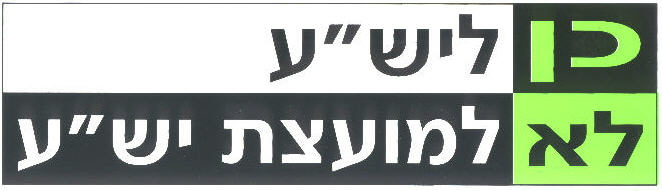
As the Nachaliel report concluded: “Playing a deceptive leadership role to render Yesha incapacitated makes the Yesha Council the central cohesive element of Yesha’s surrender; and the linchpin of Israel’s phased destruction.”
Scaling Up the Script: The JNS Summit and the Managed Threat
Today, this exact same operational script is on full display in the national security framework. The national establishment and its elite media echoes ceaselessly promote a glowing vision of Israel as a military and high-tech superpower.
This narrative is the centerpiece of events like the upcoming JNS International Policy Summit in Jerusalem. Convening top-level government officials, diplomats, and leading thinkers, the summit is designed to project strength, debate media bias, and engage in defensive hasbara. Yet, like the Sovereignty Movement conferences, the JNS Summit functions to celebrate and shield the very political figures—most notably Prime Minister Binyamin Netanyahu—who have presided over the systematic erosion of independent Jewish sovereignty, including the managed policies that contributed to the conditions of October 7, 2023.
This points to a broader, systemic failure: mainstream outlets that suppress or distort inconvenient truths, and much of the “pro-Israel” ecosystem that operates as defensive hasbara—reflexively shielding official narratives even when those narratives actively undermine long-term Jewish sovereignty.
Meanwhile, a quiet but systematic regional realignment is advancing: the emergence of a Saudi-led Middle Eastern Union that is integrating Israel into shared economic, military, and administrative frameworks. This process is eroding independent Israeli decision-making over Judea and Samaria and core national interests, often with the acquiescence of Israeli elites who prioritize regional integration over biblical and national claims.
Yosian is not the architect of this policy. He is, however, one of its most consistent public advocates—a credible voice who simultaneously warns of the Iranian danger and promotes the very military integration that transfers Israeli know-how and operational experience to the same regional partners who are being positioned as Israel’s future “partners” in a Saudi-led framework.
Just as the Yesha Council used the visual of the settlements to raise funds while operationally starving them of self-defense, the national establishment uses the flag of Israel and hawkish hasbara to project strength while operationally locking the IDF into joint command structures that possess a functional veto over Jewish self-defense.
Mapping the Mechanics: The Functional Capture of Resistance
To understand the strategic trajectory connecting 2001 to the present era, one must analyze the institutional mechanics of a highly specific phenomenon: the surrogate containment structure. These entities do not operate through open betrayal; rather, they function as cognitive shock absorbers designed to capture, manage, and ultimately neutralize the political and physical resistance of a target population.
The operational architecture of a surrogate containment structure relies on three distinct, sequential phases:
First, in the monopolization of representation, the entity establishes itself as the sole authorized, legitimate channel of advocacy, representation, and material resource distribution for a group facing an existential threat. By capturing this platform, it successfully preemptes the emergence of independent, bottom-up leadership.
Second, through rhetorical over-compensation, the entity projects highly intense, emotionally satisfying messages of defiance to maintain its legitimacy and insulate itself from scrutiny. This aggressive public posture acts as a cognitive sedative, lulling the target population into a state of comfortable passivity under the illusion that a robust authority is aggressively fighting their battle.
Third, the final phase involves operational disarmament and integration. Beneath the shield of this uncompromising rhetoric, the structure actively starves the target population of the physical and operational means to act unilaterally, quietly managing their assimilation into larger, dependent frameworks where independent self-defense is structurally impossible.
When we turn our gaze to the contemporary landscape, we find an institutional model that operates on the exact same structural frequencies.
As previously shown with Yosian, this is the classic phase of Rhetorical Over-Compensation. It is this very patriotic, hardline credential that allows him to step onto a “Sovereignty” stage and smoothly introduce a proposal for a “Hebrew-Arab NATO training unit” where Israeli combat soldiers train their regional partners. Under any other wrapping, a proposal to transfer Jewish combat methods and signals intelligence experience to historical adversaries would be recognized as an operational security disaster. Yet, wrapped in Yosian’s hyper-hawkish sedative, the integration is neutralized, packaged as a pragmatic economic triumph for discharged veterans.
Similarly, consider the functional architecture of elite gatherings like the JNS International Policy Summit. The event occupies the space of Monopolization of Representation, presenting itself as the premier, authoritative forum for defenders of Jewish sovereignty to debate media bias and project strength. Yet, this glossy, defiant exterior serves to shield and celebrate the exact political establishment that has presided over the systematic erosion of independent self-defense.
Underneath the jingoistic speeches of the summit, the physical reality is quietly advancing: the integration of Israel’s defense arrays into joint CENTCOM grids, standardizing operations with regional partners under the Abraham Accords, and subjecting unilateral self-defense to an external veto. The summit provides the comfortable cognitive illusion of strength, ensuring that the target population remains intellectually occupied with “media bias” while the actual, physical machinery of independent command authority is surrendered.
When we place the 2001 Yesha Council letters side-by-side with the modern phenomenon of Yosian’s “NATO” training proposals and the hasbara theater of elite summits, we do not need to rely on simplistic labels or conspiratorial accusations. The structural alignment speaks for itself. If an institution or public voice monopolizes the platform of defense, projects a highly satisfying posture of uncompromising defiance, yet systematically delivers the population into a state of integrated, physical dependency on foreign frameworks, it is performing a highly specific, time-tested function.
The Theological and Moral Mandate: A Return to First Principles
This systemic betrayal of trust is more than a political failure; it is a profound moral and theological violation. Local documentation from 2001 explicitly invokes the timeless ruling of the Aruch HaShulchan (Choshen Mishpat 426) on the absolute biblical obligation of Lo Ta’amod Al Dam Re’echa (“Do not stand idly by your brother’s blood”):
One who sees his neighbor drowning or being attacked… and is capable of personally rescuing him or hiring others to rescue him, and failed to rescue… violates the prohibition ‘Do not stand idly by your brother’s blood’… And all the more so is one obligated to prevent injury or loss to the many.
To claim the exclusive right to represent and protect the lives of the Jewish people, and to then use that monopoly to disarm them, starve them of material defense, and integrate them into the frameworks of their natural predators, is a betrayal of cosmic proportions. It is the very dynamic warned of by our Sages in Sanhedrin 97b: that in the steps preceding redemption, “the face of the generation will be like the face of a dog,” and “truth will be entirely absent,” replaced by deceptive, hollow leadership structures.
The Jewish people must awaken to the fact that their survival cannot be outsourced to globalist economic corridors, joint regional commands, or the deceptive hasbara of elite summits. The path forward demands an uncompromising return to first principles, starting with the rejection of managed illusions. The public must recognize that both the “pro-sovereignty” establishment and the elite policy conferences are part of a managed script designed to foster comfortable inaction and dependency.
Following this, Israel must reassert unilateral command, reclaiming absolute, uncompromised command authority over every single square inch of the biblical homeland and refusing to grant any foreign power, joint radar grid, or economic pact veto power over Jewish self-defense.
Finally, the Knesset must pass binding sovereign legislation declaring Israeli sovereignty indivisible, affirming that the IDF answers solely to the sovereign Jewish nation and the God of Israel, and outlawing any international agreement that subordinates independent military decision-making.
Anything less than absolute, independent sovereignty converts the Jewish army into a mercenary force in someone else’s regional project, preparing the ground for the final, irreversible trap. The time to tear down the sovereignty illusion and choose genuine, Torah-guided self-reliance is now.


Great elucidation.
Did not know that about the Yo”SH Moetza or JNS, but it all weaves together quite convincingly (if not dismayingly, as the truth often does).
Kudos on connecting all the dots like that.