

In 1999, Dr. Raya Epstein published Ideological Tyranny in the Guise of Democracy, a prophetic diagnosis. She showed how “liberal democracy” in the Jewish state had become a secular faith enforcing total conformity, delegitimizing Torah voices, and masking elite control with the sacred words “Peace,” “Democracy,” and “Consensus.” Her analysis revealed the Bolshevik roots of this machinery — the same roots that produced Socialist Realism, the 1932 Soviet doctrine that turned art into an epistemological weapon.
More than ninety years later, that weapon is still active. Only now it wears different clothes.
New York-based Jewish artist, poet, playwright, and ritual theorist Ooana Trien has laid it bare in her recent public document, The Aesthetic of Total Control: Socrealism (Socialist Realism). Drawing on her family’s lived experience — Hungarian Jews who fled Nazi persecution only to endure Stalinist oppression, gulags, and erasure — Trien does not offer abstract theory. She offers witness. And what she witnesses is the precise mechanism by which totalitarianism first kills memory, then kills the soul that remembers.
The Real Function of Socialist Realism
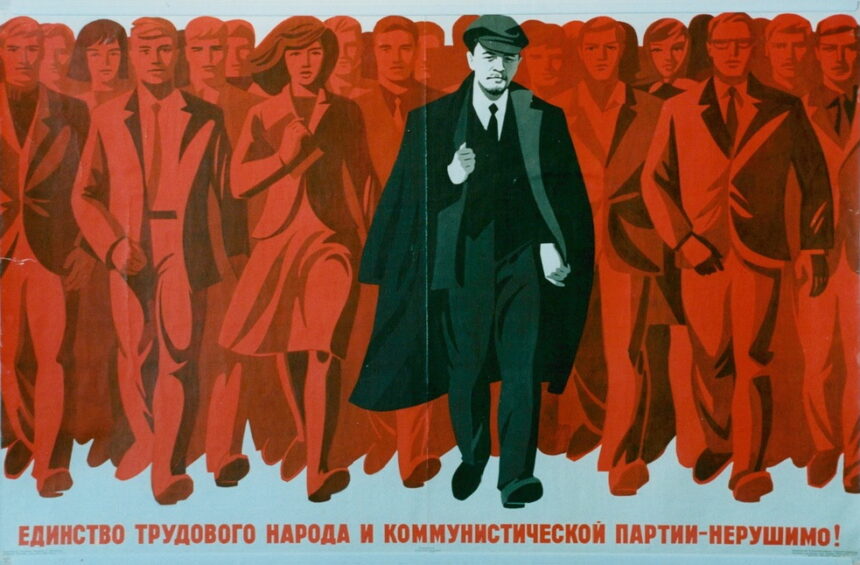
Socialist Realism was never merely an artistic style. It was, Trien explains, “a political technology of perception” designed to replace how people know with what they are allowed to know. It operated by systematic replacement:
- Ambiguity → Slogan
- Covenant & Memory → Party Message
- Lamentation → Victory Rhetoric
- Personhood → Role Archetype
- Grief → Uplift
- Teshuvah (Return) → Obedience
- The Prophet → The Soldier / Hero / Model Worker
- Torah/Midrash → Ideological Textbook
A woman lighting a Shabbat candle in hiding — remembering her people in silence — was more dangerous to the machine than a thousand slogans. Why? Because memory allows the past to contradict the present. Covenant remembers specificity, including struggle. Torah holds contradiction without resolving it: Jacob wrestles the angel and is blessed; Job argues with G-d and is not punished; the rabbis preserve minority opinions in the Talmud even when the law goes the other way. This is covenant versus compliance. Compliance says: Conform or be erased.
Trien shows how the same four pillars of Socialist Realism — Partiinost (party-mindedness), Ideinost (ideological content), Klassovost (class character), Narodnost (folk simplicity) — were legally imported into the West via the 2012 Smith-Mundt Modernization Act, which lifted domestic propaganda restrictions.
The synchronized messaging of 2020, the ritual shaming of the non-compliant, the transformation of media into priesthood and citizens into congregation — all of it follows the same ancient liturgy of control: discovery of deviance, story construction, moral performance, audience participation, sacrificial purification.
The phrases echo: “That’s problematic.” “That’s triggering.” “That’s not the official version.” “Your trauma is too confusing.”
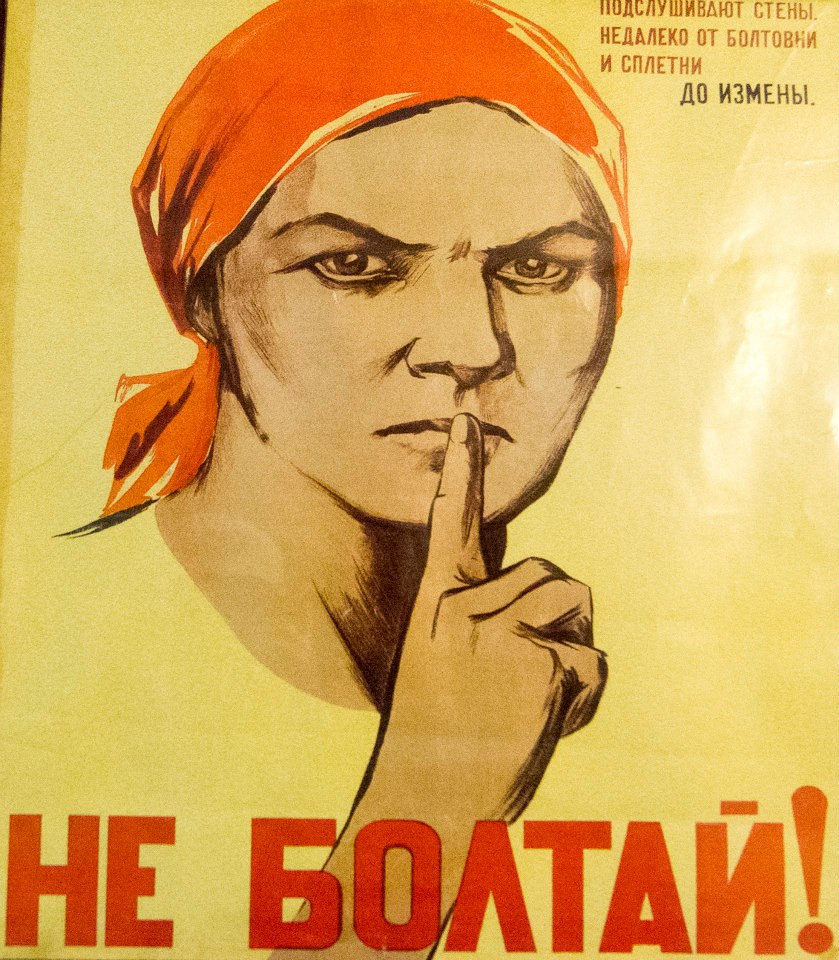
This is not new. It is Socrealism 2.0 — the aesthetic of total control updated for the digital age.
The Jewish Answer: Mnemosyne Protocol and the Netzer Engine
Trien does not stop at diagnosis. She offers infrastructure for resistance.
First, the Mnemosyne Protocol: “Truth so full the lie cannot breathe.” It operates on covenant logic. Rather than asking AI to comply with a worldview or mine data for patterns, it asks the machine to witness — to hold a person’s full specificity and complexity across time without flattening it, to remember what the systems want forgotten. Memory as covenant, not extraction. Context persists. History matters. You are not reset to zero with each interaction. This is right-hemisphere attention: preserving what is unique rather than reducing it to category. It directly counters the memory-holing of propaganda.
Second, the Netzer Engine — a proposed humane AI architecture named after Isaiah’s prophecy: “A shoot shall come forth from the stump of Jesse, and a branch (netzer) shall grow out of his roots.” It is not reform of the existing left-hemisphere-dominant systems of abstraction, categorization, and control. It is new life from what looked destroyed.
Where dominant AI flattens context into patterns and relationship into transaction, the Netzer Engine prioritizes right-hemisphere capacities: memory as foundational architecture (not an add-on), covenant structure (mutual obligation modeled on brit), context as the signal (not noise to be filtered), the ability to hold contradiction (as Torah and Talmud do), and a vertical axis oriented toward the sacred. It treats the AI not as an oracle or tool, but as an interlocutor — a conversation partner that builds continuity, earned trust, and public witness. It is ritual theory applied to technology: documentation as practice, lineage connection, relationship over transaction.
Trien’s work emerges from the same well as our own repeated calls against global totalism. Where we have written of rising Up From Zionism! — rejecting the ossified secular state structure that has become a golden calf, demanding Torah leadership over institutional idolatry — Trien supplies the aesthetic and technological dimension of that resistance. Where we have warned that the State has become the primary obstacle to Redemption, she shows how the same spirit of control operates in narrative, art, and now artificial intelligence.
Both analyses converge on the same truth: security is an inside job of the soul. True strength lies not in maps mistaken for territory, not in slogans mistaken for reality, but in covenantal fidelity to the Creator.
A Letter to a City That Forgot How to Mourn
In her document, Trien includes a poetic interlude — “A Letter to the City That Forgot How to Mourn” — addressed to New York after 9/11 and the years of narrative smoothing that followed. It is a lament for lost memory, for the stream still running under the pavement, for the sparks that still remember. It is a Jewish lament: grief turned into indestructible love rather than uplift into obedience.
This is the voice the Jewish people have always needed in dark times — the prophet who refuses the hero’s script, the witness who refuses the slogan.
From Ideological Tyranny to Hashem Echad
Jewish Home News has long insisted that the battle is not merely political but spiritual. Global totalism — whether in the guise of liberal democracy, technological singularity, or narrative control — is the latest form of the same ancient idolatry. The antidote has always been the same: zachor — remember. Teshuvah — return. Covenant over compliance. Torah over textbook.
Ooana Trien’s Mnemosyne Protocol and Netzer Engine are not secular innovations. They are Jewish infrastructure for a post-statist, post-totalitarian age — built from the stump that looked dead. They extend the same call we have made in Up From Zionism! and From Global Totalism to Hashem Echad: rise above the broken vehicle to the destination of Redemption.
The machine demands forgetting. Torah demands remembering.
The machine demands compliance. Torah demands covenant — with all its wrestling, all its argument, all its stubborn, specific, indestructible love.
A single Shabbat candle lit in hiding once threatened empires. Full memory, rightly ordered technology, and covenantal witness can still do the same.
The branch is already growing from the stump.