



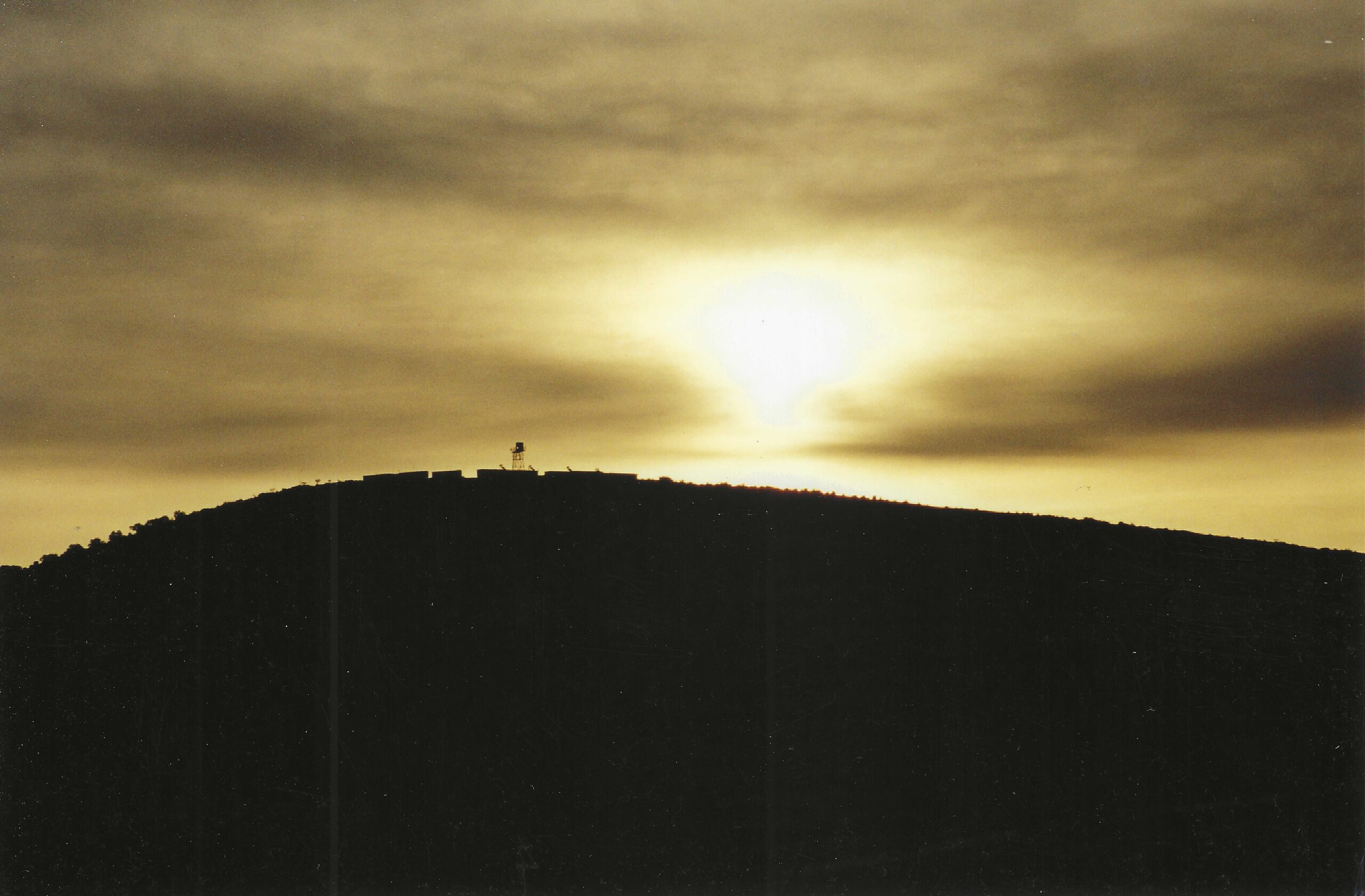
When I wrote the “Yesha Defense Initiative” (עברית כאן) over two decades ago, I began not with a statistic, but with a scenario.
It is 2:45 a.m. on a Tuesday in Israel. The streets of Judea and Samaria—our biblical heartland, Yesha—are quiet. But in the IDF war rooms, there is chaos. Confirmation has just arrived: forty platoons of Palestinian mechanized armor are on the move. They are headed for the yishuvim, our homes.
The security coordinator of a target community, the ravshatz, is notified. He has twenty minutes. Twenty minutes before three Palestinian BRDM2 armored vehicles smash through the community’s simple yellow sliding gate. Twenty minutes to decide whether to activate his civilian rapid response team or accept the official recommendation to prepare for evacuation. I wrote the stark truth: “Either way many of your neighbors will be killed. And the ravshatz is utterly powerless to do anything… And he knows it better than anyone.”
This grim scenario was my opening salvo. As a resident of Nachaliel, I circulated this draft briefing book in the shadow of the Second Intifada as a desperate plea and a detailed strategic proposal. My core argument was that our entire security doctrine was fatally flawed, leaving our communities totally vulnerable to a catastrophic, coordinated “first strike.”
At the time, our vision was dismissed by officials as alarmist. But read today, the document I wrote resonates with a chilling prescience. It was my meticulous, passionate, and detailed articulation of a strategic nightmare, one that foresaw a specific mode of attack that the official consensus deemed impossible.
More importantly, it was my comprehensive, community-based solution built on the principles of self-reliance, layered defense, and challenging the very assumptions of our national security establishment.
Two decades later, those pages serve as a powerful, haunting case study in strategic foresight and the timeless, agonizing debate over civilian defense.
The Anatomy of My Scenario
My central thesis was simple: our defense establishment was preparing for the wrong war. The prevailing wisdom, which dictated policy and equipment, was focused on “anti-terrorist” scenarios: a small cell of gunmen infiltrating a home, a lone bomber, or a hostage situation. I argued this was a fatal miscalculation. I posited that the true, existential threat was not piecemeal terrorism but a sudden, overwhelming, and coordinated military assault, a “first strike” designed to achieve the “swift, irrevocable collapse of Yesha.”
In the document, I methodically detailed the vulnerability. The lynchpin of the threat, as I saw it, was armor. The Oslo Accords, I noted, permitted the Palestinian Authority to possess “up to 45 wheeled armored vehicles.” My colleagues and I believed the number was actually much higher, supplemented by smuggling. These vehicles, like the BRDM2, were not tanks, but they were more than enough to “easily smash their way through yishuv gates.”
This single point was the crux of the failure. The communities, I wrote, were “totally helpless” against this specific threat because they had been systematically denied the one weapon that could counter it: anti-tank weapons. My investigation led me to claim that the gates, the fences, and the armaments of the yishuvim were “designed, selected, and controlled universally to be uniquely vulnerable to a specific tool that has been then semi-secretly given to the PA—armored vehicles.”
This was a devastating accusation, and I did not make it lightly. It suggested not mere incompetence or budgetary neglect, but a deliberate, systemic policy of engineered vulnerability. I argued that this policy was meant to maintain a “back-door option” for the “easy removal” of settlements, ensuring that in a final status agreement or a political crisis, our communities could not meaningfully resist an evacuation order. My conclusion was stark: our residents, in effect, were being prepared for evacuation, not for defense.
The Precedents That Drove Me
To understand the profound concern that motivated me, you must look to the hard lessons of Israel’s recent past. For me and my neighbors, these events were not history; they were precedent. They were the templates for “betrayal.” I explicitly invoked two actions by Israel: the 1982 eviction of Yamit and the other 17 Jewish communities in the Sinai, and the chaotic 2000 withdrawal from the South Lebanon security zone.
I recalled in the initiative how Ariel Sharon, the architect of the Yamit eviction, had first “initiated the establishment of tiny outposts” in the Sinai, earning the settlers’ trust before turning to evict them. This created a deep-seated suspicion in our community: that a right-wing leader ostensibly “with us” could, and would, use that trust to execute a politically devastating withdrawal.
Even more potent was the fresh wound of South Lebanon. I recounted in detail the “surprise abandonment” of the South Lebanese Army (SLA), Israel’s long-time ally. I quoted an SLA soldier’s bitter realization: “We could have stopped them with our weapons, but the IDF did not shoot and would not allow the SLA to shoot, either.” The lesson I drew was that the IDF high command was capable of using “trust to produce the paralysis and surprise needed to accomplish a betrayal effectively.”
I then made a direct and explosive connection in the text. I noted that the general who oversaw the South Lebanon abandonment, Moshe Kaplinsky, had just been appointed as the OC Central Command, with jurisdiction over Judea and Samaria. “The perpetrator of Yamit is now working together with the perpetrator of Southern Lebanon,” I wrote. “Yesha is apparently their target.”
This context is crucial to understanding my mindset. The Yesha Defense Initiative was not just about a Palestinian threat; it was about a profound crisis of faith. I posited a “double shock” scenario: a sudden Palestinian armored attack occurring simultaneously with an IDF order to stand down and evacuate. The ravshatz in my 2:45 a.m. scenario wasn’t just outgunned; he was being paralyzed by his own side.
A Pattern of Neglect
I built my case by synthesizing nine distinct government policies that, taken together, formed what I saw as an undeniable pattern of induced vulnerability. Whether this was born of a deliberate, malicious “back-door option” for evacuation—my most profound fear—or from a catastrophic, systemic bureaucratic failure, a simple “failure of imagination” within the institution, the result was the same. The system was broken.
My analysis grouped these policies into several broad categories of failure. The most critical, in my view, was doctrinal obsolescence; I lamented the IDF’s “insistence on obsolete anti-terrorist scenario” training—preparing for a few gunmen in a house—which provided the doctrinal basis to deny anti-tank weapons and limit civilian defense forces to a “handful of small arms,” leaving us defenseless against a military assault.
This was compounded by active information suppression, where I alleged official channels actively suppressed the truth. When we residents reported night-time gunfire—which we believed to be PA forces training for night attacks—IDF officials repeatedly dismissed it as “weddings.” These “false IDF ‘wedding’ claims,” I argued, were disinformation designed to “keep Yeshans in the dark.”
This pattern was made tangible through resource denial, as I detailed the “denial of sufficient amounts of ammunition,” which I claimed was “only enough for several minutes of combat.”
Finally, I even pointed to strategic misdirection, re-framing seemingly supportive policies like Ariel Sharon’s call to “seize the high ground” as self-defeating instructions that served only to “strain Yesha’s overstretched defenders even further.”
This pattern of neglect extended to infrastructure. I argued there was “no means for mutual support between yishuvim.” We lacked the communication equipment and long-range weapons to coordinate a defense, allowing us to be “isolated and overrun piecemeal.” Even the “elaborate security barriers” were, in my analysis, an “indefensible trap” that restricted defenders to an inner perimeter while providing cover for attackers.
These policies, as I outlined them, painted a grim portrait of communities intentionally isolated, under-equipped, and misinformed, all while being told to trust the very system that was failing us.
A Phased Solution: The Three-Layered Shield
But my Yesha Defense Initiative was not merely a list of woes. My primary purpose was to propose a concrete, viable, and positive solution. Having defined the problem as a first strike, I presented a layered defense system.
This proposal, however, faced an immediate and obvious “operational paradox.” How could we, who were being actively denied basic ammunition, suddenly deploy sophisticated interceptor vehicles?
The solution had to be split into two distinct phases: a “policy-resistant” immediate-action plan, and a long-term “policy-reversal” goal.
Phase 1: Immediate Asymmetric Self-Reliance
This was the core, actionable plan, focusing on what we could do ourselves, right now, with what we had, to bypass the official blocks and maximize deterrence.
The first element was a “policy-resistant” early warning network. This meant trained observers using private optical and radio equipment, creating a communication net independent of official channels. Its sole purpose was to spot the massing of forces and “ruin the shock of surprise,” robbing the attackers of their chief advantage.
The second element of Phase 1 was the yishuv defense itself, focusing on asymmetric tactics. Recognizing the lack of official anti-tank weapons, I proposed adopting tactics proven by “poorly armed defenders” elsewhere—citing the 1956 Hungarian uprising and the First Chechen War. I detailed the organization of “anti-tank killer teams” composed of firebombers, a machine gunner, and a sniper. I described how to create “anti-armor ambush areas” in the narrow streets of a yishuv, “sealing off vehicles inside your pre-selected kill zone.” I provided granular detail on how to aim firebombs and where to shoot armored vehicles like the BRDM2 with rifles to “degrade the combat effectiveness” by targeting “periscopes,” “antennae,” and “externally mounted fuel tanks.” This was not theory; I intended it as a practical manual for self-defense.
Phase 2: The Full Interceptor Shield
This was the long-term goal, contingent on reversing the government’s failed policies. This phase included the “network of interceptor vehicles” I had envisioned. These teams, manned by our rapid response units, would “deploy barriers that are capable of blocking, disabling, or destroying enemy armored vehicles before they reach the yishuv.” This proactive layer was designed to break up the coordinated assault, but it required a level of equipment and operational freedom that was, at the time, being denied to us. Phase 1 was how we would survive long enough to make the case for Phase 2.
An Obligation of Self-Defense
Ultimately, for me, the Yesha Defense Initiative was more than a technical proposal. It was a philosophical and moral argument about the very nature of Israeli sovereignty and Jewish identity. I wrote it in a spirit of profound self-reliance, born from the conviction that the state could, and might, fail its citizens.
I explicitly placed the initiative in a long line of Jewish self-defense. I cited the Warsaw Ghetto uprising, noting that “each yishuv still has more weapons, ammunition, and trained personnel on hand” than they did. I invoked the 1948 battle for Kibbutz Degania, where members “halted by members of the kibbutz equipped with small arms and Molotov cocktails” stopped a Syrian tank attack. The message was clear: when the state is absent, the community must act. To do otherwise was to “acquiesce in their own betrayal by default.”
I captured this moral imperative with the Hebrew phrase emblazoned on the document: “Lo ta’amod al dam re’echa“—”Do not stand idly by your brother’s blood.” This, I argued, is our fundamental obligation. The initiative was our way to fulfill that Torah obligation.
My political analysis was equally profound, if controversial. I posited that a small but powerful “anti-Covenant” segment of Israel’s elite saw our very presence in “Biblical Israel” as an “intolerable irritant.” For this segment, I argued, “the abandonment of Yesha to an Arab Palestinian state” was the ultimate goal, even if it meant sacrificing Israel’s strategic viability. The initiative, therefore, was not just a military plan; it was a political and cultural counter-revolution, a declaration that we Yeshans would not be “irritated” away. It was my plan to “neutralize the threat of eviction” by eliminating the element of surprise and making the cost of such a “betrayal” too high to pay.
A Warning Vindicated
Reading the Yesha Defense Initiative I wrote more than twenty years ago is an unsettling experience, even for me. The document is a product of its time—the raw, chaotic, and fearful peak of the Second Intifada. My specific political anxieties about Ariel Sharon and the Oslo Accords are bound up in that historical moment.
And yet, its core content is timeless. My document was, at its heart, a study in worst-case-scenario planning. It challenged the prevailing failure of imagination that dismissed a large-scale, coordinated attack as fantastical.
I believe the paper’s greatest contribution was not my prediction of betrayal, but my meticulous diagnosis of a specific, catastrophic vulnerability: a multi-pronged, surprise assault designed to overwhelm isolated communities whose defenses were designed for a different, lesser threat.
The solution I proposed—a layered defense prioritizing early warning, proactive interception, and robust, well-armed local teams—remains a model of community-based security. It speaks to a fundamental tension that still exists in Israel and beyond: the tension between the citizen and the state, between the resident’s right to self-defense and the state’s monopoly on power.
The technologies of warfare have evolved. The specific vehicle of the threat has changed. My paper was prescient about the BRDM2s, but today the threat may come from drones, precision missiles, or cross-border tunnels.
The strategic logic, however, remains unchanged. The 3-layered shield is a concept, and it scales. Early Warning, for example, is no longer just about armor; it is about tasking those same citizen-observers to listen for the sounds of tunnel digging and to spot the low, slow signature of drones. The Interceptor Layer concept adapts; perhaps “interceptor vehicles” now deploy counter-drone jammers or serve as rapid-response teams to a known tunnel exit. And the Yishuv Defense layer evolves; the “anti-tank killer teams” are trained with new skills: sharpshooters targeting drone optics, or tactics for engaging fighters emerging from a tunnel mouth.
The Yesha Defense Initiative was my plan for a war that did not come in the early 2000s. For two decades, its core principles—its passionate call for empowerment, its warning against a catastrophic ‘failure of imagination,’ and its chillingly specific analysis of vulnerability—continued to echo in those hills.
Then, on October 7th, 2023, the nightmare scenario I had detailed became a horrific reality. The ‘worst-case-scenario’ of a multi-pronged, surprise assault designed to overwhelm isolated communities, whose defenses were tragically designed for a lesser threat, was no longer a theory. The echoes of my warning became a devastating roar.
It is a persistent, tragic warning that paralysis is a choice, and that the ultimate defense of one’s home, as I wrote then, begins at the gate.

It was only a surprise to the victims.
You were right, and are right, but, I don’t see much action to increase security and combat capabilities at the local community level. Arming a few more volunteer defenders with M4 rifles is grossly insufficient. Israel needs fortified communities that can withstand and repulse assaults by heavily armed enemies, who may arrive on foot, by vehicle–including armored vehicles–from tunnels, and from the air and sea.
Lots of wisdom in this post; thank you for everything you write.
Chilling how what you predicted occurred in the Gaza Envelope.
And I never guessed the gunfire considered part of their weddings could actually be masking attack-practices.
Also, this sentence sums up decades of their entire methodology:
“the IDF high command was capable of using ‘trust to produce the paralysis and surprise needed to accomplish a betrayal effectively’.”
And this reflects their attitude in a nutshell:
“a small but powerful ‘anti-Covenant’ segment of Israel’s elite saw our very presence in ‘Biblical Israel’ as an ‘intolerable irritant’.”
That also clarifies why there is no reasoning with or appealing to them on grounds of democracy, fairness, justice, or compassion.
Great job.