




Today, the 30th of Tishrei, marks the somber anniversary of the assassination of Minister Rechavam Ze’evi. Murdered in a Jerusalem hotel by the Popular Front for the Liberation of Palestine, his death was a brutal punctuation mark on a life dedicated to the security of Israel. In the years since, Ze’evi’s legacy has often been flattened, his complex and multifaceted career distilled by both admirers and detractors into a single, controversial idea. He has become a symbol, a slogan, a political lightning rod.
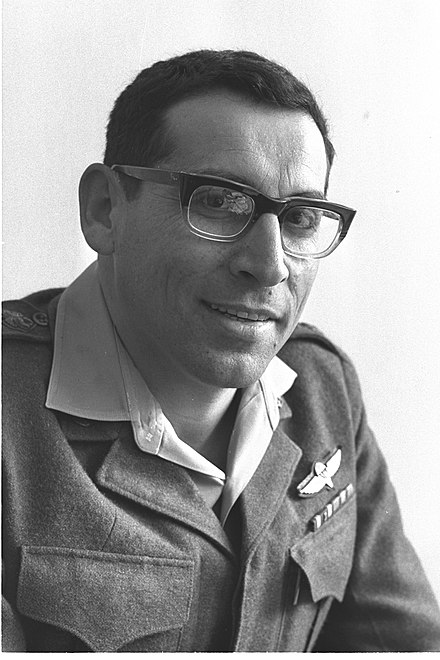
But the man was far more than the caricature. Before he was a minister, he was a general—one of Israel’s most brilliant strategic minds, a key member of the generation that forged the IDF’s operational doctrine. In the immediate aftermath of the Six-Day War, Major General Ze’evi was tasked with one of the most sensitive and challenging missions imaginable: serving as the de facto governor of the newly liberated Samaria. It was here, in the biblical heartland of Judea and Samaria, that the theories of the war room met the messy reality of governing a hostile population.
A paper he authored in 1974, reflecting on his first five years administering the region, provides an invaluable window into the mind of the man behind the myth. It is not a political manifesto, but a sober, clear-eyed assessment from a military administrator. It reveals a doctrine for security and governance that was at once firm and pragmatic, rooted in a deep understanding of history, and astonishingly effective. On the anniversary of his death, to truly honor his memory is to move beyond the slogans and engage with the substance of his life’s work. This long-forgotten paper is the place to begin.
Wrestling with History’s Legacy
To understand Ze’evi’s strategy for securing Samaria, one must first understand the history he was determined not to repeat. The region, which he notes was known in the security slang of his youth as “The Dangerous Triangle,” had for decades been the epicenter of violent Arab nationalism. Defined by the three cities of Shechem, Jenin, and Tulkarm, its rugged, hilly terrain—replete with olive groves, caves, and hidden valleys—was, in his words, “an ideal land for hiding and organizing the activities of insurgents and bandits.”
Ze’evi begins his analysis not in 1967, but in 1935, correcting a common historical misconception. The bloody Arab Revolt of 1936-39, he reminds the reader, did not begin in Jaffa, but here, in the hills of Samaria, with the murder of Jews on the roads near Tulkarm and on Mount Gilboa. This was the birthplace of the kuffiyeh-clad gangs, the political-terrorist cells led by figures like Sheikh Izz al-Din al-Qassam. The violence was not random, but organized, and it drew its strength from a critical symbiosis with the local population. Ze’evi points to the Arab custom of “Faza’a,” where local villagers would temporarily join the terrorist gangs for an operation before melting back into their homes, providing both manpower and logistical support.
This dynamic, he argues, utterly confounded the British Mandate authorities. Ze’evi’s critique of the British is sharp and methodical, for in their failures he found the key lessons for his own success. First, the British failed to integrate military and civil authority; their soldiers operated in a vacuum, disconnected from the political administration. Second, they were foreigners in a foreign land, unable to understand the terrain or the culture. Third, and most critically, they allowed the terrorists to establish independent zones of control—safe havens from which to launch attacks and to which they could retreat. Finally, their military efforts were consistently sabotaged by political interference, as when General Dill’s forces had the infamous terrorist commander Fawzi al-Qawuqji cornered in 1936, only to be ordered to let him escape.
For Ze’evi, this was not ancient history. When he took command of Samaria in 1967, the new generation of Arab nationalist organizations—the PLO, the PFLP—were openly planning to replicate the exact same model of a “popular revolt” that had so successfully bled the British. They counted on the same two foundational elements: a sympathetic local population and a rugged terrain perfect for insurgency. Ze’evi’s entire strategy was built on neutralizing these two advantages.
The Iron Hand in the Velvet Glove
The success of the Israeli Military Government in Samaria, which saw the region transform from a hotbed of terror into a zone of relative stability and unprecedented economic growth in just five years, was no accident. It was the result of a meticulously applied doctrine, born from the lessons of the past.
Ze’evi’s first and most important principle was the absolute necessity of separating the terrorists from the population. “One of the secrets of our success in eliminating terror,” he writes, “is the separation we created between the population and the saboteurs.” This was achieved not merely through force, but through a sophisticated policy he describes as “reward and punishment.” For villages and towns that remained quiet, the reward was a light hand from the administration and active investment in development. For those that harbored terrorists, the punishment was swift and severe.
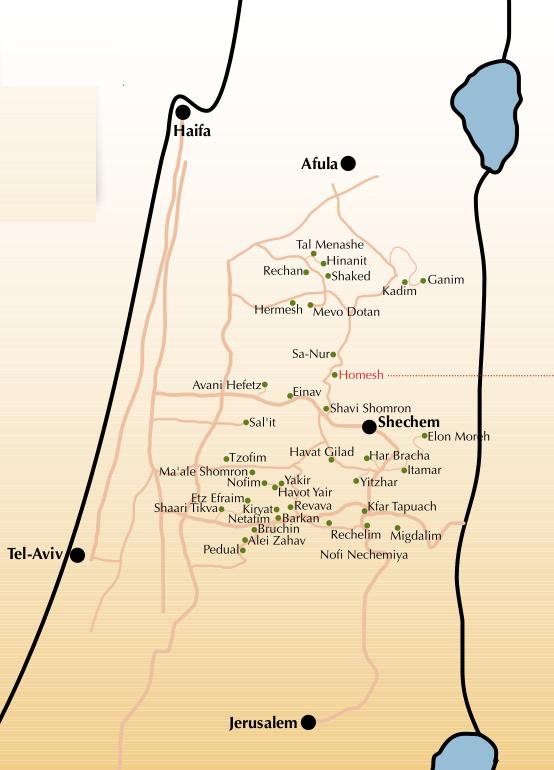
This policy was built on a foundation of absolute security control. Ze’evi sealed the Jordan River, which he called the “lifeline” for terror, cutting off the flow of weapons and fighters from Jordan. He then established a pervasive but low-profile military presence throughout Samaria, placing bases in the abandoned posts of the Jordanian Arab Legion. This created, in his words, “a landscape of presence everywhere, without causing any interference to the local population in the course of their daily lives.”
With the region secured, the administration turned to the second half of its strategy: improving the daily lives of the average resident so dramatically that they would have more to lose from a return to violence than they could possibly gain. Ze’evi speaks of expanding agricultural and industrial production, improving health and education services, paving roads, and launching urban development plans. He created a system of “open bridges” across the Jordan River, allowing near-free movement for people and goods, a policy that fostered economic prosperity and maintained vital family links for a population that had been connected to the East Bank for centuries.
The results were tangible. Ze’evi quotes a resident of Shechem, the heart of the “Dangerous Triangle,” who testified: “The authorities do not apply any pressure on the residents. The residents of the area live a life of freedom and liberty, in contrast to the disgraceful life that was their lot during the Jordanian rule. Freedom of movement, freedom of expression, and freedom of action characterize the life of the citizen in the West Bank. His life is better than the life of the Palestinian living in Jordan.” This was not propaganda; it was the strategic objective. By making life demonstrably better, Ze’evi’s administration drained the swamp in which the terrorists hoped to swim.
The Gamble on Democracy
Nowhere was this strategy tested more severely than in Shechem. With its proud history, powerful families, and reputation for nationalist fervor, Shechem was the undisputed capital of Samaria and the primary target for terrorist organizers. The city was a tinderbox, and the administration’s handling of it would determine the fate of the entire region.
A key crisis emerged over the education system. Encouraged by Jordan, teachers and administrators declared a strike in 1968, refusing to open the schools. The move was designed to paralyze daily life and demonstrate popular resistance to Israeli rule. The central grievance, Ze’evi explains, was a genuine and deeply felt fear among the local educators that Israel intended to “Judaize” their schools, forcing them to teach Hebrew and Israeli history, as was done in Arab schools within the Green Line.
A purely military response would have been to force the schools open, creating a public confrontation and fueling the narrative of oppression. Ze’evi chose a different path. His administration entered into direct dialogue with the heads of the education system and the city’s mayors. They offered a simple guarantee: the Jordanian curriculum would remain in place, with the sole exception of removing passages that explicitly incited hatred against Israel and the Jewish people. This pragmatic compromise removed the core of the local leaders’ fears. It gave them the political cover they needed to do what was best for their own children. The local leadership itself issued a back-to-work order for the teachers, and the crisis was resolved. It was a masterclass in governance: understanding the opponent’s legitimate concerns and addressing them, thereby isolating the extremists.
This success paved the way for Ze’evi’s boldest move: holding municipal elections in 1972. The idea was met with furious opposition. The Jordanian government and the terrorist organizations both threatened anyone who participated. They understood exactly what was at stake. The elections were designed to cultivate a legitimate, homegrown Palestinian leadership—a leadership that was accountable to its own people for providing services and maintaining stability, rather than to external puppet masters in Amman or Beirut.
Despite threats, intimidation, and even arson attacks against candidates’ property, the pressure from Ze’evi’s administration was relentless and the desire of the local population for functional leadership was strong. In the end, the elections were held in every city in Samaria. The result, Ze’evi writes, “goes beyond the local municipal level. The behavior of the population in the elections highlighted its ability to take an independent position contrary to the will of the Jordanian government and the sabotage organizations.” He had succeeded in creating a class of leaders with a vested interest in the success of his system of stability and prosperity.
Roots in the Land
For all his success as an administrator, Ze’evi’s paper ends on a note of deep concern, pointing to what he viewed as a historic failure that threatened to undermine all his other achievements. He expresses profound regret that, in the decades leading up to 1948, Jewish settlement had failed to penetrate the heart of Samaria. “Be the reason what it may,” he writes, “we arrived at 1948 without a Jewish presence in Samaria… And who among us can guess and appreciate how things would have developed had there been Jewish settlement in this region as well?”
For Ze’evi, the absence of Jewish roots in the land created a strategic vacuum. He believed that military control, however effective, and enlightened governance, however benevolent, were ultimately transient. True and lasting security could only be achieved by creating facts on the ground—by establishing a permanent civilian Jewish presence that would inextricably tie the biblical heartland to the modern State of Israel.
He notes with a hint of frustration that, in the five years since the Six-Day War, only nine small communities had been established, almost all of them clustered in the Jordan Valley. He concludes his paper by mentioning the newest and most recent settlement, Nahal Gitit, and offers a prayer that “it will cease to be the ‘last’ and the ‘youngest.’” This was not a passing thought, but the capstone of his entire strategic vision. Security, for Rechavam Ze’evi, was a structure built on four pillars: a powerful and uncompromising military, an intelligent and responsive civil administration, a thriving economy, and a deep, civilian presence rooted in the soil. Without all four, the entire structure would remain vulnerable.
The Strategist’s Final, Grim Conclusion
Reading this paper today, one is struck by its brilliance, but also by the path its author would ultimately take. The doctrine of enlightened administration Ze’evi perfected was, by his own account, a stunning success. He pacified the “Dangerous Triangle,” raised the standard of living, and cultivated a local leadership that chose pragmatism over ideology. Yet, the man who engineered this system of coexistence would later become the most prominent advocate for the separation of the two peoples. How could the architect of this successful model come to believe it was ultimately doomed to fail?
The answer lies within the paper itself. Ze’evi, the historian, knew that the quiet he had achieved was conditional. The population, he observed, was not reformed, but merely responding rationally to a new set of incentives. Their cooperation was based on the “reward” side of his “reward and punishment” equation. He understood that the underlying nationalist aspirations, which had fueled decades of violence before his arrival, had not vanished; they were merely dormant, held in check by overwhelming Israeli military superiority and newfound economic prosperity. He saw his own success not as a permanent solution, but as a temporary holding action.
His insistent call for Jewish settlement in Samaria was the first expression of this grim realism. He believed that without a demographic anchor, Israeli control would forever be a military occupation, a transient phase in a long war. But even that, he seems to have concluded, was not enough. His years on the ground, interacting with both the cooperative local mayors and the unrepentant terrorists, appear to have led him to a final, somber conclusion: that the two peoples’ national aspirations were fundamentally irreconcilable within the same small territory. The same clear-eyed, methodical logic that allowed him to dismantle the insurgency in Samaria eventually led him to the policy of “transfer.”
It was not a conclusion born of hate, but of a deep and tragic pessimism forged in a lifetime of conflict. It was the strategist’s final move in a game he concluded could not be won, only managed. The man remembered for a single controversial idea did not begin there. He arrived at it after trying everything else, and succeeding, only to realize that even his remarkable success was built on a foundation of sand. His assassination was a brutal affirmation of his darkest fears—a confirmation, in his eyes, that the forces of enmity he had contained could never truly be vanquished, only separated.

Did he grow up a lefty?
His original ideas sound exactly like the Oslo insanity. At least he was honest about it and came to the logical conclusion when faced with reality, which happens to be the Jewish idea.