


A new pre-print study has cast serious doubt on the Israeli Health Ministry’s 2021 assurances that COVID-19 vaccines were safe for pregnant women, revealing a troubling gap between the Ministry’s claims and the evidence that has since emerged.
Analyzing data from over 200,000 pregnancies in Israel, the study found that women vaccinated between weeks 8 and 13 of pregnancy—early in the first trimester—experienced a higher-than-expected rate of fetal losses: an additional 3.9 per 100 women for the first dose and 1.9 per 100 for the third dose.
These findings directly undermine the Ministry’s campaign, which promoted the vaccine as universally safe and explicitly denied any link to miscarriages, suggesting instead that the messaging was a deliberate strategy to drive vaccination rates rather than a reflection of the full evidence.
Health Ministry’s 2021 Claims: Bold Assertions, Thin Evidence
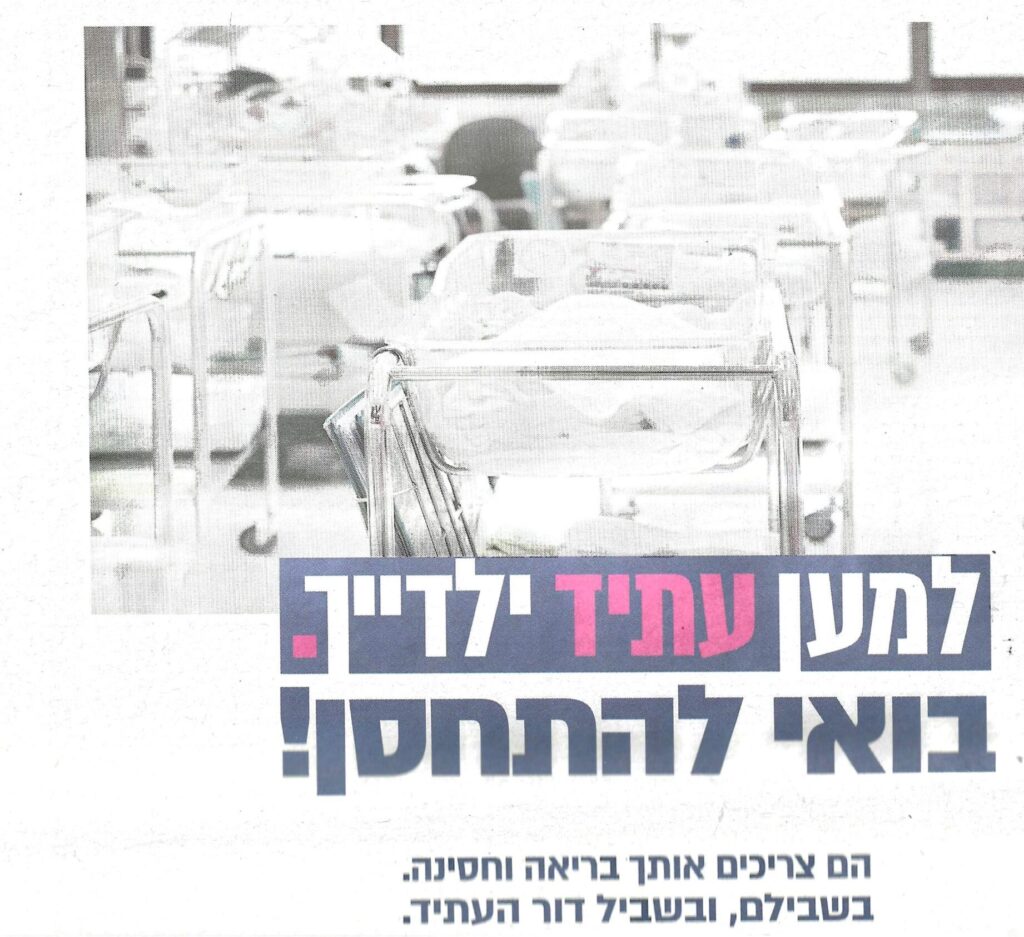
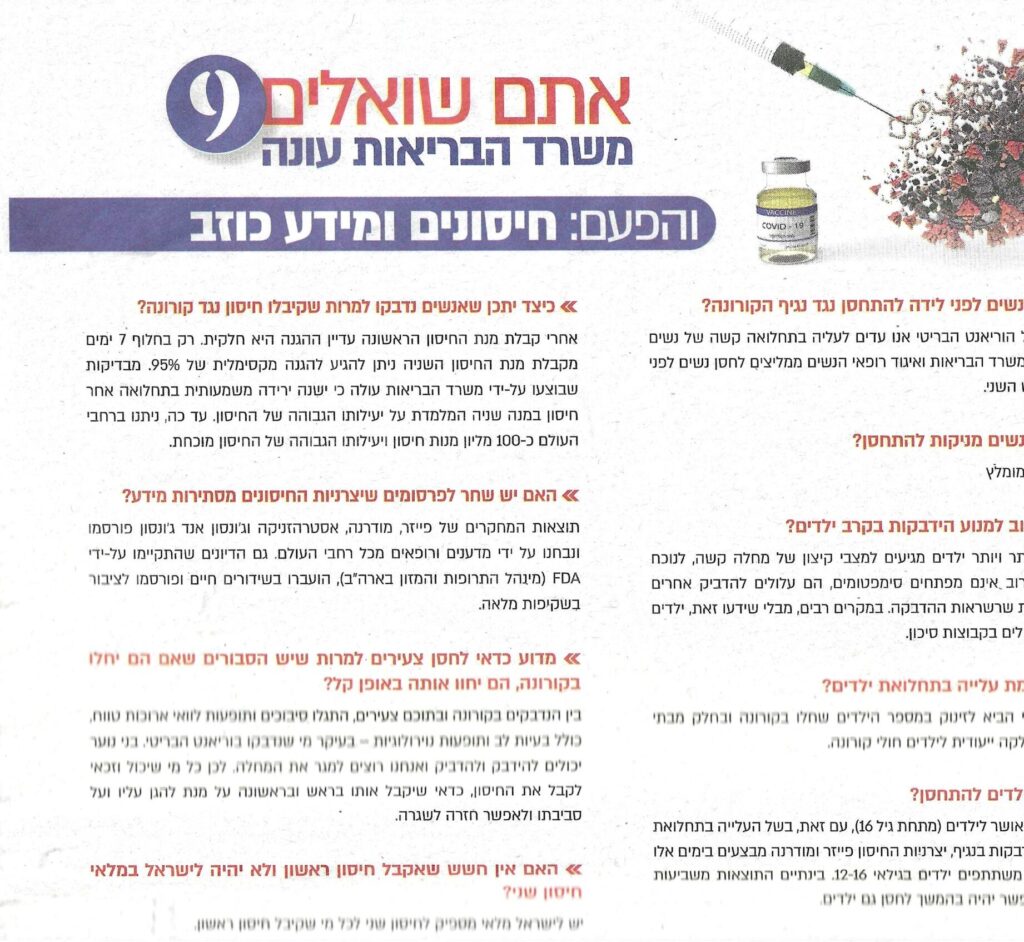
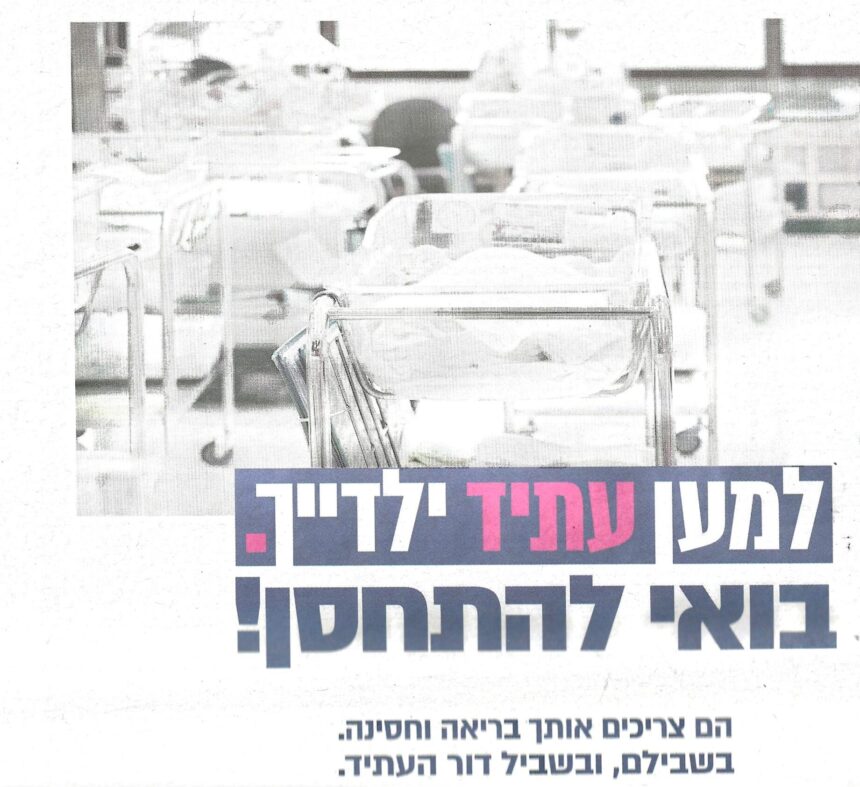
In January and February 2021, as Israel positioned itself as a global leader in COVID-19 vaccination, the Health Ministry launched an aggressive campaign targeting pregnant women. With slogans like “Come get vaccinated! For the future of your children,” the Ministry rolled out a series of definitive statements:
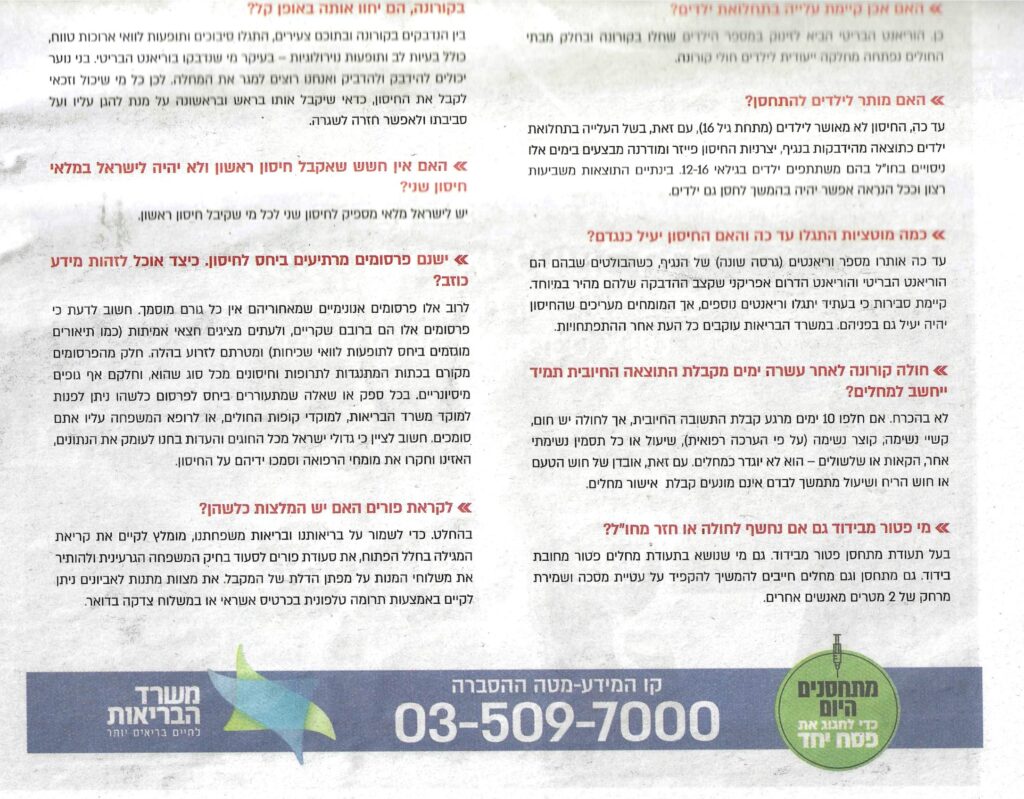
- Blanket Safety: “The Ministry of Health recommends the COVID vaccine for pregnant women. The recommendation is based on extensive data accumulated in Israel and worldwide, indicating the safety and efficacy of the vaccine for both the mother and the fetus.”
- No Miscarriage Risk: “The vaccine does not cause miscarriages or stillbirths. The accumulated data shows that the miscarriage rate in vaccinated women is similar to the miscarriage rate in the general population.”
- Anytime Vaccination: “Vaccination is recommended in the second and third trimesters of pregnancy. It can be vaccinated at any time convenient for the pregnant woman, as part of routine pregnancy check-ups.”
These claims were presented as unassailable truths, with no hint of uncertainty or trimester-specific risks. The Ministry’s messaging implied a comprehensive understanding of the vaccine’s safety profile across all stages of pregnancy. Yet, the 2025 study reveals that this confidence was misplaced—or perhaps strategically overstated—particularly for the vulnerable early weeks of gestation.
New Evidence Exposes Early Pregnancy Risks
The 2025 study, currently in pre-print and pending peer review, offers a stark counterpoint to the Ministry’s assurances. Drawing on Israel’s robust health data systems, it highlights specific risks tied to the timing of vaccination:
- Elevated Fetal Loss: Women vaccinated between weeks 8 and 13 faced a heightened risk of fetal loss, a period when the fetus is especially susceptible to external factors.
- Dose-Specific Impact: The risk was most pronounced for first and third doses, with 3.9 additional fetal losses per 100 women for the former and 1.9 for the latter during this window.
- Data-Driven Insight: The study’s reliance on Israel’s extensive vaccination records lends weight to its findings, given the country’s high vaccination rates and detailed tracking.
These results expose a critical flaw in the Ministry’s blanket safety claims, suggesting that the “extensive data” touted in 2021 either failed to account for early pregnancy risks or was selectively interpreted to support a broader vaccination push.
A Deliberate Strategy to Prioritize Uptake Over Accuracy
The gap between the Health Ministry’s 2021 assertions and the 2025 study’s findings points to a calculated approach rather than an oversight. At the height of the pandemic, with Israel under pressure to vaccinate its entire population, the Ministry opted for a messaging strategy that prioritized vaccine uptake over nuanced transparency. By framing the vaccine as unequivocally safe across all trimesters—and dismissing miscarriage risks outright—the Ministry avoided the potential hesitancy that might have arisen from acknowledging data gaps or uncertainties, particularly for early pregnancy.
This approach becomes more apparent when considering the study’s focus on weeks 8 to 13, a stage when many women may not yet have confirmed their pregnancies or sought prenatal care. The Ministry’s failure to flag this period as potentially risky suggests a deliberate choice to streamline its message, even if it meant glossing over evidence that might have complicated the campaign. The 2025 study’s revelation of elevated fetal loss rates in this window underscores the consequences of that decision.
Eroding Trust and Raising Questions
The Health Ministry’s strategy has left a legacy of doubt. Pregnant women, who depended on the Ministry for reliable guidance, were given assurances that the new evidence now calls into question. The discrepancy suggests that the drive to vaccinate may have trumped the duty to provide a complete picture of the risks, particularly for those in early pregnancy. This raises broader concerns about the integrity of public health communication during the pandemic: When does the push for compliance override the need for accuracy?
Israel’s role as a vaccination pioneer makes these findings especially significant. The country’s data-rich environment should have enabled a more precise assessment of risks by trimester, yet the Ministry’s messaging remained broad and unwavering. Whether this reflects a lack of scrutiny or a conscious effort to downplay potential issues, the outcome is the same: Pregnant women were not fully informed.
A Reckoning for Public Health
The 2025 study lays bare the shortcomings of the Health Ministry’s 2021 claims, revealing a disconnect between the assurances offered and the reality that later emerged. The evidence of increased fetal loss among women vaccinated in early pregnancy challenges the Ministry’s portrayal of the vaccine as uniformly safe—a portrayal that appears to have been shaped by a deliberate strategy to boost uptake rather than a commitment to full disclosure.
As research continues, the lesson is clear: The Ministry’s failure to adapt its guidance in real time—or to acknowledge the limits of its data—has left a gap that this study begins to fill. Pregnant women should weigh the evolving evidence carefully. The stakes are too high for anything less.