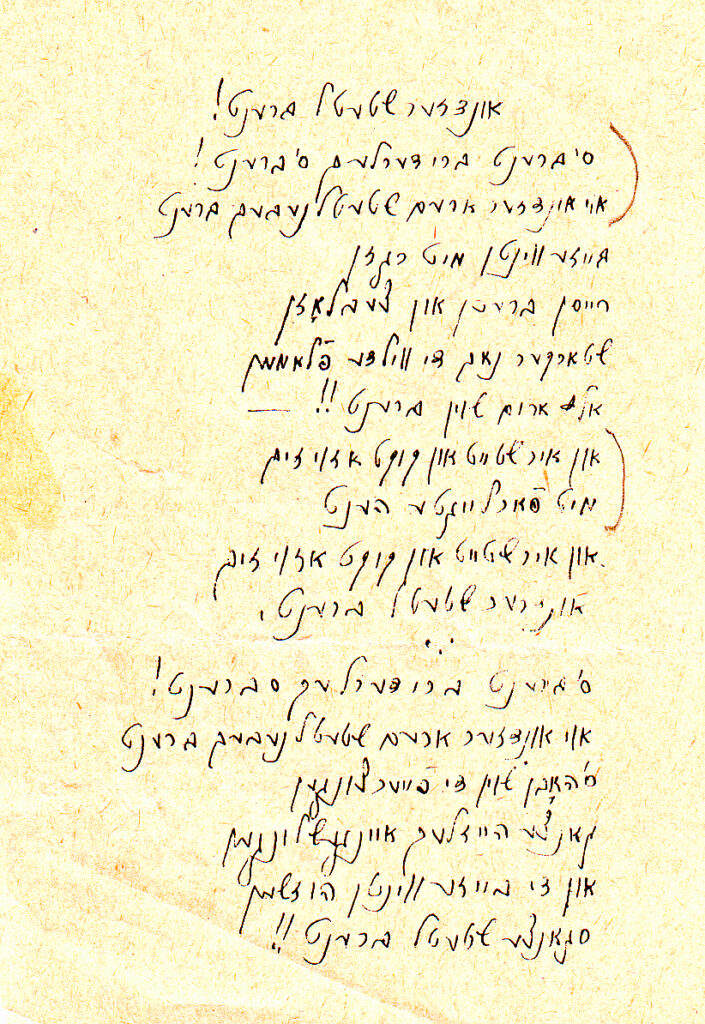
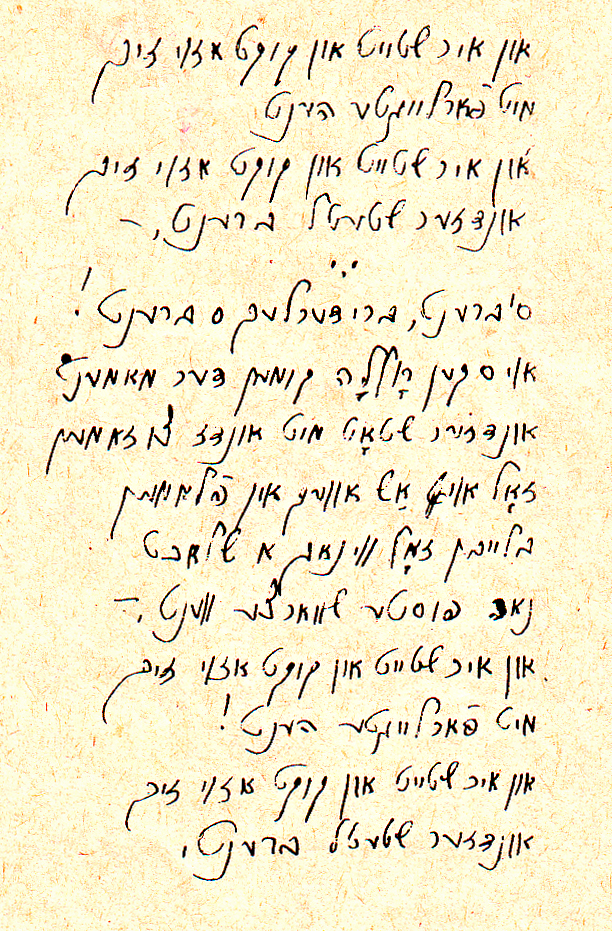
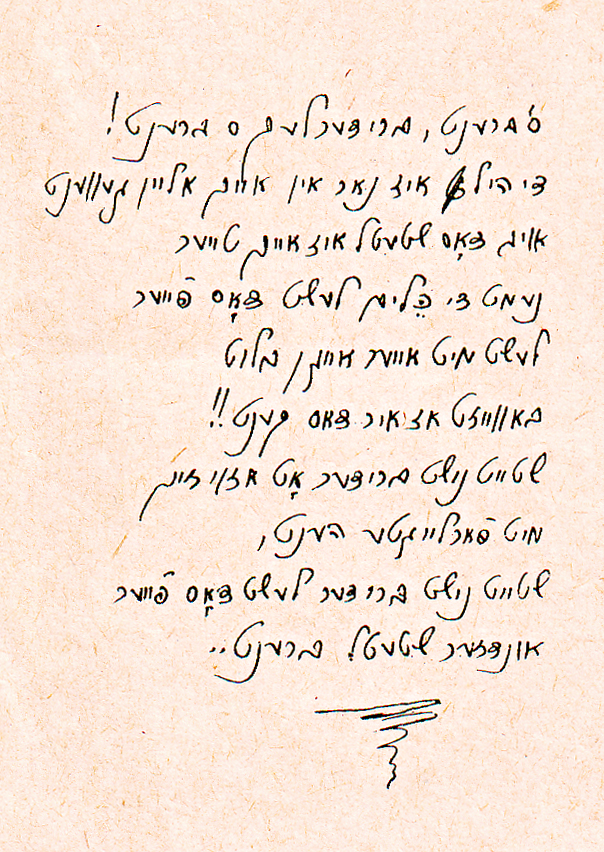
Es brent, briderlakh, s’brent! Our poor little town, alas, is burning! And you stand and look like that, with folded hands… Our town is burning! Don’t stand there like that, brothers — extinguish the fire!
Mordechai Gebirtig wrote these words in 1938 as a warning and a demand. The song was not content to lament. It condemned those who stood “with folded hands” while their world burned and insisted that the only proper response was to wake up and fight the fire. That same cry runs through the modern history of Jewish return to our land.
For more than a century, the forests we planted, the fields we cultivated, and the communities we built have been set ablaze — repeatedly and deliberately. The fires were lit by external actors who rejected Jewish presence and sovereignty.
At the same time, while specific acts of violence against Jewish lives and property, such as arson attacks, are carried out by Arab perpetrators, the conditions that enable, sustain, or fail to deter such incidents frequently originate in internal Israeli dynamics and policy choices. Only this factor lies fully within our power to change.
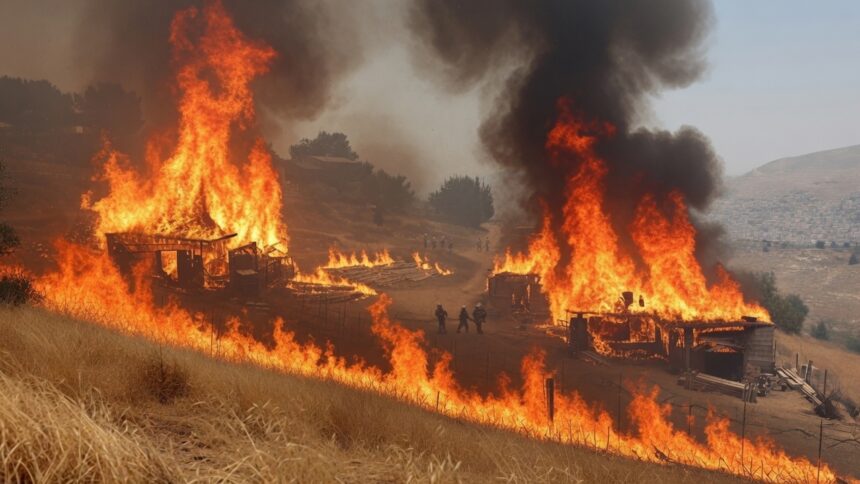
חוות גלעד: הכוחות עדיין פועלים בשטח, 24 בתים נפגעו בשריפה מתוכם 13 נשרפו לחלוטין.
מה שידוע לנו: השריפה התחילה בשעות הצהריים קרוב לשכונת מצפה ישי בקדומים, ובעזרת הרוחות החזקות התקדמה במהירות ליישוב חוות גלעד. שם היא טיפסה במהירות לקו הבתים הראשון של היישוב.
The pattern of intentional arson against Jewish settlement and agriculture is long and consistent.
In the 1929 riots, Arab mobs attacked Jewish communities in Hebron, Safed, and other places. Homes and shops were looted and burned. Jewish streets were set ablaze amid the violence.
During the 1936–1939 Revolt, Arabs systematically targeted Jewish agriculture. Thousands of dunams of Jewish fields and orchards were destroyed by fire. KKL-planted forests were attacked as part of the broader campaign against Jewish economic and physical presence on the land.
After the state was founded, the 1950s fedayeen raids from Gaza and Jordan brought arson and sabotage directly to border kibbutzim and farms. Infiltrators burned property, vehicles, and agricultural infrastructure alongside ambushes and theft. These attacks were designed to make Jewish life on the frontier untenable.
Later decades continued the pattern. The 1989 Mount Carmel fire was attributed to arson with multiple points of ignition. The 2016 wave of fires included multiple cases of confirmed or strongly suspected arson using flammable materials, with arrests tied to “nationally motivated” attacks. The 2018–2021 campaign of incendiary kites and balloons launched from Gaza burned thousands of dunams of forests, reserves, and crops in southern Israel — direct damage to agricultural communities. Subsequent major blazes in 2021 and 2025 again raised arson suspicions in several locations.
The land has burned. Jewish forests, crops, and communities have paid the price again and again. The enemies who chose to light these fires operated from explicit opposition to Jewish sovereignty.
Internal Shortcomings That Have Cost Us
While the fires were set from outside, Israeli policy and institutions have not confronted the threat with full consistency or maximum resolve. These are failures we can correct.
During the Oslo years, significant parts of the Israeli political and security establishment embraced an optimistic narrative that downplayed “Palestinian” incitement, rejectionist ideology, and the strategic intentions of groups like Hamas. Intelligence and public messaging were subordinated to the goals of the diplomatic process. The result was security arrangements and threat assessments that left Israel more exposed when violence returned on a large scale. This was not passive error; it was an active choice to sustain a particular vision even when evidence on the ground diverged.
In Judea and Samaria, successive governments have made repeated trade-offs between security needs, legal standards, diplomatic calculations, and domestic political pressures. Policies governing outposts, defensive infrastructure, local security initiative, and movement have created friction and delays in rapid response. Whether these stemmed from concerns over rule of law, international image, or internal balancing, the practical effect was to complicate the very measures that raise the cost of aggression. When local defensive capacity is restricted or centralized too tightly, communities become more vulnerable precisely where threats are highest.
Internal political dynamics have added another layer. When security policy becomes a recurring battlefield between ideological camps, deterrence suffers. When one community’s threat assessment is dismissed because it conflicts with a preferred narrative — or when another community’s security concerns are subordinated to broader transformative goals — the state’s posture becomes limp. These are domestic choices. They do not light the fires, but they weaken the shield and encourage the arsonists.
Ultimate accountability for the security environment rests with those who hold governing authority and shape policy. While the direct perpetrators bear responsibility for their actions, the enabling environment is not created in a vacuum. Security policies that systematically disadvantage Jewish self-reliance or presence have repeatedly shaped conditions in which Arab violence, including arson, encounters less effective resistance or deterrence than might otherwise exist.
When policies prioritize elite ideological transformations, narrative management, or neutralizing rival Jewish groups over the consistent defense of Jewish lives and property, they bear substantial weight in explaining why such attacks continue and why responses often remain reactive rather than preventive.
The Missing Half of the Mandate
If we are to honestly answer the question of “what we must do now,” we must confront a fundamental ideological blind spot within the very movement dedicated to redeeming the land. The national-religious camp has poured immense, heroic energy into the mitzvah of Yishuv Ha’aretz (settling the Land of Israel). Yet, they have championed only half of the commandment. The Torah does not present the inheritance of the land as a passive real-estate venture; it explicitly couples settlement with displacement.
This is the warning Yehoshua delivered at the very shores of the Jordan River: that the waters would sweep the nation away if they crossed without the explicit intent to displace the land’s hostile inhabitants. Modern history has proved this warning correct. By attempting to build outpost after outpost while ignoring the hostile population surrounding them, Jewish leadership has engaged in a dangerous half-measure. Answering acts of arson and murder merely by pouring more concrete does not establish deterrence; it merely increases the number of targets while leaving the root cause unaddressed.
If the faithful defenders of Eretz Yisrael remain paralyzed by the fear of external political pressure, they risk validating the Left’s assertion that a nation cannot indefinitely rule over a hostile foreign population. The tragedy is that while the Left’s defeatist conclusion is entirely warped, their diagnosis of the current friction is correct. Genuine security and lasting settlement cannot be achieved through demographic coexistence with those who seek our destruction. We must possess the courage to fulfill the mandate in its entirety—recognizing that true sovereignty requires the resolve to remove the threat, rather than merely attempting to manage its flames.
It’s Burning
Es brent. The land has burned before and, if we proceed as we always have, will again. The question is not whether external hostility exists — it does, repeatedly and with fire as one of its tools. The question is whether we will meet it with clearer assessment, steadier deterrence, and fewer self-imposed complications.
That requires concrete steps within our power: restoring threat assessment that follows evidence rather than diplomatic or ideological preference; maintaining consistent defensive posture without periodic political oscillation; reviewing security practices in vulnerable areas so that local initiative and rapid response are strengthened rather than periodically constrained; and reducing the internal weaponization of security debates so that protecting Jewish presence takes priority over petty partisan politics.
Gebirtig’s song rejected folded hands. It insisted that a people facing fire must act — with resolve, with tools, and with the willingness to pay the price of defense.
Israel’s history of burning fields and forests shows that external rejection of our presence is real and persistent. The record of our own policy choices shows that we have made that rejection easier to act upon.
Both facts are true. Only one set of facts is ours to repair.
The work of extinguishing the fire — and building so that it burns less easily next time — belongs to us.
Es brent. Our forests, fields, and communities have burned. The song’s demand remains: Do not stand there like that, brothers. Extinguish the fire — and do what it takes so they can’t burn it down so easily next time.
This is the work that belongs to us.
It’s burning! Brothers, it’s burning! Oh, our poor little town, alas, is burning! Angry winds with rage Tear, break, and scatter, Even stronger the wild flames — Everything around is already burning.
es brent
And you stand and look on With folded hands, And you stand and look on — Our town is burning!
It’s burning! Brothers, it’s burning! Oh, our poor little town, alas, is burning! The tongues of fire have already Swallowed the entire town — And the angry winds are howling, Our town is burning!
And you stand and look on…
It’s burning! Brothers, it’s burning! Oh, G-d forbid the moment may come When our city together with us Will turn to ash in the flames, And remain — as after a battle — Only empty, black walls.
And you stand and look on…
It’s burning! Brothers, it’s burning! Help depends only on you alone. If the town is dear to you, Take up the tools, put out the fire, Put it out with your own blood — Show that you can do it!
Don’t stand there, brothers, like that With folded hands, Don’t stand there, brothers — put out the fire — Our town is burning!
Mordechai Gebirtig
Don't Miss Our Alerts!
Get vital alerts and headlines for the Jewish community that other news sites ignore or suppress