


History is not merely repeating itself in Judea and Samaria; it is screaming a warning we dare not ignore.
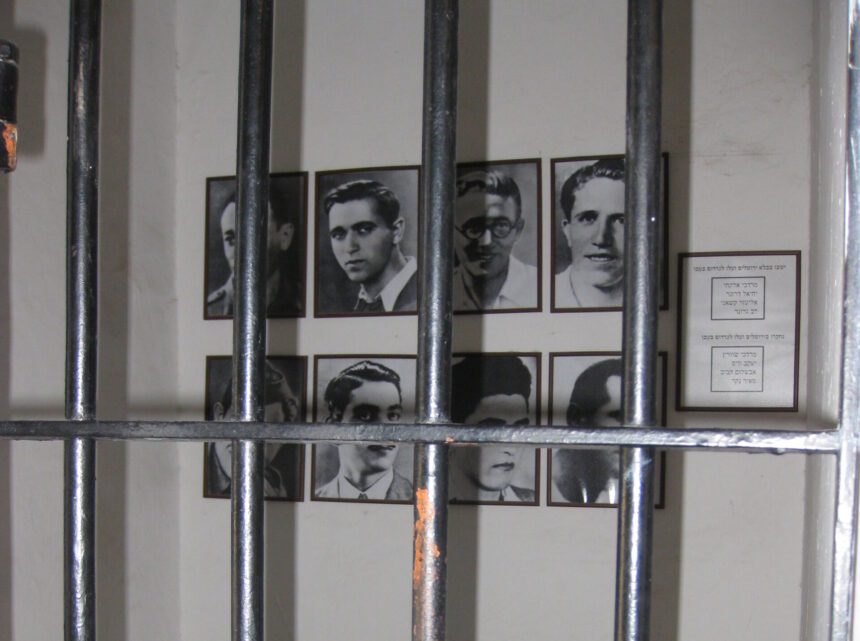
In the late 1930s, the Jewish establishment in pre-State Palestine was paralyzed by a policy of Havlagah—self-restraint. Desperate to appease British colonial overseers and maintain a veneer of respectability, the leadership refused to respond decisively to Arab terror. Jewish blood was cheap; Jewish roads were death traps. It was a policy of strategic suicide disguised as morality. It ended only when the Irgun stepped into the void, rejecting the paralysis of the establishment and replacing restraint with deterrence.
In a blistering communique, Jonathan Pollard warns that the government of Benjamin Netanyahu has adopted a modern, and equally disastrous, policy of Havlagah. By refusing to enforce the law against a massive, foreign-funded Arab takeover of our heartland, the Cabinet has abdicated its most fundamental duty: sovereignty.
“In some respects,” Pollard told Jewish Home News, “the vigilante actions of some Hilltop residents remind me of the pre-State days when retaliatory terror operations conducted by the Irgun finally put an end to the Arab rain of murder and mayhem.”
The young pioneers on the ridges of Judea and Samaria—derisively labeled “Hilltop Youth”—are not the problem. They are the inevitable antibodies generated by a state that refuses to defend its own immune system.
The Myth of ‘Settler Violence’ vs. The Reality of Strategic Conquest
To understand why young Jewish shepherds are establishing outposts on rugged ridges, one must first look at the map the government refuses to show you. The media, echoing the U.S. State Department, is obsessed with a narrative of “settler violence.” It is a narrative that collapses under the weight of a single, staggering statistic.
According to the 2024-2025 Strategic Report by the Regavim Movement, the Palestinian Authority—bankrolled by the European Union—has built 97,581 illegal structures in Area C.
Let that number sink in. This is not a housing crisis; it is a war. It is the “Fayyad Plan” in overdrive—a systematic, strategic strangulation of Jewish settlement blocs designed to create a de facto Palestinian state without a single negotiation.
In the face of this massive, illegal territorial conquest, what is the Israeli government’s priority? It is not the demolition of this hostile terror state rising in our backyard. Instead, Pollard notes with scathing clarity, the Cabinet directs the Shin Bet’s “Jewish Section” to hunt down teenagers for building shacks on state land.
“Illegal Arab building continues without let up,” Pollard writes, “but all Bibi and Bezalel Smotrich can complain about is a bunch of kids taking out their frustrations on known terror-supporting cities.”
This is not law enforcement; it is a moral inversion. A government that tolerates nearly 100,000 illegal enemy fortresses while brutalizing its own pioneers for pitching tents has lost the right to speak of “rule of law.”
The Open Wound on the East
The paralysis of Havlagah extends to the borders. The Jordan Valley, once our secure eastern wall, has become a sieve. It is no longer a border; it is a highway for Iranian-backed weaponry flooding into Judea and Samaria. M-16s, RPGs, and Claymore mines are moving freely into terror cells in Jenin and Shechem.
“The fact of the matter is that the army’s anti-terror campaign in the Territories has been an utter failure,” Pollard argues. “Illegal weapons shipments continue to flow across our Eastern border with Jordan while the terrorists’ infrastructure in places like Jenin, Tulkarem and Qalqilya is still largely intact.”
A sovereign government would respond to this existential threat with immediate, overwhelming force: sealing the border hermetically, deporting smugglers, and dismantling the terror nests. Instead, the IDF “manages” the conflict while the enemy plants a forest.
It is into this deadly security vacuum that the Hilltop Youth step. Their presence on the ridges is not an act of rebellion; it is an act of desperate necessity. When a young family moves a flock of sheep onto a strategic hill, they are implementing a Jewish agricultural settlement strategy—holding territory to prevent the territorial contiguity of a terror state.
Sovereignty or Suicide
The government of Israel faces a binary choice, identical to the one faced by the Yishuv leadership in 1939.
It can continue its policy of Havlagah. It can continue to curry favor with Washington by ignoring the 97,000 illegal Arab strongholds while persecuting the few Jews willing to hold the ground. It can continue to let the Jordanian border remain a sieve. This path guarantees that “vigilantism” will only grow, because when a state refuses to protect its citizens, the citizens will eventually protect themselves.
Or, it can choose sovereignty.
“Maybe—just maybe,” Pollard posits, “if the government instituted both a decisive anti-terror campaign in the Territories along with a concerted effort to roll back rampant illegal Arab construction, maybe there wouldn’t be so many instances of Jewish vigilantism.”
The solution is not to crush the Hilltop Youth.
The solution is to make them unnecessary by doing the job the government was elected to do: Seal the borders, demolish the illegal Arab sprawl, and win the war.


Mordechai, have you checked out the Bit-honistim? Are they worthy of your presence there?
Having asked that question, I think that we have to also address the issue of the need of the people for organizations like Honenu, Regavim, Women for Israel’s Tomorrow, and the organizations that raise money to buy back land that should be recognized as ours, over many years (at least since 1967, I reckon. About a year and a half from now, that will be 60 years ago.). I have considered this need for a plethora of watchdog organizations that, for the most part, are ignored, to be a sign of systemic dysfunction on the part of the government system for many years…more of a reflection on the system than on us, the Jews who live here.
As for the organization I asked you about at the top of this note, I don’t know where they fit, or even if they do.
All the best to you!