



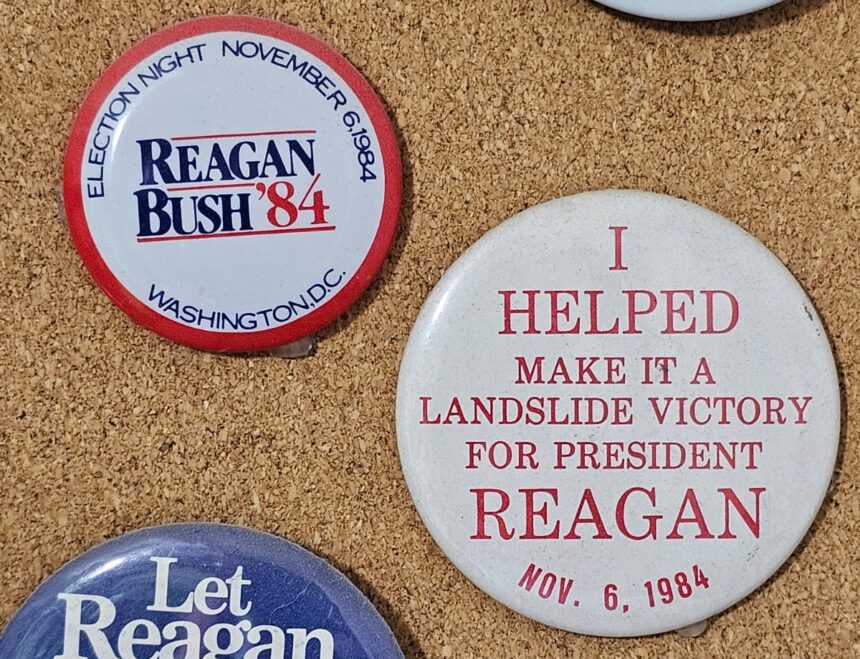
My entry into the world of politics began not with an event, but with a question to my father at age 14: “What are Republicans and Democrats?”
That conversation led me to my father’s bookshelf, where I found books that would form the two complementary pillars of my political education. One was The Conscience of a Conservative by Barry Goldwater. Later, I discovered Plunkett of Tammany Hall by William Riordon.
Goldwater provided the “bookful of learnin’”—the “why.” He wrote of “wholehearted devotion to liberty” and the unassailable principle of the matter.
Plunkett, in contrast, provided the cold, practical “how-to.” He dismissed “silver-tongued orators” and “booksful of learnin’,” advising instead to “get some marketable goods.” He described how he began his career not with a speech, but by securing a single, deliverable vote—his cousin Tommy’s.
In Chapter 4 of my new book, Normal Channels: Blocked or Compromised, I detail how I learned to synthesize these two essential philosophies.
My first act was one of pure Goldwater idealism. When Democrat Congressman Mike Barnes gave a talk to the Young Republicans, I confronted him on what I perceived as his “softness” in the face of totalitarian aggression. I was focused entirely on the principle.
My second act, applying Plunkett’s pragmatism, was to build my own “marketable commodity.” I organized the Montgomery County Teen-Age Republican Club, transforming friends I had debated into a new, organized bloc of activists.
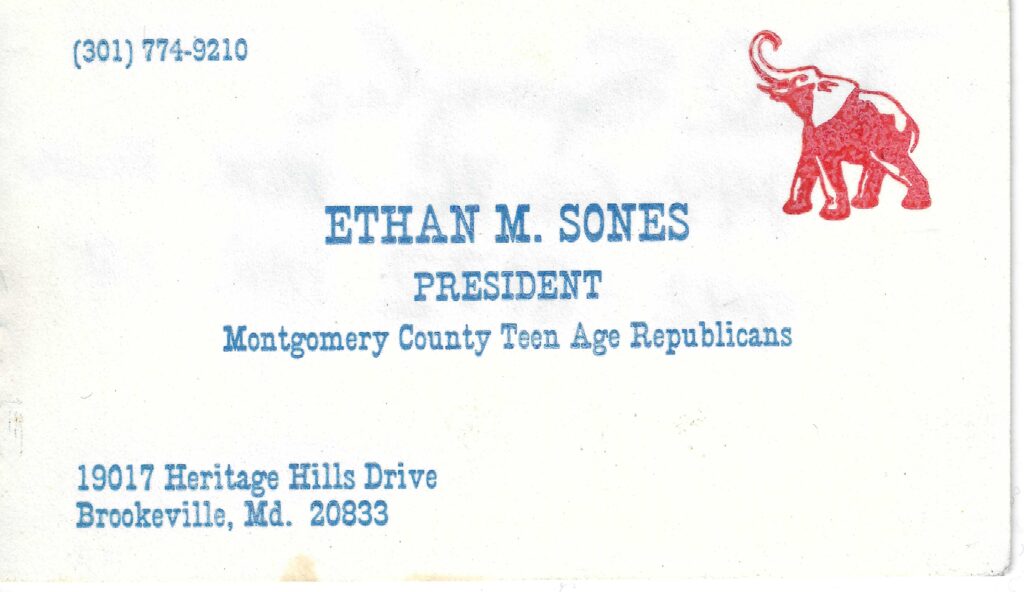
I had successfully translated principle into a practical political result. This synthesis of principle and practice was formally recognized by the party leadership. In a letter of recommendation dated November 15, 1985, Brian J. Berry, the state chairman who had first invited me to volunteer, confirmed the effectiveness of this Plunkett-style approach.
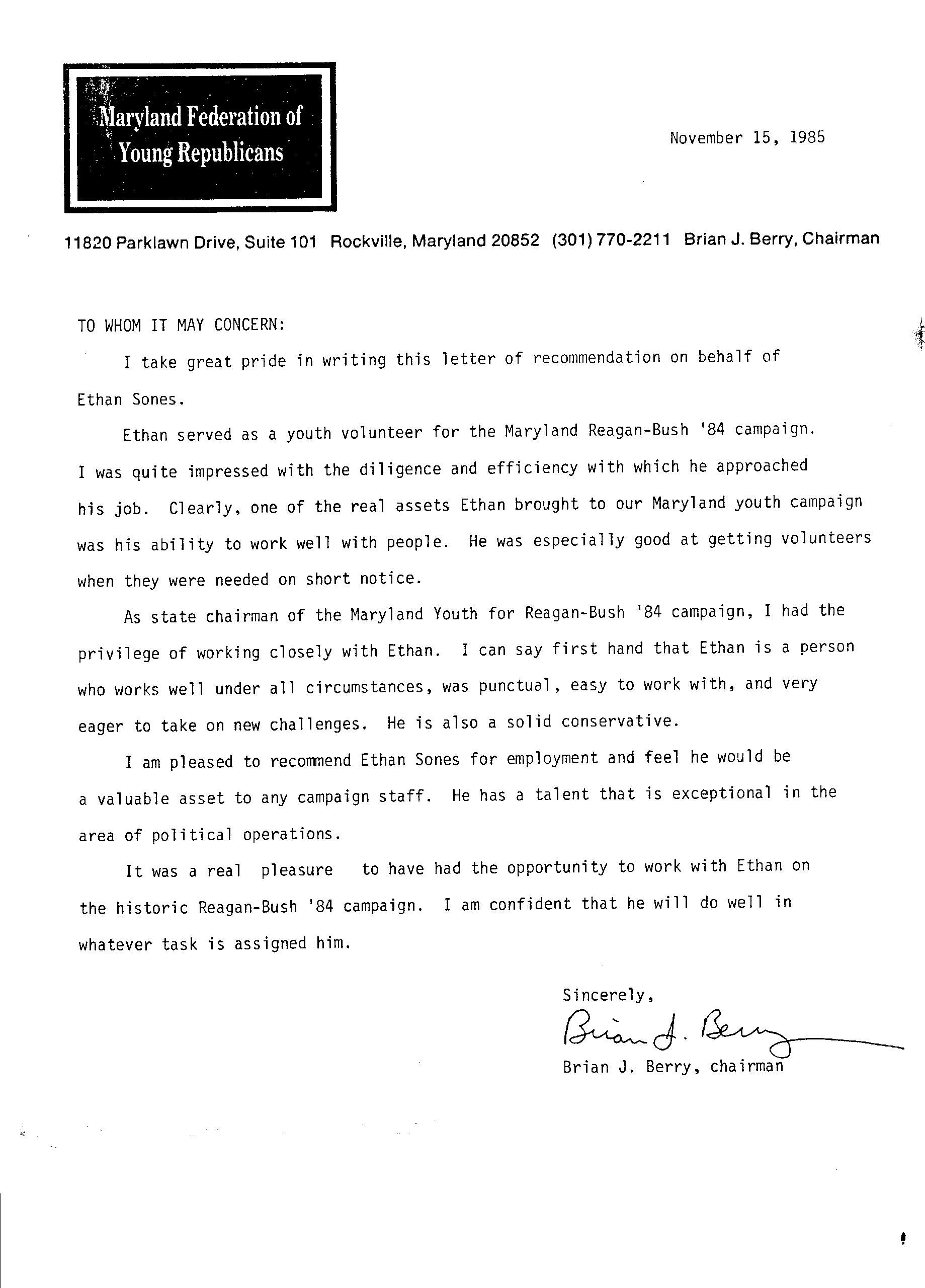
He noted my “exceptional… talent… in political operations” and praised my ability to “work well with people,” especially in “getting volunteers when they were needed on short notice.”
This chapter is the story of that first step. The full chapter is now live on my Substack.
Paid subscribers can read the full analysis right now.
For all other readers, I have posted a free preview on the Substack page. This preview includes my personal introduction to the chapter and the beginning of my political education.
Click Here to Read the Free Preview of Chapter 4 on my Substack
Click Here to Subscribe Directly and Get “The Insider’s Briefing”