

The history of the State of Israel is frequently presented as an endless series of “impossible choices.” From the early days of the Yishuv to the current security crisis, the prevailing narrative suggests that a “nature of reality” dictated a selection between the fit and the unfit, the prominent and the doomed. We are told that the hell of wartime necessitated a blurring of morals and that “tragic necessity” remains the only viable standard for leadership.
However, a forensic examination of the historical record—from the institutional processing of the Teheran Children to the disappearance of Yemenite infants and the modern alignment of Israeli leadership with foreign scripts—reveals a consistent pattern. It is not a story of tragic dilemmas, but of a systematic choice to prioritize the consolidation of institutional power over the fundamental principles of the Torah.
The Agency of Malevolence: The Law of the Guardrail
The Torah provides a specific legal framework for analyzing this pattern. The commandment to place a ma’akeh (guardrail) around one’s roof (Deuteronomy 22:8) contains a profound moral implication that provides the ultimate check on political pragmatism. Our Sages reveal that the Law’s phrasing implies the person who falls was already destined to fall for their own reasons. Yet, the Torah commands: Let it not be from your roof.
In Jewish law, the “agency of malevolence” is a choice. While a negative outcome may be destined in the grander scheme, a beneficial person is the vehicle for beneficial events, while a malevolent person becomes the agency for malevolence. When a leader justifies a betrayal of his brothers by stating, “If I didn’t do it, someone else would,” he is not making a pragmatic choice; he is actively electing to be the malevolent agent who removes the guardrail from the house of Israel to facilitate a tragedy he finds politically convenient.
The Mechanics of Erasure: Recha Freier and Henrietta Szold
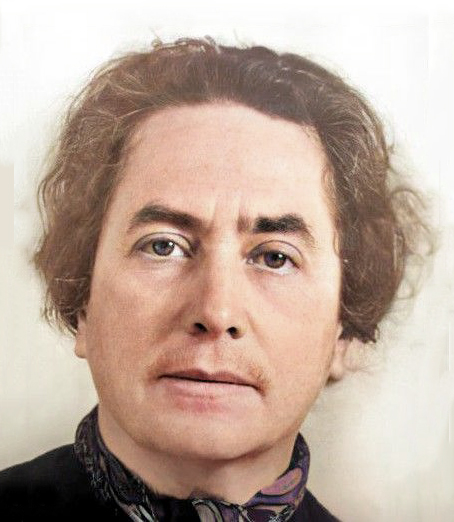
The institutional shift toward this “agency of malevolence” is visible in the very founding of Youth Aliyah, long before the state was declared. Recha Freier, who initiated the rescue of German Jewish youth in 1932, operated on a single principle: the immediate preservation of life. Henrietta Szold, then directing the Social Service Bureau of the Va’ad Leumi, initially resisted Freier’s plan, citing a lack of “financial infrastructure” and arguing that the Yishuv could not support unaccompanied children.
Once the logistical viability was proven, however, the Jewish Agency co-opted the organization. Szold integrated it into a centralized state-building apparatus that viewed children not as refugees, but as “demographic material.” Freier was systematically erased from the official record, and by 1944, a decade-anniversary exhibition of Youth Aliyah omitted her name entirely.
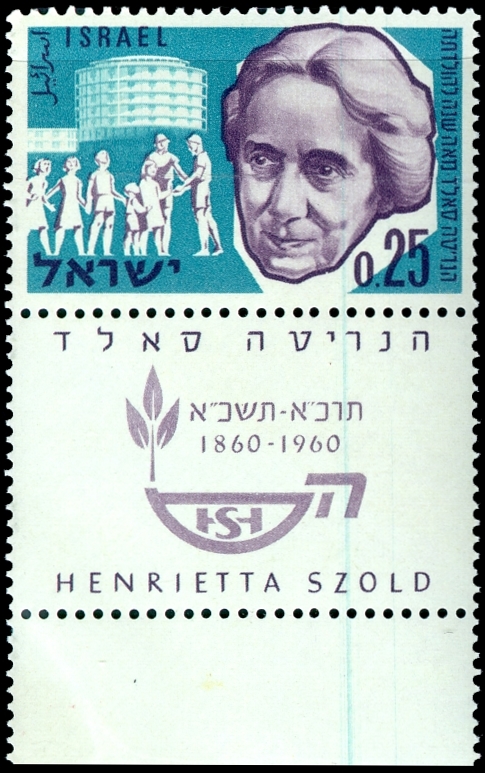
This was not merely a clash of personalities; it was a policy choice. The Agency required total control to ensure the “New Jew” was forged in a secular, agrarian mold. When Agudath Israel presented lists of hundreds of available placements in religious homes and yeshivas, Szold’s office deployed a “revolving door” of administrative excuses. They claimed “questionnaires were missing” or that “inspections were delayed by illness,” while simultaneously funneling these children into secular kibbutzim.
The Teheran Children: A Case Study in Coercion
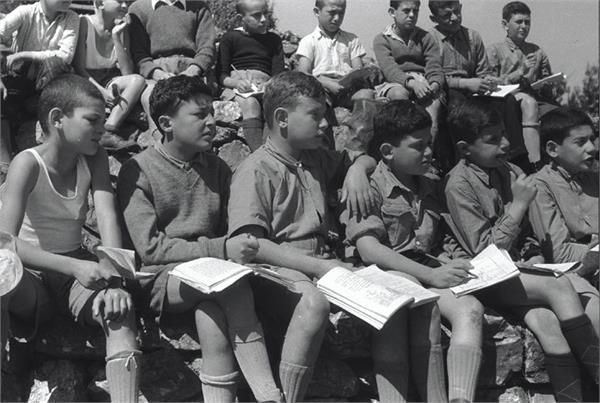
The treatment of the 733 “Teheran Children” (1942–1943) provides the raw data for what occurs when institutional power replaces principle. These orphans, largely from strictly Orthodox Polish households, were placed under the supervision of David Levinberg, a member of the Marxist Hashomer Hatzair.
The documentation of their treatment reveals a calculated policy of identity erasure:

– Children were physically barred from reciting Kaddish for their parents. When children set up a makeshift synagogue, staff repurposed the tent as a delousing station.
– Despite a budget for kosher food supplied by the Polish government and local Persian philanthropists, the Agency kitchen remained non-kosher. Levinberg explicitly stated to a camp doctor: “Let one or two die of hunger and the rest will forget about kosher food.”
– The traditional peyot (sidelocks) of the boys were sheared off while they slept. On the voyage to Palestine, counselors were reported to have torn hats from the children’s heads and thrown them into the ocean.
This was a policy of “spiritual genocide” not by accident, but by design. The data shows that while over 250 children fainted from malnutrition while requesting kosher food, and while 500 beds sat empty in Agudath Israel homes, the Jewish Agency chose to break the children’s resolve rather than cede ideological control.
The ‘Pregnant’ Leader: Tracing the Genealogy of Compromise
This genealogy of compromise leads directly to the modern era. In intelligence circles, a leader who is irreversibly compromised is termed “pregnant.” To be “pregnant” is to be so complicit in a script—often an American-led one—that your actions are dictated by a past you cannot afford to have exposed.
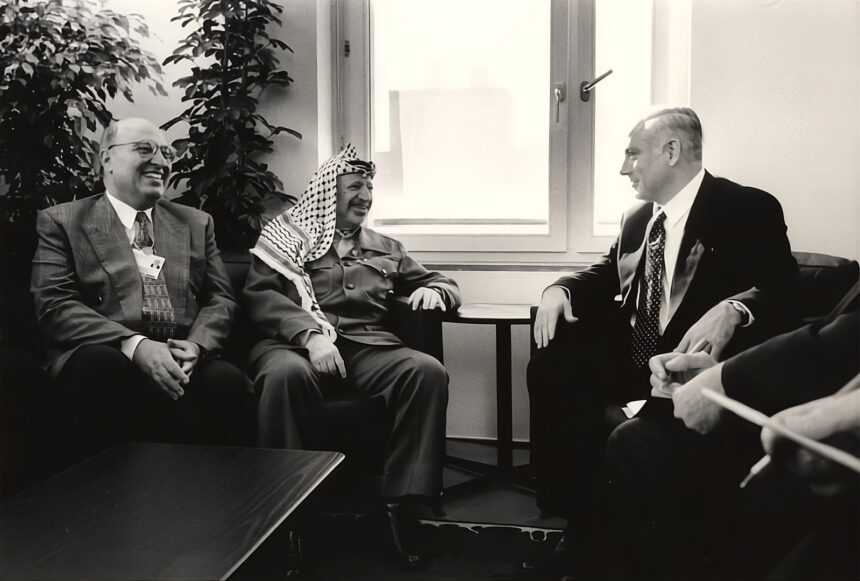
For decades, the Israeli electorate has been presented with the “lesser of two evils” as a strategic necessity because the alternative is “too horrifying.” This is the script used to justify the career of Binyamin Netanyahu.
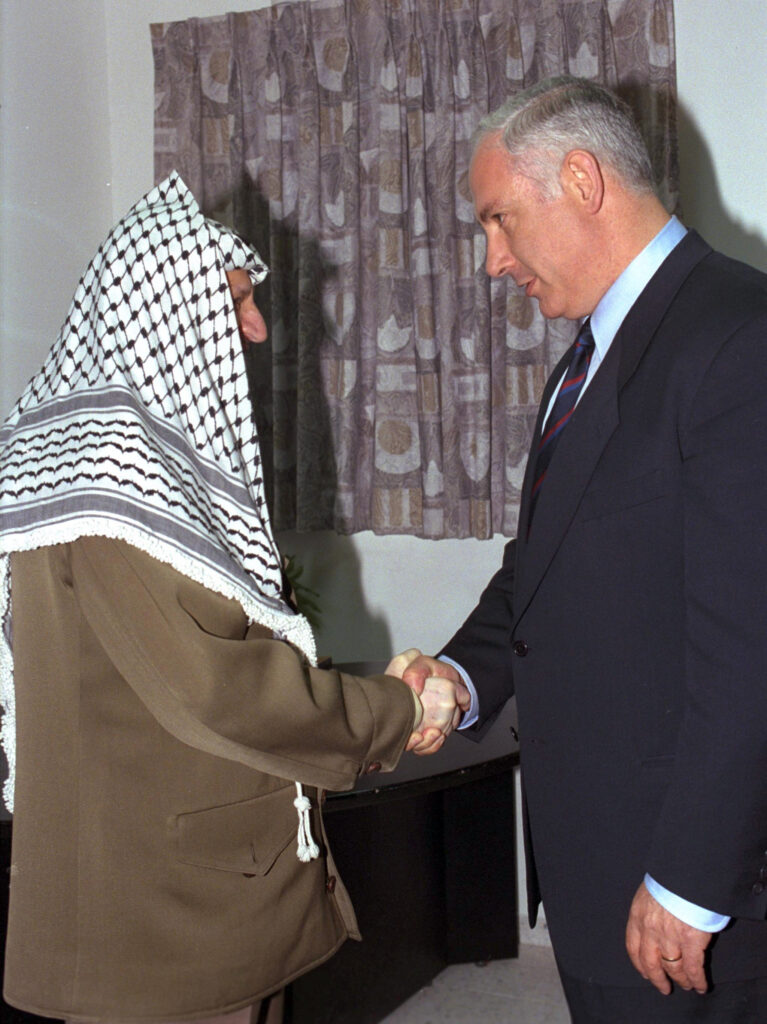
The man who campaigned against the “criminal” Oslo Accords became the man who signed the Hebron Accords in 1997. The man who rhetorically speaks of sovereignty and “red lines” is the man who oversaw the “Gideon Plan” in 2015, which slashed reserve armored brigades and artillery units in favor of a “small, smart army” that did not protect on October 7th.
These are not “blunders” of a paralyzed leader. They are the calculated actions of strategic subservience. By allowing suitcases of cash to fund Hamas while hollowing out the IDF’s physical mass, the leadership participated in a “managed chaos” script (such as the 2009 Brookings Institution’s “Leave it to Bibi” plan) that required Israeli vulnerability to facilitate a regional reordering.
The Individual’s Guardrail: A Roadmap for the Voter
It is a common defense to say that the modern voter is caught in a trap, and that refusing the “lesser of two evils” only empowers the “greater” one. However, the Law of the Guardrail suggests that the system itself—one that demands the sacrifice of principle for power—is the primary threat.
As Rabbi Shimshon Raphael Hirsch wrote, when a community misuses its authority to make the individual subservient to itself or to the collective rather than to G-d, the only path is decentralization. We must rise up and say, “I do not recognize this community’s right to violate G-d’s Law in my name.”
To build a modern “guardrail,” the citizen must move from passive observation to concrete civic action:
Withdraw Consent: Refuse to validate the “lesser of two evils” trap. If the only options offered are varying degrees of betrayal, the voter must decline the contract entirely.
Independent Infrastructure: Support educational and social systems that refuse state funding, thereby insulating them from the revolving door of bureaucratic coercion seen in the 1940s.
Refuse the Script: Send a clear message to the international community that the government’s strategic subservience does not represent the will of the people.
What Should They Have Done?
What should they have done in 1943? They should have welcomed the orphans into the homes of their brothers without ideological conditions. They should have saved every life possible based on the sanctity of the individual, without a “selection” based on ideological fitness.
What should we do today? We must recognize that the “tragic necessity” excuse is a lie. True sovereignty is built not by worshipping the power of the State, but by restoring the guardrail of Torah principle to our own roof. We must reject the “lesser of two evils” trap and the American-led scripts that demand the strategic betrayal of Jewish lives.
Worship of power is merely the political expression of worship of self. Those who worship power eventually end up as slaves to the bullies they admire.
The only antidote to this deadly power worship is to put the guardrail back on the roof. We must refuse to abandon our brothers—of any group or level of observance—for the sake of a fleeting source of power.
True sovereignty does not come from a smart army or a Washington green light. It comes from a leadership, and an electorate, that recognizes only one Source of Power.