


In the summer of 2025, a specter returned to haunt the Western world. Measles, a disease declared vanquished from the United States a quarter-century ago, is back with a vengeance. With 1,408 confirmed cases logged across America as of late August 2025 and hundreds in Israel amid ongoing surges, public health officials have sounded the alarm, pointing their fingers at a familiar scapegoat: the unvaccinated. The portrayal is as simple as it is potent—failure to comply has resurrected a vanquished foe.
Yet, beyond the headlines and the frantic calls for more shots, a more complex and disturbing picture is taking shape. A growing number of independent researchers, doctors, and journalists are uncovering a pattern that defies the official explanation. From the sprawling suburbs of Texas to the dense neighborhoods of Jerusalem and Beit Shemesh, a disquieting timeline has emerged. Vaccination campaigns have often been followed by outbreaks, and while direct causation is not established, it raises questions about whether the response could play a role.
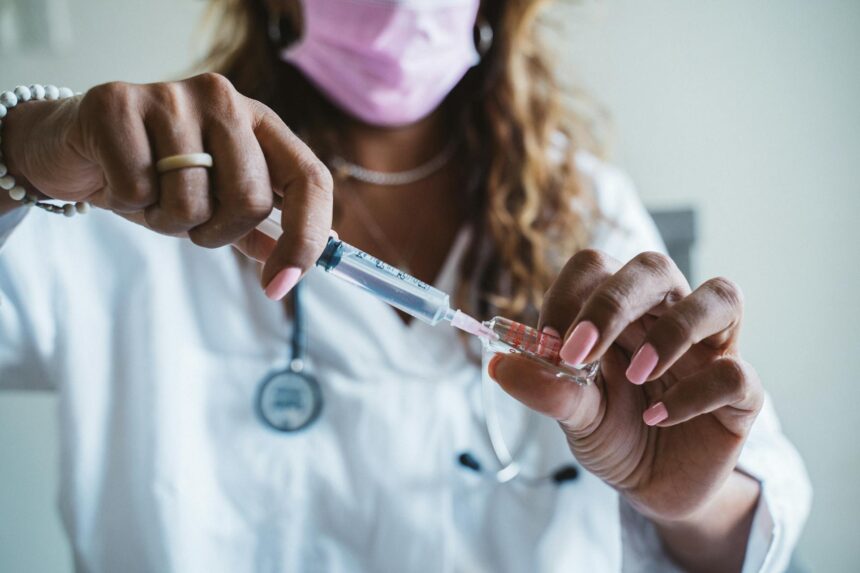
The paradox is stark. In Texas, state health authorities administered over 173,000 MMR doses between January and March, a significant increase over the previous year. By August, the state was grappling with 801 measles cases, eclipsing the entire nation’s total for 2024.
In one striking example from Gaines County, a targeted vaccination drive that administered just 80 doses was followed by a staggering 242% leap in local infections. The story repeats itself across the nation. New Mexico ramped up vaccinations by over 80%, only to be hit with an outbreak in a county with high vaccine coverage. Cases in Hawaii, Michigan, Virginia, and Illinois all appeared on the heels of urgent public health advisories and vaccination promotions.
Thousands of miles away, Israel is caught in the same feedback loop. Facing its own surge that began in the spring of 2025, the Israel Health Ministry launched an emergency response, administering more than 100,000 MMR doses. Despite these efforts, the outbreak has only intensified, swelling from a few dozen cases in May to hundreds by late August, with children on life support. Officials blame pockets of “vaccine hesitancy” in haredi communities, yet the timeline remains undeniable: the escalation of the outbreak has shadowed the escalation of the official response. It begs the question: is the official response fanning the flames?
A Live Wire in a Crowded Room
The core of this uncomfortable question lies in the nature of the measles, mumps, and rubella (MMR) vaccine itself. Unlike inactivated vaccines, the MMR uses live, albeit weakened, viruses. The medical establishment has long assured the public that these attenuated viruses are safe and cannot cause the disease they are meant to prevent. But the evidence is mounting that this is a dangerous oversimplification. The vaccine virus doesn’t just disappear after injection; it replicates, and it can spread.
This phenomenon, known as “shedding,” is well-documented in scientific literature, though rarely discussed in public health messaging. A 2024 study in the Journal of Clinical Virology found that more than a third of recently vaccinated children shed measles vaccine RNA in their nasal passages for up to a month. Older studies, including one from the CDC itself, have confirmed the vaccine virus can be transmitted through urine for weeks. In Israel, this theory has found startling support from an unexpected source: the sewer. Wastewater surveillance has detected the vaccine’s specific genotype in 8% of samples, confirming that the virus is being shed into the environment on a scale that could easily contribute to community transmission.
When you inject a live, shedding virus into hundreds of thousands of people during a period of heightened alert, you are not merely building a firewall; you are potentially lighting hundreds of thousands of tiny, moving matches. This reality completely upends the simplistic narrative of the unvaccinated being the sole drivers of outbreaks. It suggests that the recently vaccinated can, for a period, become carriers, seeding the virus among both the unvaccinated and those for whom the vaccine’s protection has waned.
The Original Sin of Gain-of-Function
The troubling nature of the vaccine virus goes deeper than shedding. Its very origin story is rooted in a practice that has become a source of intense global controversy: gain-of-function research. The measles strain used in today’s vaccines was derived from a wild virus isolated in 1954. To weaken it, scientists serially passed it through a host of non-human cells, including chicken embryos and monkey kidneys.
This process did more than just attenuate the virus; it fundamentally altered its biology. The wild measles virus primarily uses a receptor called CD150, found on immune cells. The vaccine virus, however, was re-engineered to favor a different receptor, CD46, which is present on nearly every cell in the human body. Critics argue this is a clear-cut case of gain-of-function—an artificial expansion of the virus’s cellular targets. This modification was performed decades before the term entered the popular lexicon with COVID-19, but it fits the definition: a man-made change that gives a pathogen a new, potentially broader, capability.
The official justification is that this change, along with others, makes the virus less harmful. Yet, there are no peer-reviewed studies that directly compare the infectivity and replication of the modern vaccine strain to the wild-type virus in humans. The assurances of its safety are based on indirect evidence from animal and lab studies. This leaves a gaping hole in the safety profile of a vaccine mandated for millions of children.
We are told to trust that this engineered virus is benign, even as outbreaks follow its deployment.
A History of Mismanagement and Missed Cues
While authorities focus exclusively on vaccination status, they ignore a crucial factor: the quality of medical care. In February 2025, two young girls, ages six and eight, died in Texas amid the measles outbreak. Their deaths were immediately weaponized by media outlets to stoke fear and drive vaccination. However, a meticulous review of their medical records by Dr. Pierre Kory, a critical care specialist, concluded that the girls did not die from measles. They died from severe bacterial pneumonia that was tragically mismanaged by their doctors, who failed to administer the appropriate antibiotics in a timely manner.
This echoes the horrific events in Samoa in 2019. A measles outbreak there, which followed a UNICEF-backed vaccination campaign, resulted in 83 deaths and a case fatality rate 40 times the global average. While official sources still claim it was supplied and recommended during the response, local doctors and activists reported that officials were suppressing the use of vitamin A—a proven, WHO-recommended therapy that can cut measles mortality in half—and that families were being forced to vaccinate against their will.
The lesson from both Texas and Samoa is that a measles diagnosis should not be a death sentence. With proper nutrition and competent medical care, measles is a survivable illness for the vast majority of people.
Indeed, historical data shows that measles mortality in the U.S. had already plummeted by over 98% before the vaccine was introduced in 1963, thanks to improvements in sanitation and nutrition. By blaming every death on the virus and the unvaccinated, the medical establishment deflects from its own potential failures and ignores simple, effective treatments in favor of a one-size-fits-all, patent-protected solution.
Dr. Richard Bartlett, a Texas physician, has successfully treated over 100 measles patients in the current outbreak with inhaled steroids like budesonide, reporting rapid recoveries even in severe cases. Yet, such approaches remain outside the rigid, vaccine-centric official protocol.
The Unraveling of a Narrative
The 2025 measles resurgence is exposing the deep flaws in our global public health strategy. The narrative that has been carefully constructed for decades—that a single vaccine is an infallible shield and that anyone who questions it is a danger to society—is crumbling under the weight of real-world evidence. The data from Texas, Ontario, and Israel does not point to a failure of the people, but a failure of the product and the policy.
The relentless focus on achieving a 95% vaccination rate as a magic threshold for “herd immunity” is proving to be a mirage. Outbreaks are occurring in populations with high overall coverage, and a significant percentage of cases—sometimes as high as 60% in past outbreaks—are among the vaccinated. The immunity conferred by the vaccine is not lifelong, and its effectiveness appears to be far more fragile than we have been led to believe.
What is required now is not more fear, but more honesty. We need a public health system that is transparent about the risks of vaccination, including shedding and waning immunity. We need medical authorities who are willing to investigate the clear temporal link between vaccination campaigns and subsequent outbreaks. We need to differentiate between wild and vaccine-strain measles in our testing, so we can understand what is truly driving these epidemics. And most importantly, we need to end the suppression of safe, effective, and affordable treatments that save lives.
Until that happens, we remain trapped in a dangerous cycle where the supposed cure perpetuates the crisis, and the authorities who promote it refuse to see the evidence right in front of their eyes. The specter of measles is not back because we have forgotten the past. It may be back because we have refused to learn from it.