


In the dusty archives of the 1980s, a single typewriter ribbon held the secret to a global deception. It was not merely a piece of office stationery, but a forensic artifact that shattered the official timeline of the Iran-Contra affair.
Contrary to the accepted history, this evidence demonstrated that the arms flow to Iran was not a desperate reaction to a hostage crisis. Instead, it was a calculated, proactive strategic blueprint designed by U.S. and Israeli intelligence in 1985—years before the public scandal broke—to preserve Iran’s ability to wage war.
Today, as the dust settles on the rubble of Gaza and the kibbutzim ravished on October 7th, that typewriter ribbon offers a chilling key to understanding the present.
In a comprehensive analysis of declassified cables, historical memoirs, and direct communications with Jonathan Pollard, a disturbing parallel emerges. The official histories of US covert operations—from the jungles of Angola to the tunnels of Hamas—reveal a stark disparity between public policy and private reality.
It is a doctrine of “managed catastrophe,” where humanitarian crises are not tragedies to be solved, but cover stories for a colder strategic objective: the “Bleed.”
The ‘Arms for Hostages’ Fiction
For decades, the official narrative of the Iran-Contra affair was one of desperate humanitarian overreach: the Reagan administration, moved by the plight of American hostages in Lebanon, sold arms to Iran to secure their release.
But forensic evidence and testimony contradict this Hostage Bazaar narrative.
“In all my discussions with my boss, Rafi Eitan, about the arms transfers, liberation of the hostages was NEVER mentioned,” Jonathan Pollard told Jewish Home News, shattering the humanitarian pretext. “We wanted the Iranians to bleed the Iraqis and the Americans wanted to bleed the Sandinistas. That was it. The hostages were nothing more than a diversion. We all knew this at the time.”
The typewriter ribbon evidence, previously detailed by Jewish Home News, proves that the “Finding”—the presidential authorization for the operation—was retroactively manufactured. It was a bureaucratic prop designed to circumvent the Boland Amendment, which legally forbade US funding of the Contras.
The pattern is distinct: An emotional, humanitarian narrative (saving hostages) was deployed to blind the public and the legislature to a geostrategic operation of attrition (arming both sides of the Iran-Iraq war to ensure mutual destruction).
In Search of Enemies: The African Parallel
This disparity between public virtue and private vice was not invented in the 1980s. It is the standard operating procedure detailed by former CIA officer John Stockwell in his seminal exposé, In Search of Enemies.
Stockwell, who ran the CIA’s covert war in Angola in 1975, describes an almost identical playbook. Publicly, the Agency claimed it was supporting “democratic freedom fighters” and defending Angola against Soviet expansionism. They claimed to be adhering to the Clark Amendment, which restricted involvement.
Privately, Stockwell reveals, the goal was not victory for the Angolans, but simply to “make the Soviets pay a price.” The CIA actively discouraged diplomatic solutions that the local factions favored. They needed the war. They needed the enemy.
“We were not in Angola to help the Angolans,” Stockwell later admitted. “We were there to bleed the Russians.”
Just as the hostages were a “diversion” for Pollard’s handlers, the Angolan people were collateral damage in a script written in Langley. The “Bleed Doctrine” requires a sustained conflict, not a resolution. To achieve this, enemies must sometimes be manufactured, and crises must be prolonged.
From Kabul to the Kibbutzim
History is littered with this script. In 1979, officially, the US began aiding the Afghan Mujahideen to fight a Soviet invasion. In reality, as National Security Advisor Zbigniew Brzezinski later admitted, the aid began before the invasion specifically to “induce” the Soviets to intervene—to give them “their own Vietnam.”
The policy is consistent:
- Identify a rival (Soviets, Iraqis, regional powers).
- Select a proxy (UNITA, Contras, Mujahideen).
- Manufacture a narrative (Humanitarian aid, Hostage rescue, Defense of Democracy).
- Maximize the “Bleed” (Ensure the conflict drags on to deplete the rival’s resources).
This historical lens forces a forensic re-examination of October 7th.
As detailed in the Jewish Home News investigation, the failures that allowed the invasion of the Gaza envelope were so systemic and total that they defy the explanation of mere incompetence.
If we apply the Pollard/Stockwell rubric, the official narrative—a “colossal intelligence failure”—begins to look like another cover story.
Just as the “Arms for Hostages” deal was not about hostages, and the Angola operation was not about Angolan freedom, the “Leave it to Bibi” script suggests that the catastrophe of October 7th was not a blind spot, but a permitted event. A “manufactured catastrophe” designed to justify a pre-planned regional reshaping.
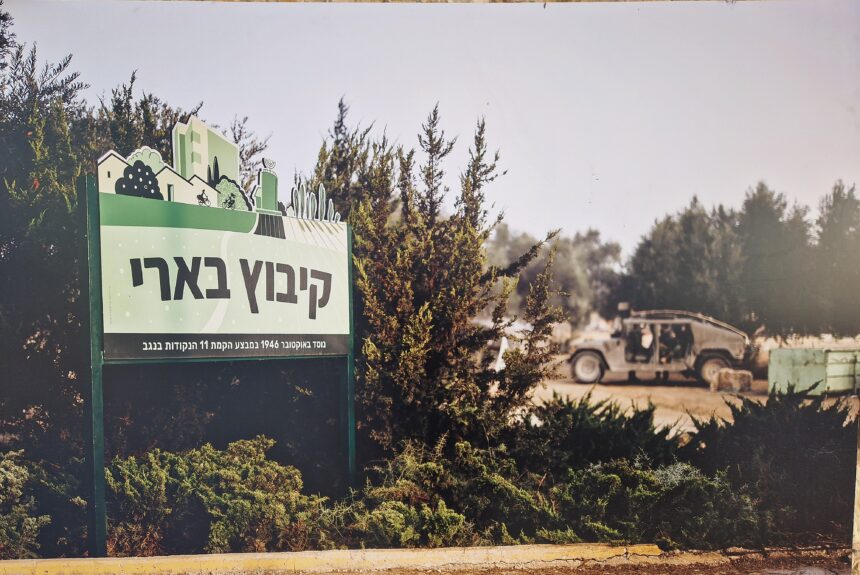
The forensic evidence of the typewriter ribbon proved Iran-Contra documents were fakes created to hide the timeline. Today, we must ask: What forensic evidence is being ignored in the burnt homes of Be’eri and Kfar Aza?
If the goal remains the “Bleed”—whether of Iranian proxies, Palestinian demographics, or Israeli political opposition—then the hostages held in Gaza may have played the same tragic role as those in 1985: pawns in a diversionary narrative, while the real operators conduct business in the shadows.
As Pollard noted, “We all knew this at the time.” The tragedy for the public is that we usually only find the typewriter ribbon after the war is over.