
This week, Jews around the world stand once again, as our ancestors did on the plains of Moab, to hear the words of Parshat Nitzavim.
The setting is one of ultimate gravity. All of Israel, from the woodchopper to the prince, is gathered to enter into a covenant with the Creator. The choice presented is the most fundamental one imaginable: “See, I have set before thee this day life and good, and death and evil… therefore choose life, that thou mayest live, thou and thy seed.”
For generations, we have understood this as a command to follow the Torah’s precepts. But in our age—an age drowning in information yet starved of wisdom—this injunction takes on a new and urgent meaning. What, precisely, does it mean to “choose life” in a world that has lost its moorings, a world that pulls us in a thousand directions at once?
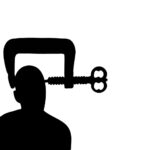
A penetrating diagnosis of the modern world may offer a key. Western civilization, by abandoning its belief in a transcendent, unifying truth, has unleashed a powerful internal impulse causing it to fly apart, to disintegrate from a coherent whole into a chaotic collection of disconnected fragments. The only path to restoration is not a nostalgic trip back in time, but a return to center, a search for what Richard Weaver called “the one which endures and not the many which change and pass.”
This “return to center” is the very essence of the command to “choose life.” And the forces that pull us away from it are the very ones described with such crystal-clear foresight in our parsha. By understanding this critique of our fragmented times, we can unlock the depth of the Torah’s prescription.
The Idolatry of Facts
The modern person is often a specialist, an obsessive. Lacking a central truth that would allow him to see reality as a coherent whole, he dedicates himself to a tiny, isolated piece of it. He becomes the scientist who knows the mechanics of the cell but nothing of its purpose, the economist who can model markets but understands nothing of human good, the politician who amasses polling data but has no vision for the nation. Each is lost in his own fragment, mistaking his narrow expertise for wisdom.
This has led to an astonishing vogue of factual information. Because modern man has been told that ultimate truth is unattainable, he now clings desperately to what he can have: “facts.” This is his spiritual condition. He is adrift in a sea of data, bytes, and breaking news alerts. He has endless information about the “many which change and pass,” but no access to the “One which endures.” He has, in short, traded truth for facts.
Having lost his hold upon a cohesive, organic reality, he clings all the more firmly to his discovered facts, hoping that salvation lies in what can be objectively verified. This is a profound description of modern idolatry. The new gods are not made of wood and stone, but of data and statistics. We worship at the altar of the objectively verifiable, believing that if we can just gather enough facts, we can solve the riddle of existence in careless disregard for the very purpose of existence. We are a civilization frantically trying to see our own way to salvation.
And it is here that the deepest wisdom of our tradition reveals itself in a single, simple act.
The Deception of the Eye
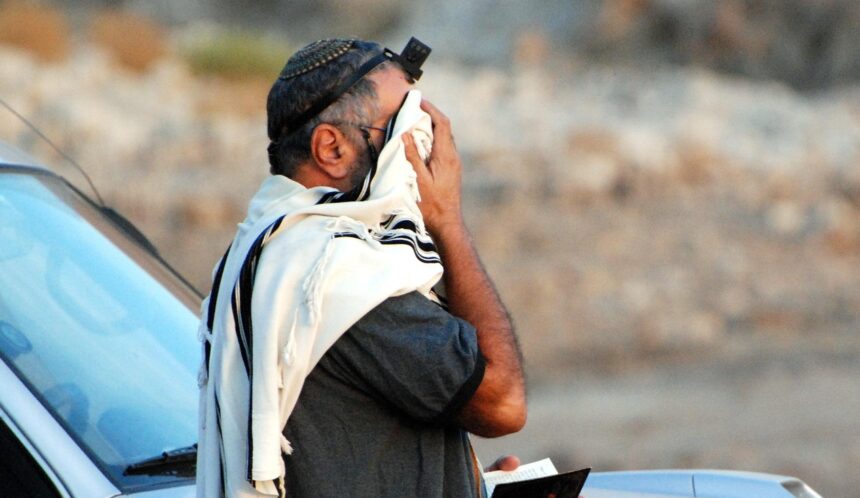
Two times a day, every Jew prepares to declare the central tenet of his faith: “Hear, O Israel, the L-rd our G-d, the L-rd is One.” And in that moment, he performs a strange ritual. He covers his eyes with his hand.
Why? Why, at the moment of declaring the ultimate reality, do we deliberately block our primary sense? In the hierarchy of senses, seeing is almost universally held to be supreme. “Seeing is believing.” We want to see the evidence, the proof, the facts. Hearing, by contrast, is an act of trust. It requires us to listen to a voice, to accept a truth that originates outside our own field of vision.
The act of covering the eyes during the Shema is a powerful, built-in defense against the very spiritual sickness of our age. It is a conscious act of rebellion against the deception of the visible. In that moment, the Jew declares that he will not be seduced by the world of appearances, the world of fragmented facts, the chaotic reality presented to the eye. The world we see is a world of multiplicity, of contradiction, of endless change. If we rely on our eyes alone, we will never perceive the unity that undergirds it all.
By covering our eyes, we choose to abandon the advantage of seeing for the far greater advantage of hearing. We choose to listen. We listen for the singular, unifying truth that cannot be seen but must be heard: that G-d is One.
Facts are the domain of the eye; they are the scattered pieces of the puzzle we can verify and measure. But Truth is the domain of the ear; it is the revelation of the whole, the organic reality that gives meaning to all the facts. To choose life is to choose to listen for that unifying voice, even when—especially when—the evidence of our eyes suggests only chaos.
Choosing Center
This brings us back to the stark choice in Nitzavim. The parsha warns us against the impulse to fly apart from the center in the clearest possible terms. It speaks of the person who, hearing the words of the covenant, “blesseth himself in his heart, saying: ‘I shall have peace, though I walk in the stubbornness of my heart’.” This is a perfect definition of the modern ideal that makes one’s own ego the center of the universe, promising peace by chasing one’s own desires and curating his “own truth” from the fragments of the world.
The Torah warns that this path leads to destruction. This pursuit of the disconnected self, this straying after what our eyes see and our hearts desire, is the very engine of the centrifugal impulse. It pulls us away from the center, away from the covenant, and into the worship of fragments—the “other gods, the work of men’s hands, wood and stone,” which today take the form of ideologies, materialism, and political humanist messianism.
“Choose life,” therefore, is a command to resist this pull. It is an act of spiritual gravity. It is the conscious decision to return to the center. That center is the truth of the Torah—the unifying, organic reality that makes sense of all the disparate facts of our existence.
To choose life is to stop chasing the endless stream of data and to start listening to the singular voice of Sinai. It is to cover our eyes to the distractions of the world and to hear the Shema.
The great fear of modernity’s sharpest critics was that man, having lost his center, would disintegrate. But the Jewish people have always had the antidote. It is right there in our daily prayers and in the awesome choice laid before us in Nitzavim.
We are not asked to have all the facts, nor to see all the proof.
We are asked to listen. To hear.
And in that hearing, to choose the One which endures over the many which pass. That is how we choose life, and in doing so, restore not only ourselves, but the foundations of Torah civilization.